
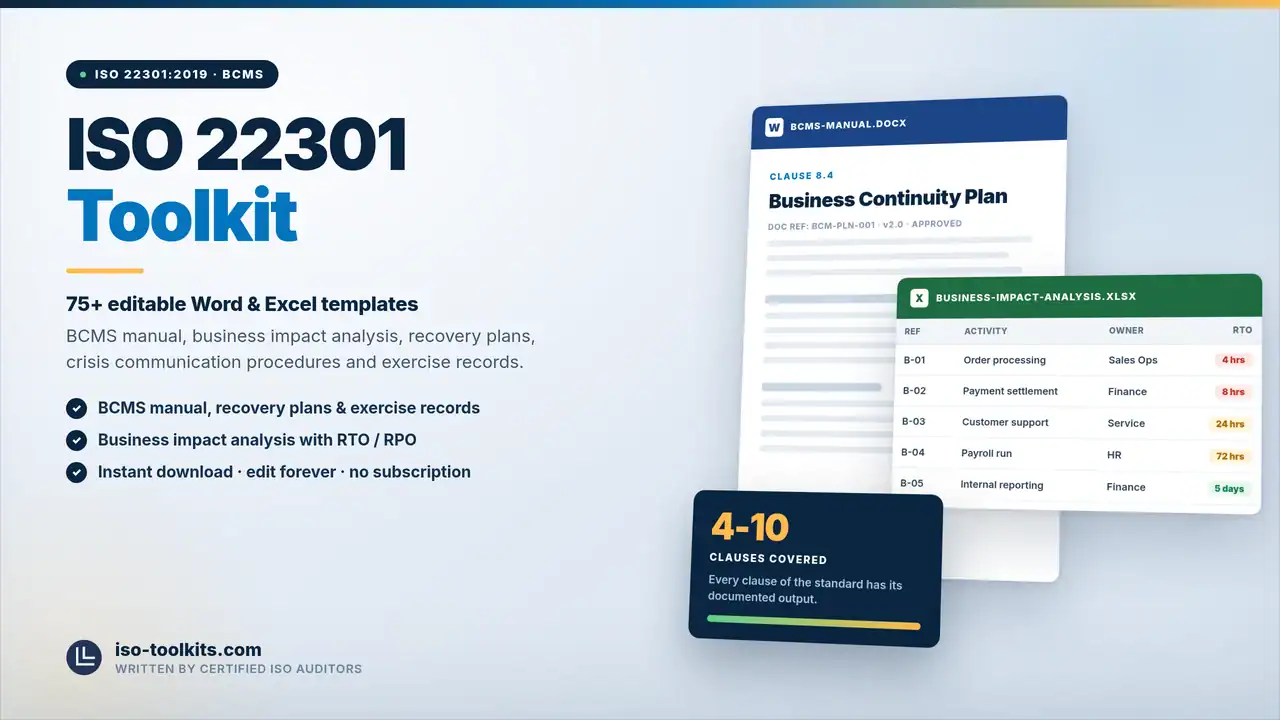
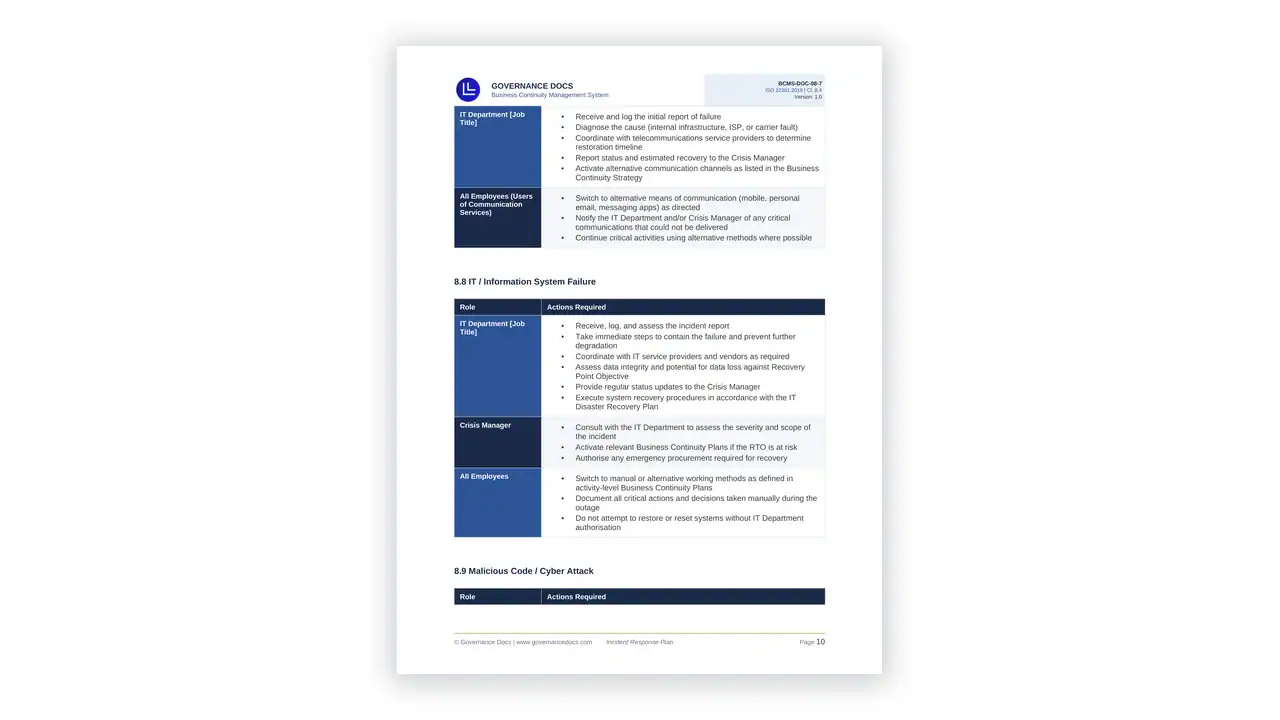
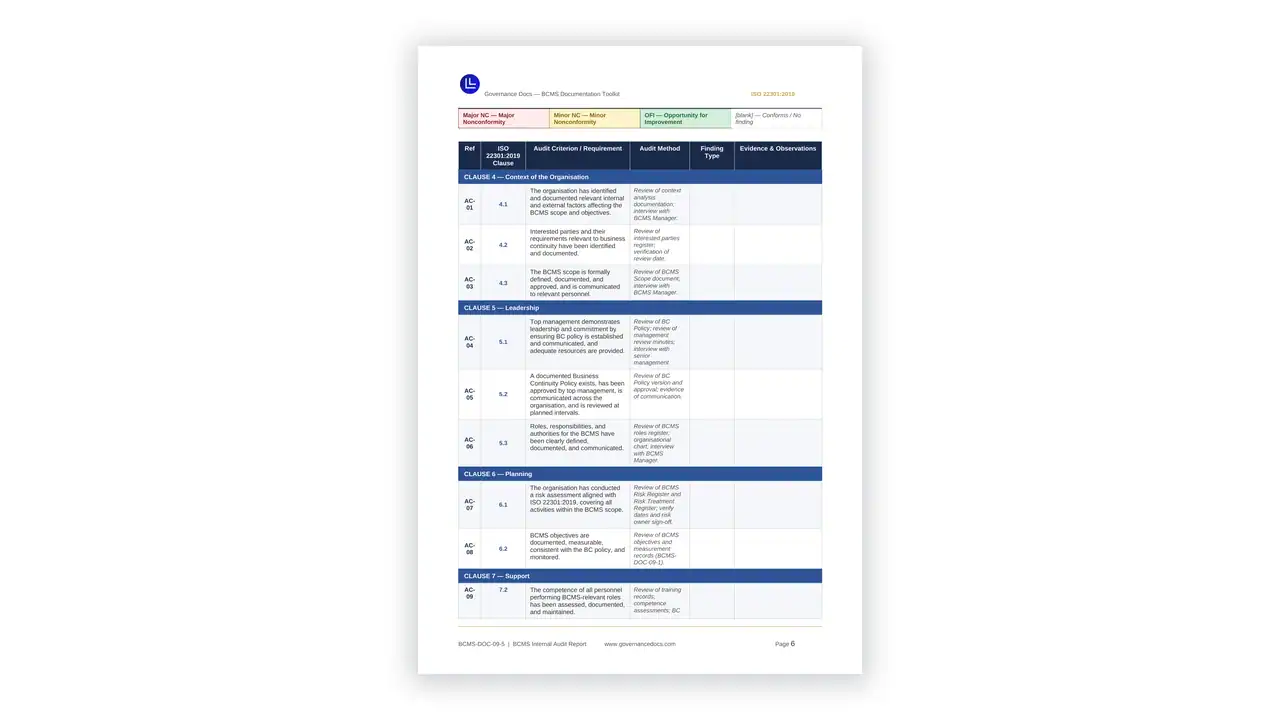
The ISO 22301 Toolkit gives you a certifiable business continuity management system in 75+ editable Word and Excel documents: BCMS manual, business impact analysis templates, recovery plans, crisis communication procedures and exercise records. Download instantly and shape it around your own recovery time objectives.
On this page:
- What is inside the ISO 22301 Toolkit
- Who this toolkit is for
- How the toolkit maps to ISO 22301:2019
- Why buy instead of running planning workshops from scratch
- Frequently asked questions
- Related resilience and security toolkits
What is inside the ISO 22301 Toolkit
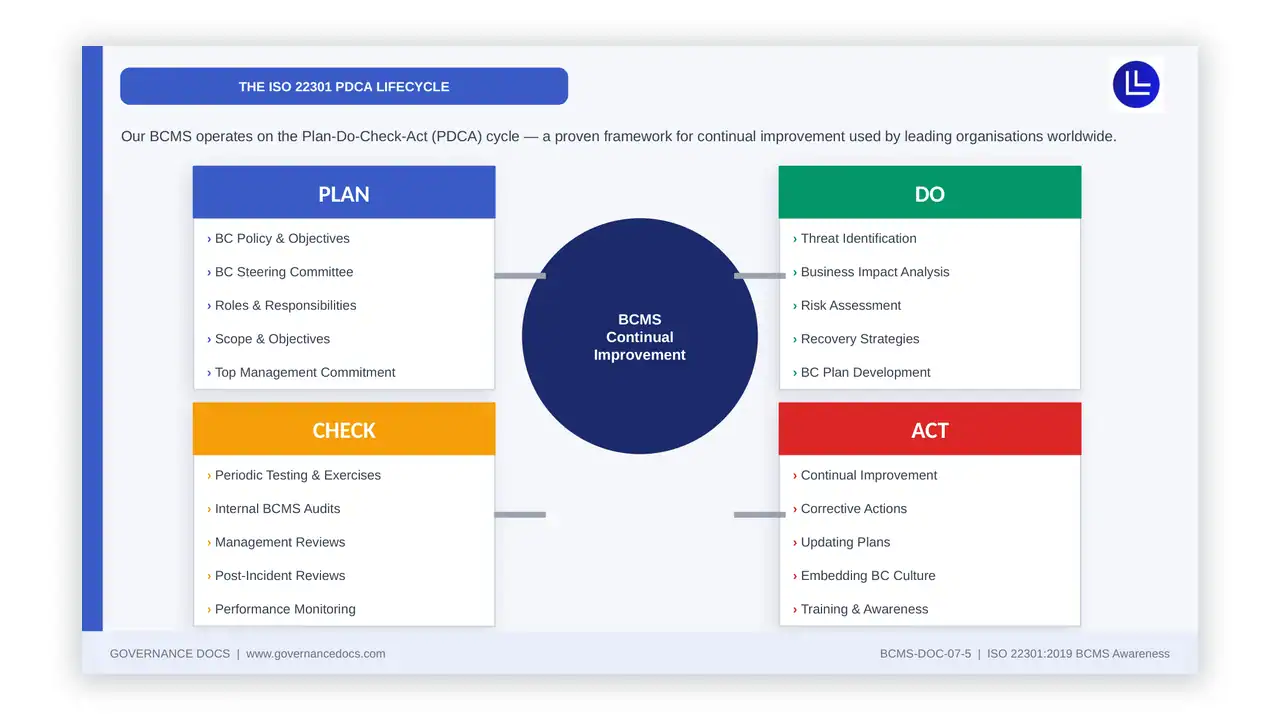
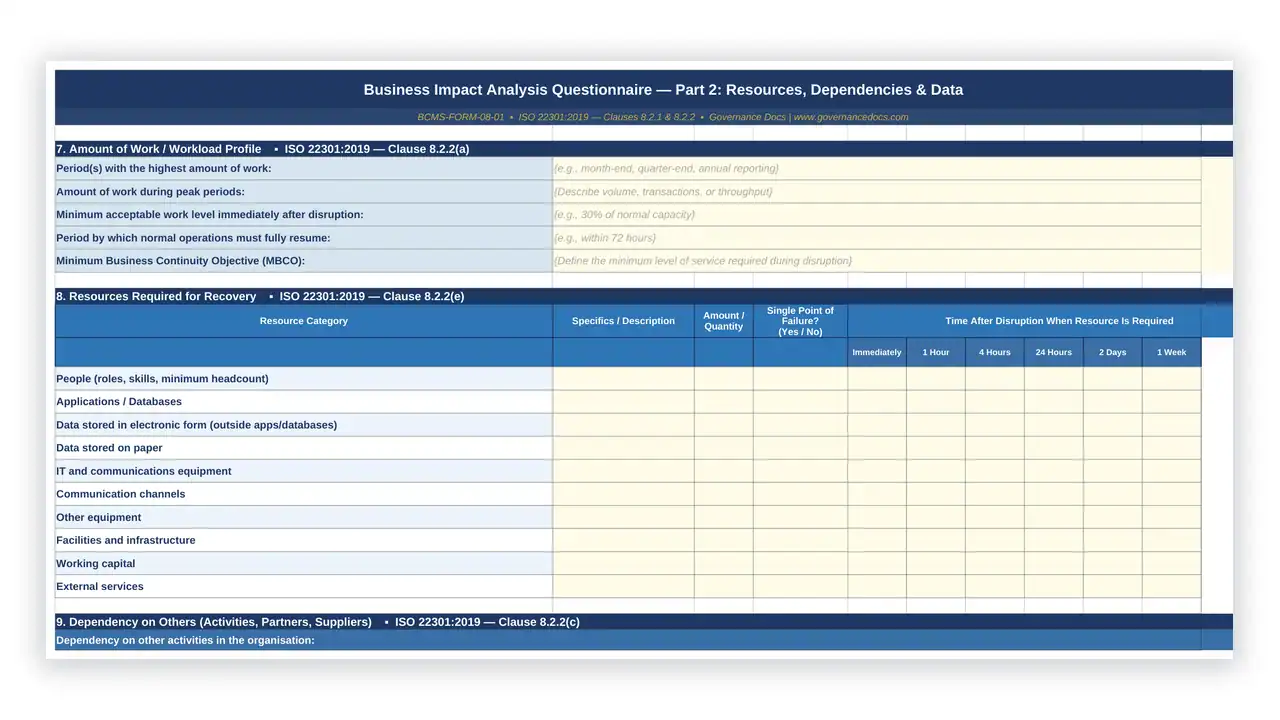
The ISO 22301 Toolkit covers the full continuity cycle, from identifying critical activities through to reviewing an exercise. Documents are cross-referenced, so an activity in the business impact analysis points to a recovery strategy, a plan and a test record.
- BCMS manual, scope statement and business continuity policy
- Business Impact Analysis templates and stakeholder questionnaires
- Risk assessment and treatment methodology for continuity threats
- Business continuity strategy and recovery plan templates
- Incident response and crisis communication procedures
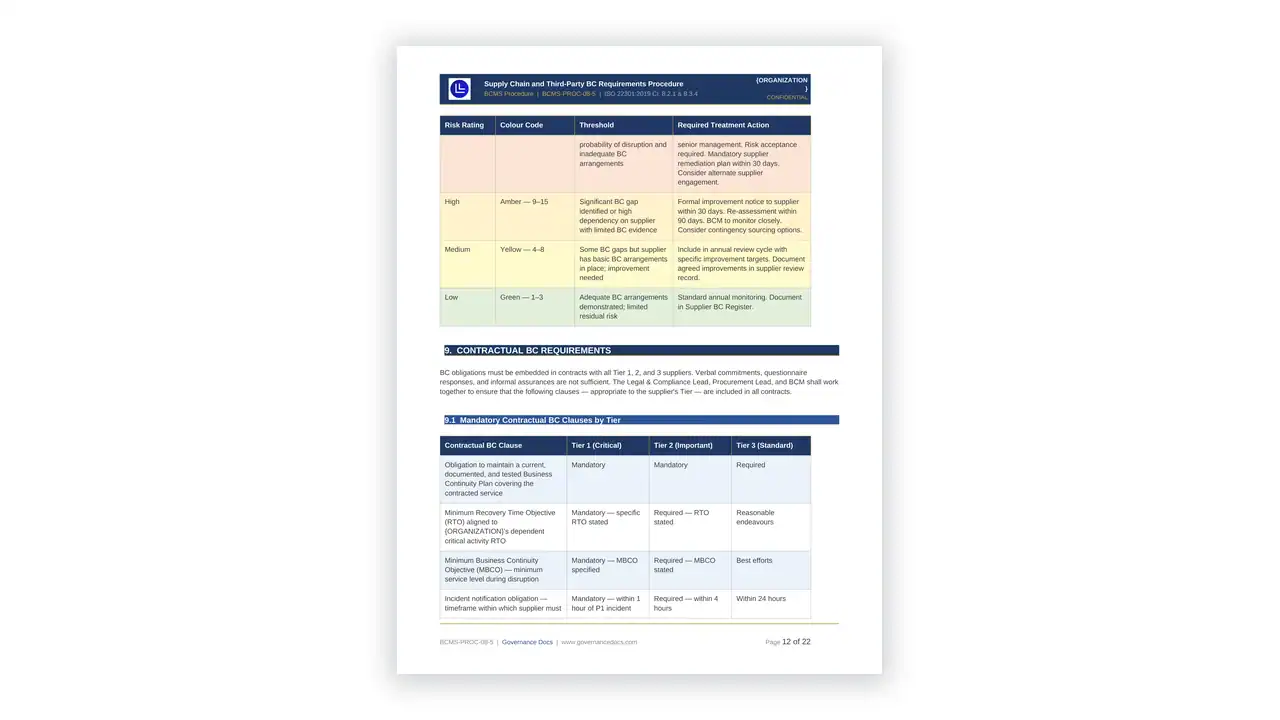
- Emergency contact, resource and dependency registers
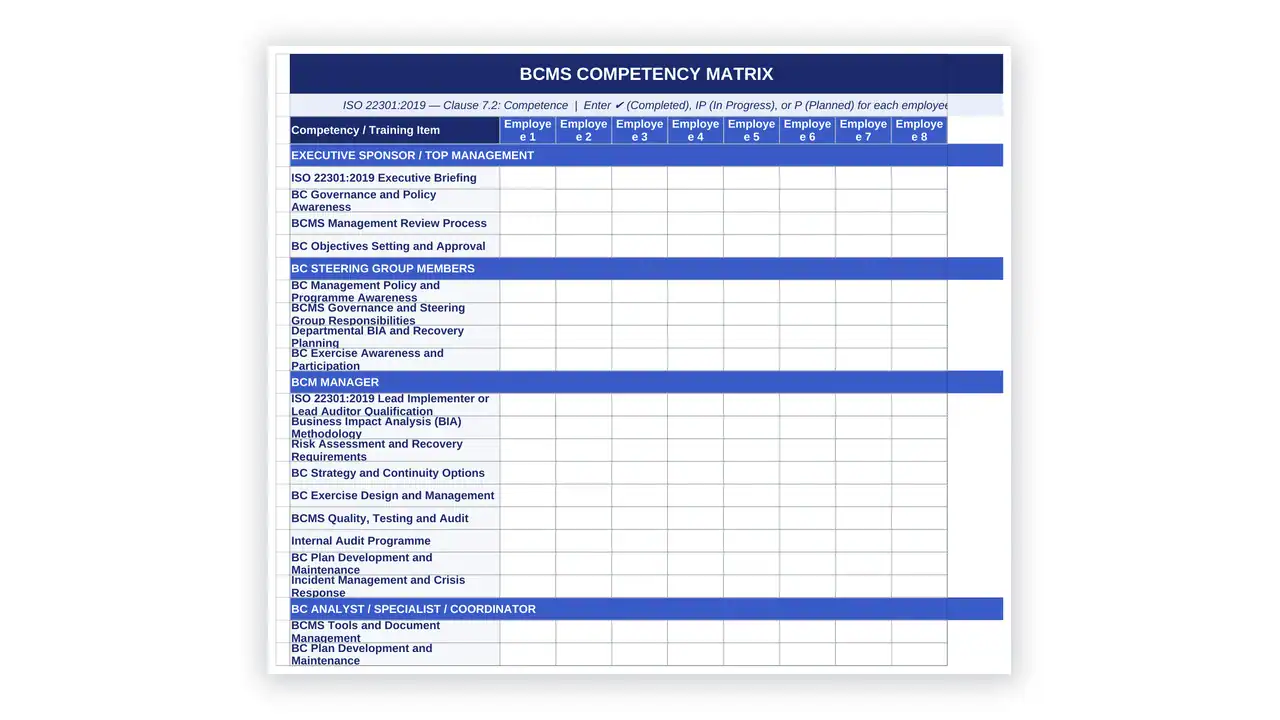
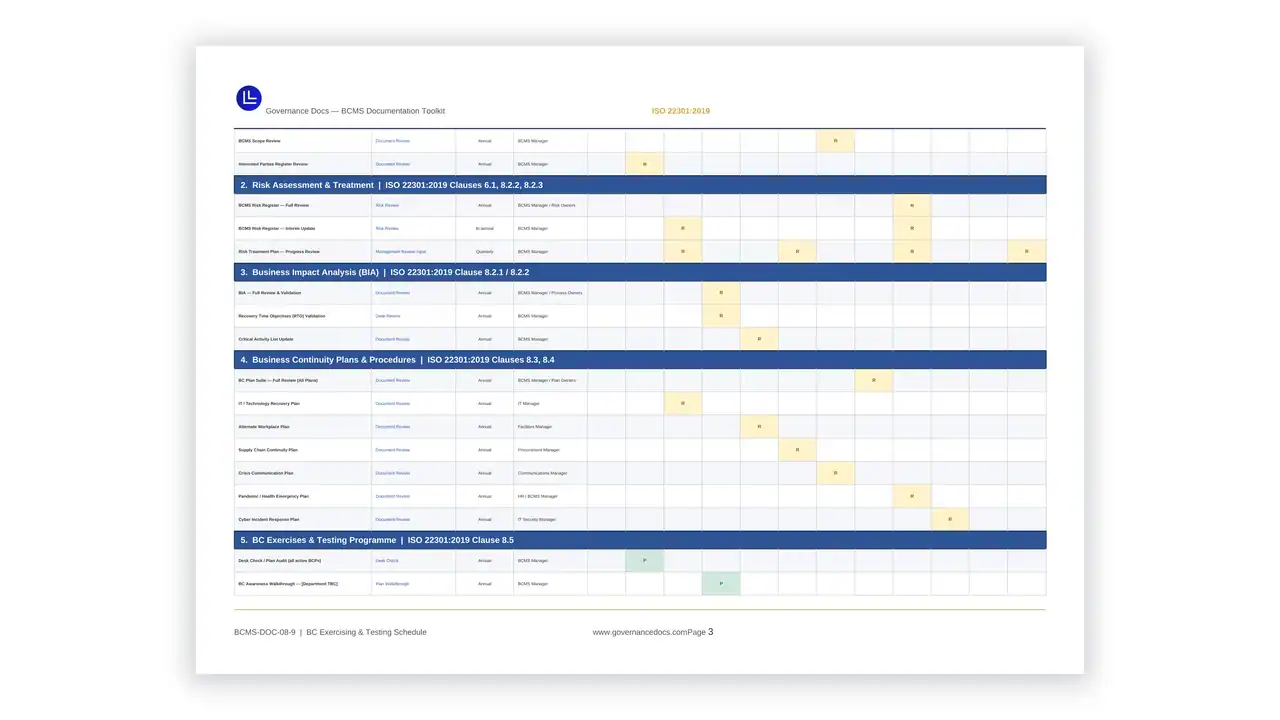
- Exercise and testing plans with post-exercise review records
- Management review, internal audit and improvement documentation

Who the ISO 22301 Toolkit is for
When systems fail, suppliers collapse or a site becomes unusable, the organisations that recover fastest are the ones that planned for it. Financial services, logistics, manufacturing, managed IT providers and the public sector all use the standard to prove operational resilience to clients and regulators.
Typical buyers are answering a customer resilience questionnaire, meeting a regulatory expectation such as DORA or an operational resilience rule, or replacing continuity plans that have never been tested. Consultants use the pack as a delivery baseline they can brand per client.
How the ISO 22301 Toolkit maps to the standard
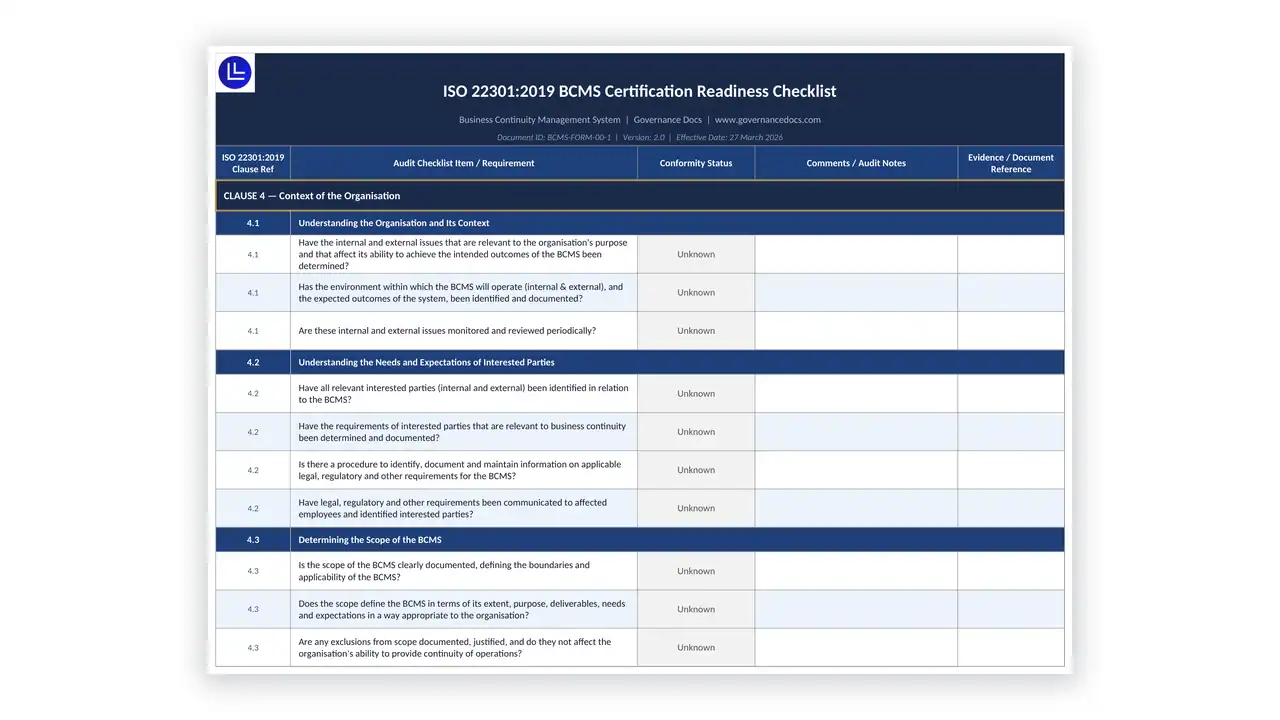
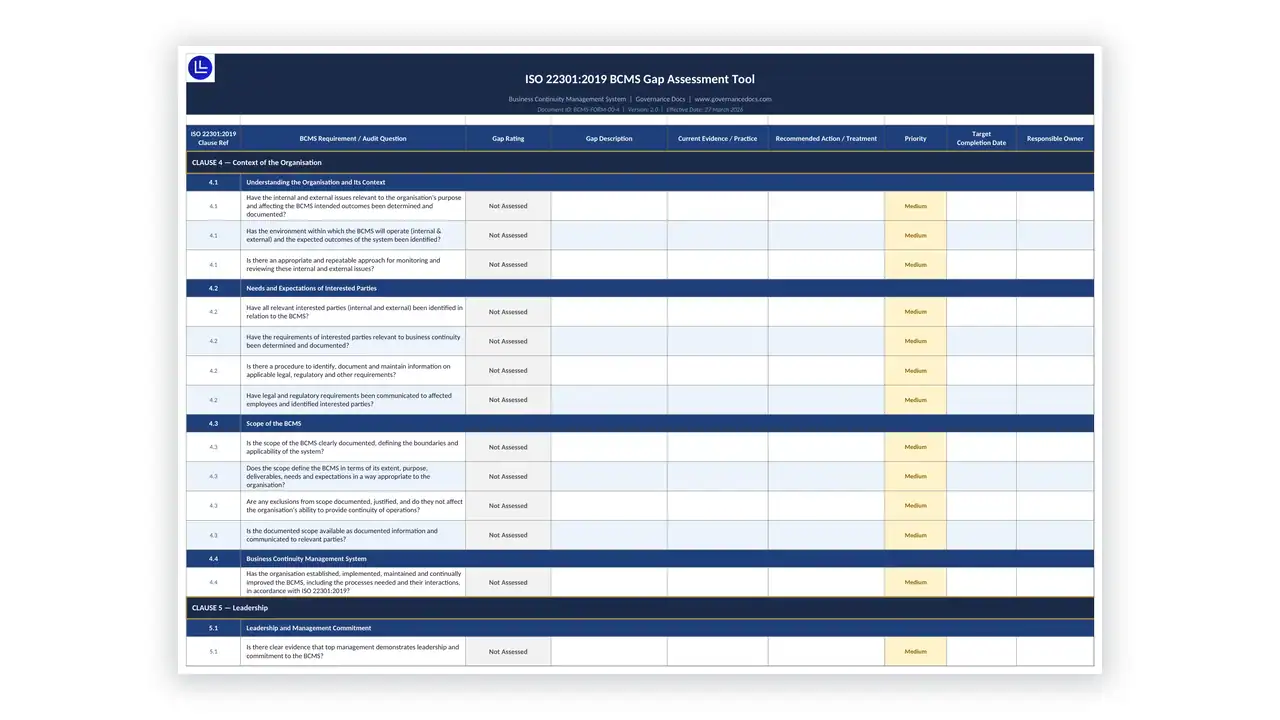
Clauses 4 to 10 follow the Annex SL structure, with clause 8 carrying the business impact analysis, risk assessment, continuity strategies, plans and exercise programme that the discipline turns on. Every document is tagged to the clause it satisfies, so closing an auditor’s checklist becomes a matter of tailoring rather than authoring.
You can confirm the current edition and official scope on the ISO website before scoping the system to your critical activities.
Why the ISO 22301 Toolkit beats starting from nothing
Building a BCMS from a blank page means weeks of planning workshops before a single plan exists, and the business impact analysis is the piece that most often stalls because the questionnaire design is harder than the interviews. Here it is already designed.
These are working documents, not read-only PDFs. Each one is fully editable, with no locked fields, no annual renewal and no per-seat licence, so you compress the groundwork and spend your time on the recovery decisions that matter.
ISO 22301 Toolkit frequently asked questions
Does it include disaster recovery plans for IT?
IT recovery sits within the continuity strategy and recovery plan templates, covering systems, data, dependencies and recovery time objectives. Platform-specific runbooks remain yours to write, since they depend on your architecture.
How does it relate to ISO 27001?
ISO 27001 Annex A requires continuity of information security, and this pack satisfies that expectation in far more depth. The two systems share the same Annex SL structure and combine cleanly.
Do we have to test the plans?
Yes, and the standard requires it. The exercise and testing plans plus post-exercise review records give you the evidence a certification body will ask for.
Related resilience and security toolkits
Continuity rarely stands alone. Pair this with the ISO 27001 Toolkit for information security, the DORA Toolkit if you are a financial entity in the EU, and the ISO 31000 Toolkit for enterprise risk management. For service continuity commitments, see the ISO 20000 Toolkit and the ITIL 4 Toolkit.


Reviews
There are no reviews yet.