
ISO 22000 asks you to sort every control measure into one of three categories – prerequisite programme, operational prerequisite programme or critical control point – and auditors test that sorting hard. Sound PRP and OPRP determination is what separates a working food safety management system from a HACCP plan with extra paperwork. 35 editable files, downloadable the moment you check out. On this page:
- What is in the PRP and OPRP determination pack
- ISO 22000:2018 is current, and a revision is close
- Who needs PRP and OPRP determination
- How the documents map to the framework
- Frequently asked questions
- Related toolkits
What is in the PRP and OPRP determination pack
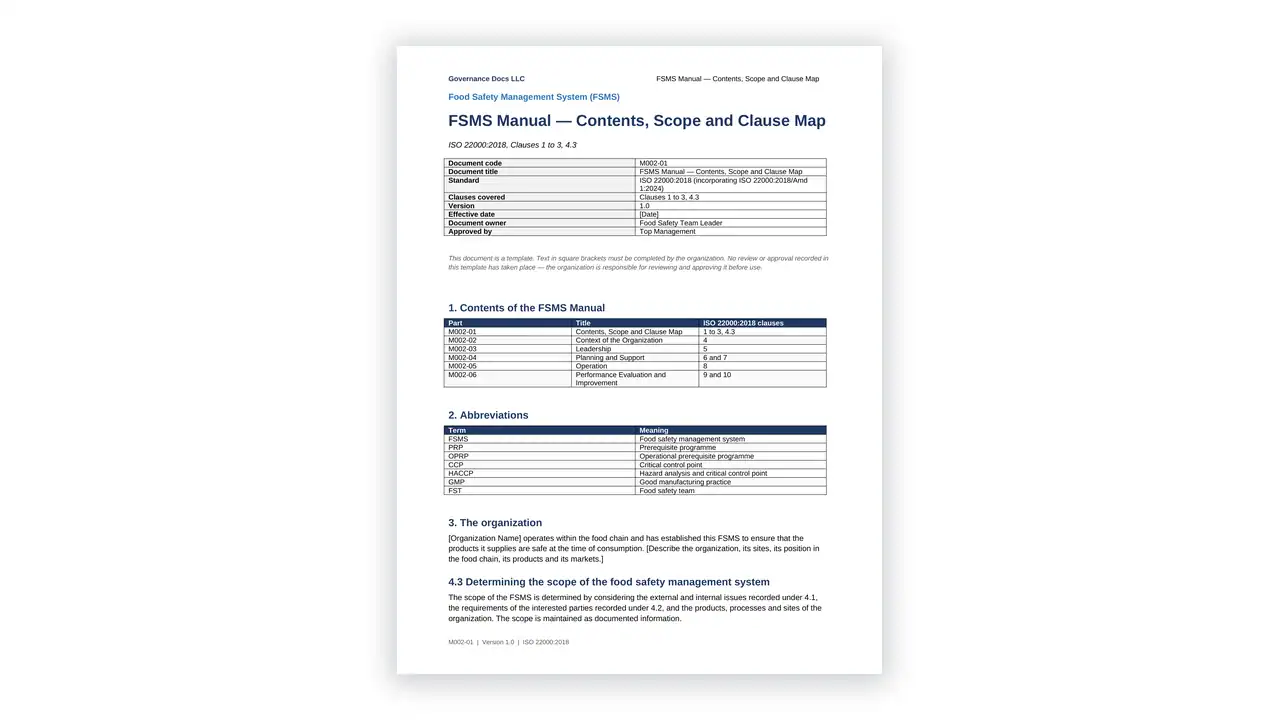
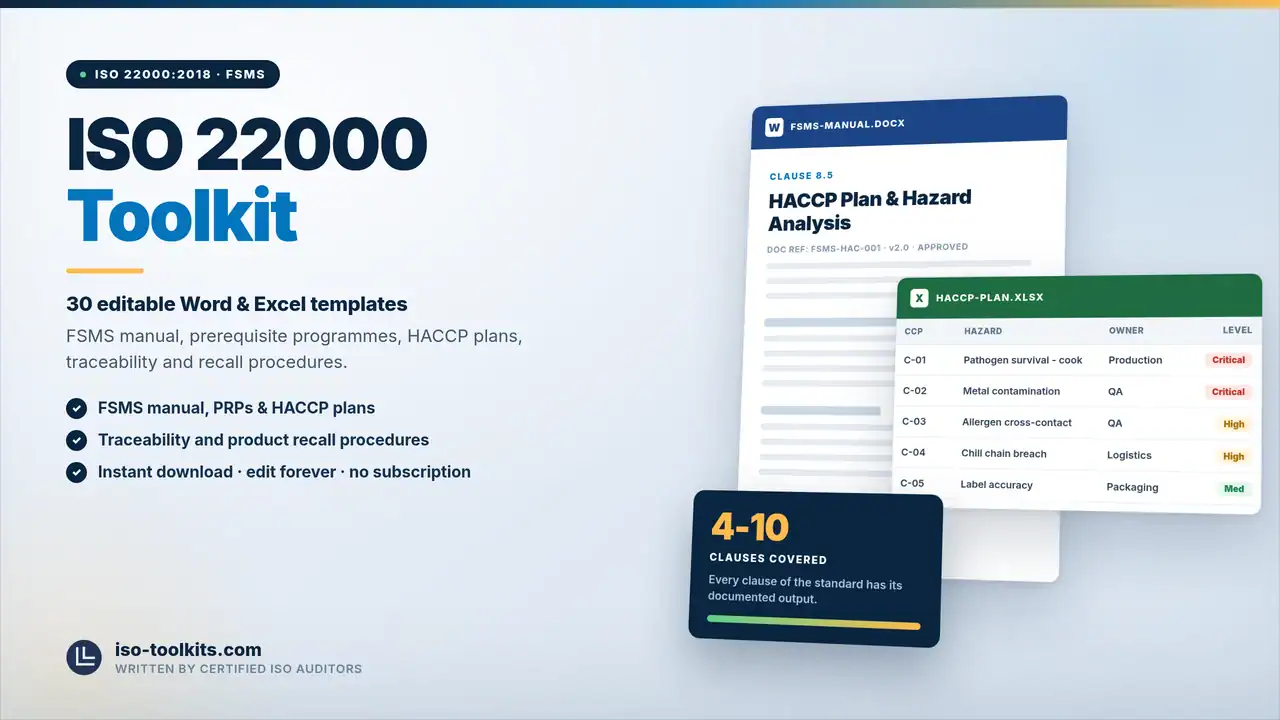
The FSMS manual is split into six clause-mapped parts so it can be maintained in pieces, with the supporting procedures and registers around it:
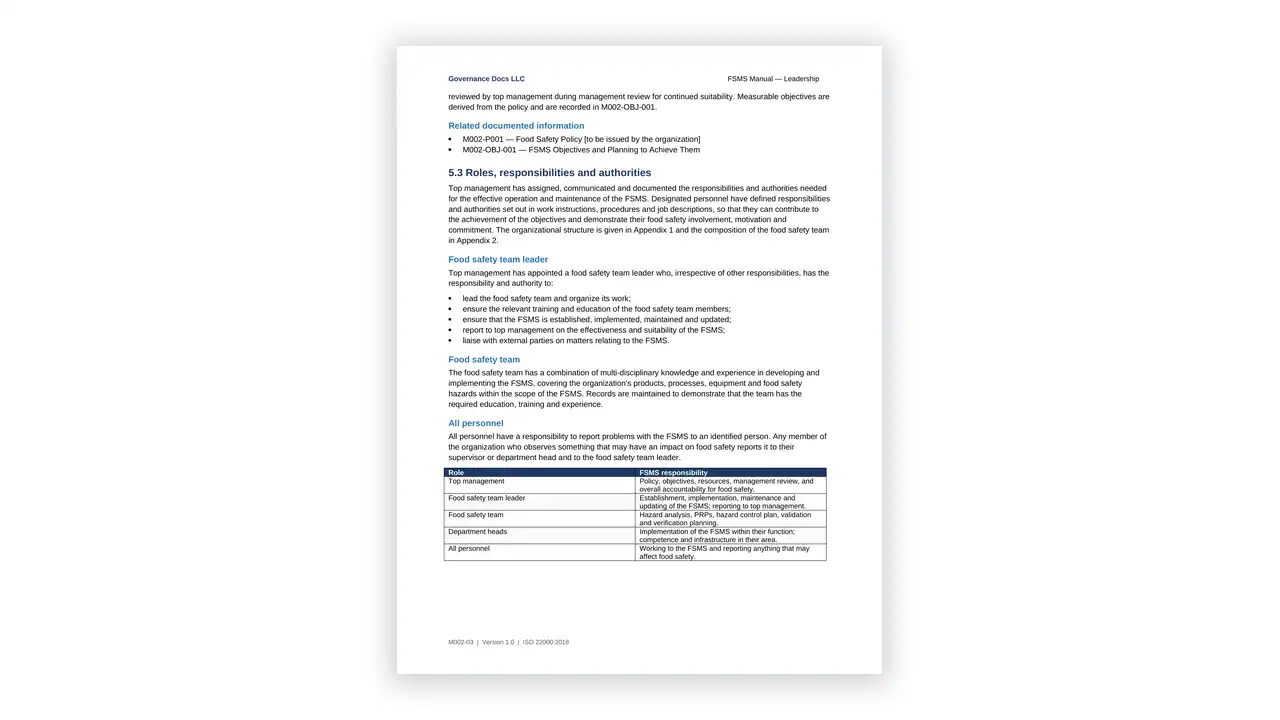
- FSMS Manual parts 1 to 6 – contents and clause map, context of the organization, leadership, planning and support, operation, and performance evaluation and improvement
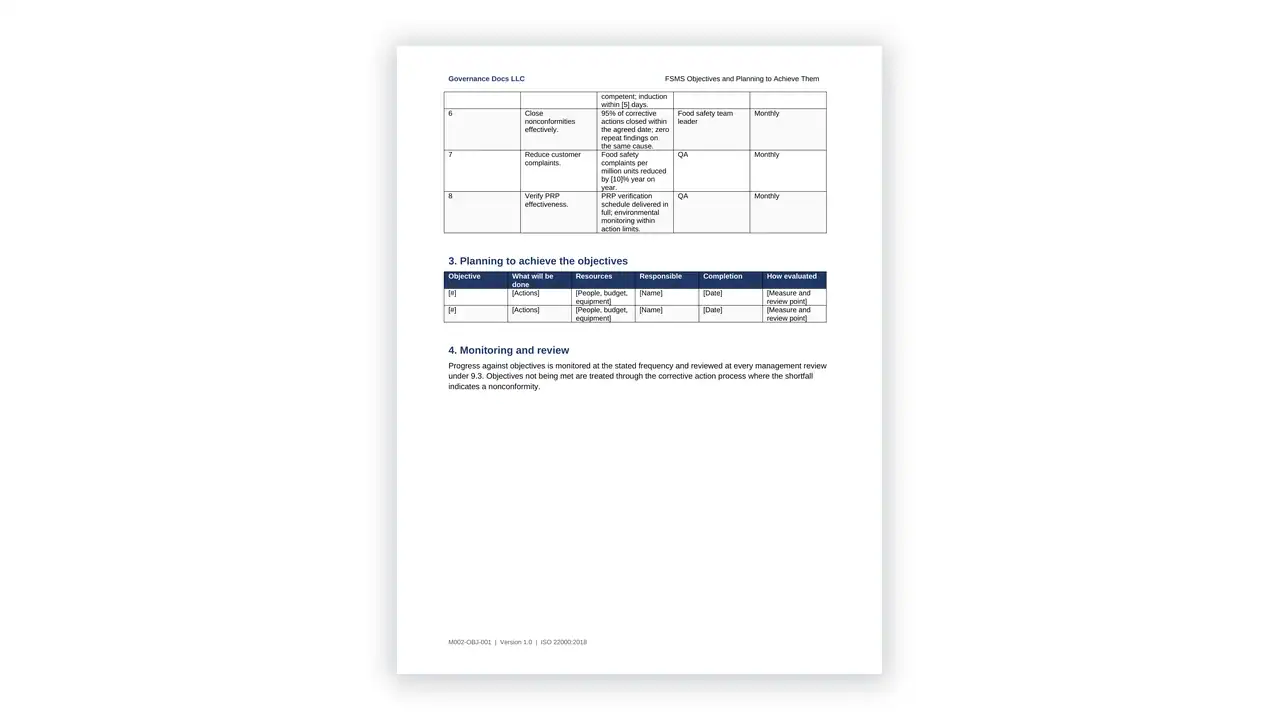
- Food safety policy and the FSMS objectives with planning to achieve them
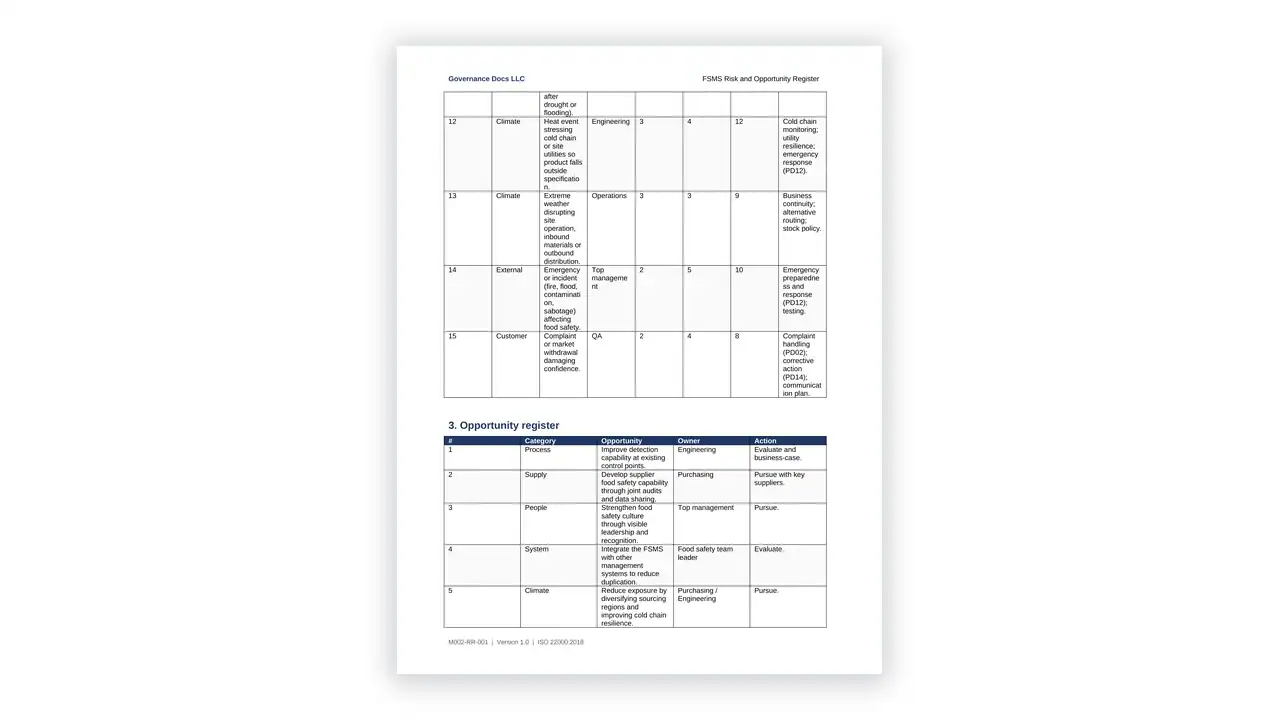
- Context and interested parties register, and the FSMS risk and opportunity register
- Food safety team formation, competence and responsibilities
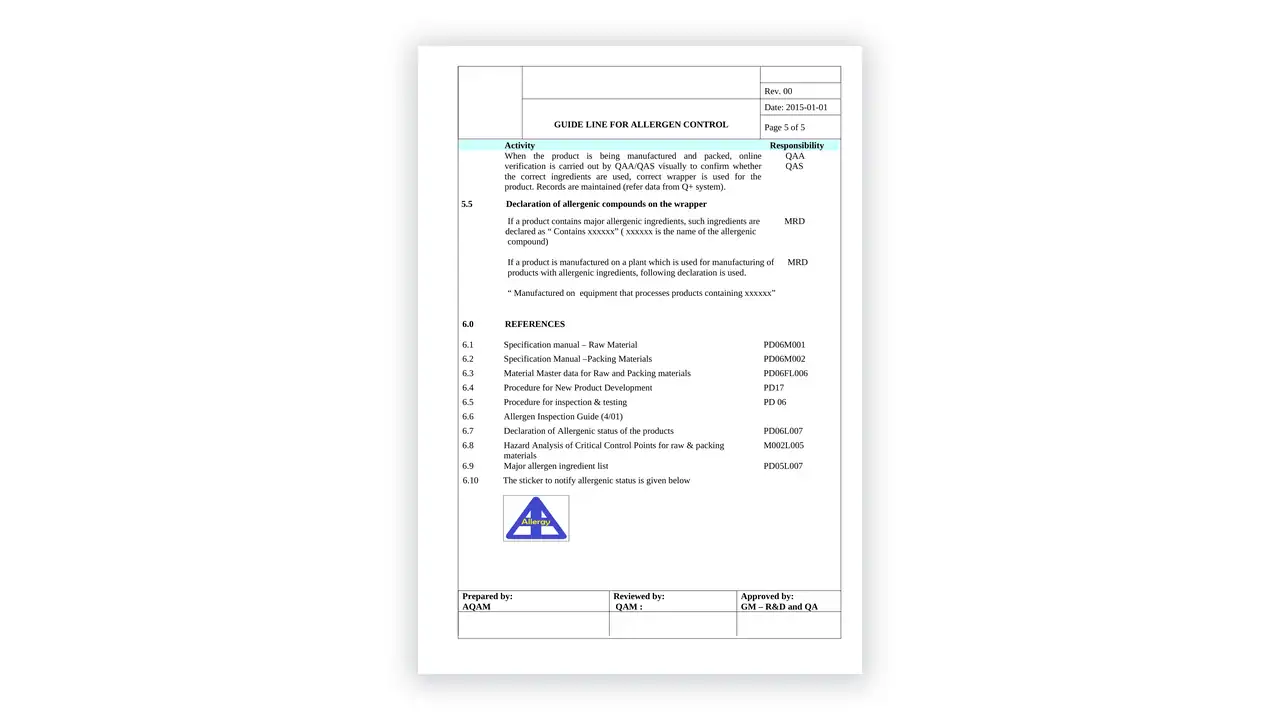
- Prerequisite programmes – the PRP set covering premises, equipment, cleaning, pest control, personal hygiene, waste and utilities
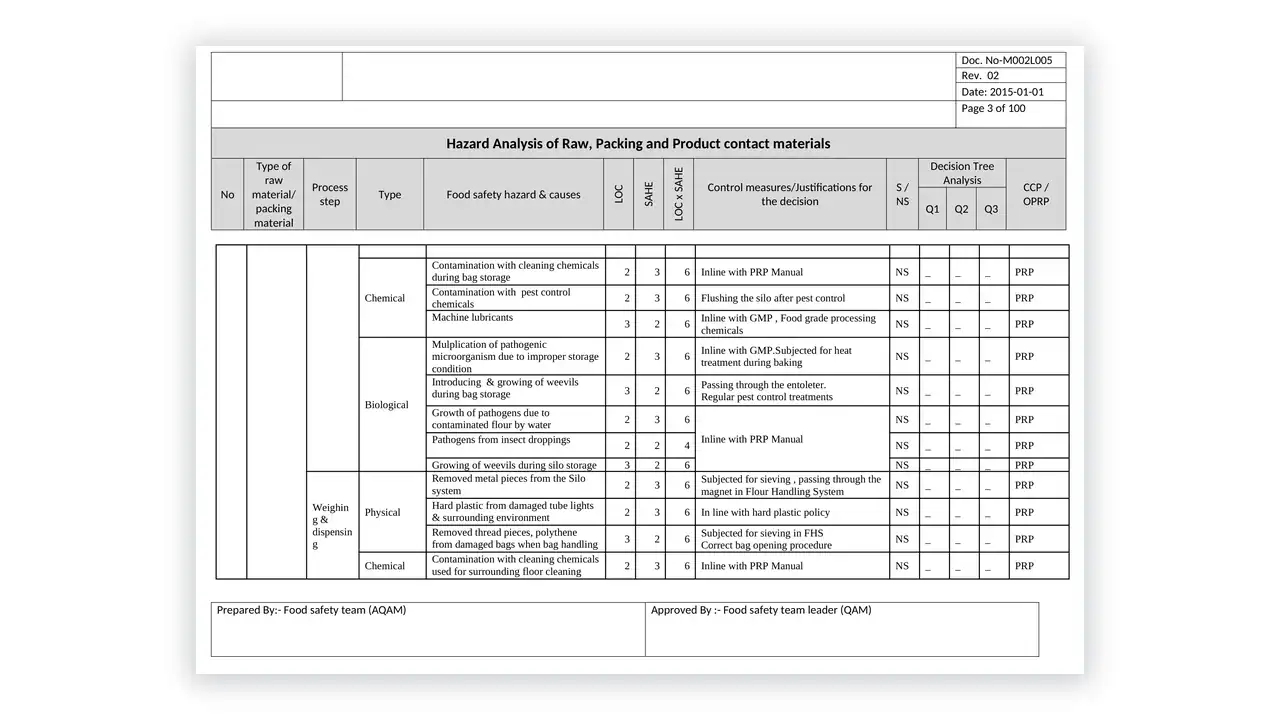
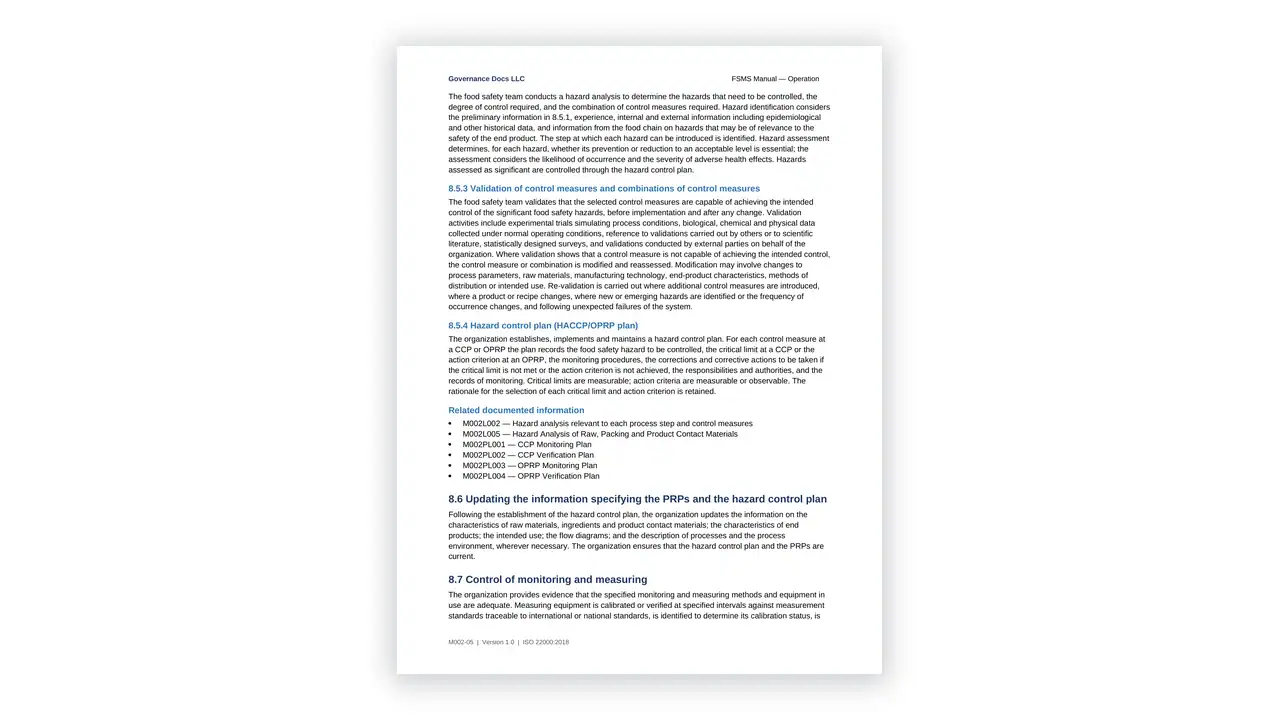
- Hazard analysis – hazard identification, hazard assessment, and the determination of control measures into PRP, OPRP and CCP categories
- The hazard control plan, covering critical limits, monitoring, corrections and corrective actions for each OPRP and CCP
- Traceability, recall and withdrawal procedures with the mock recall record
- Emergency preparedness and response
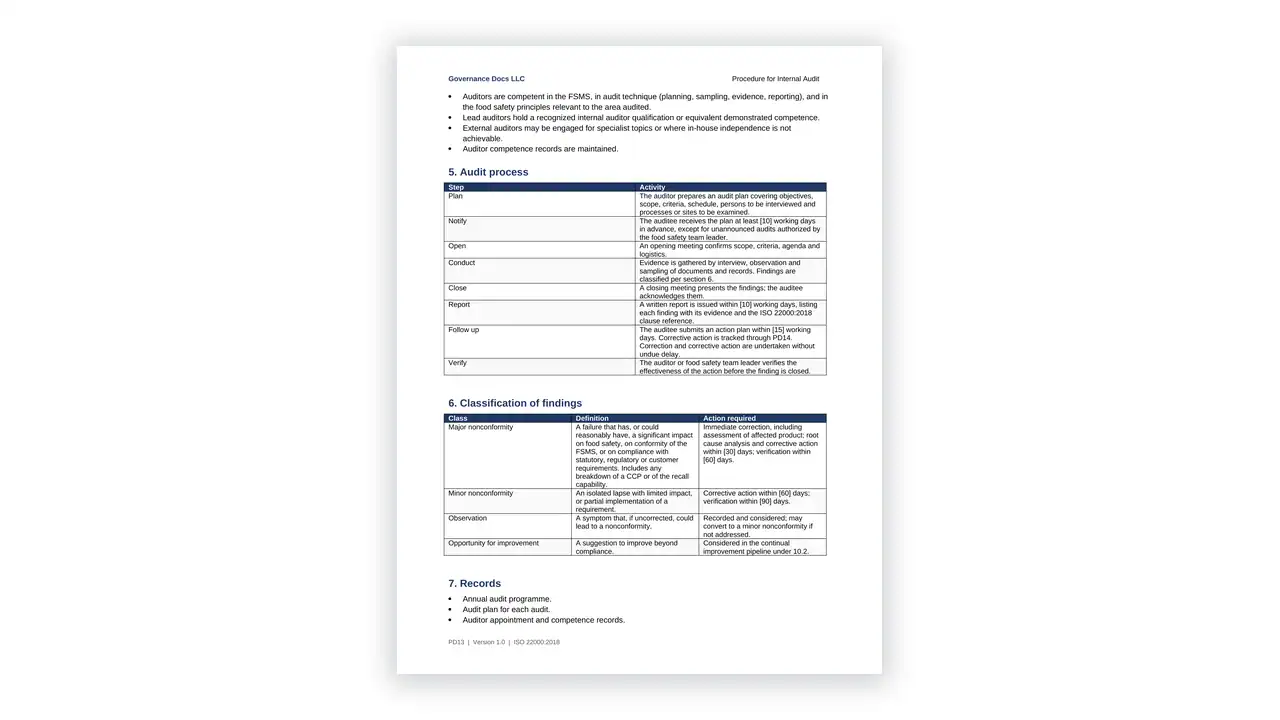
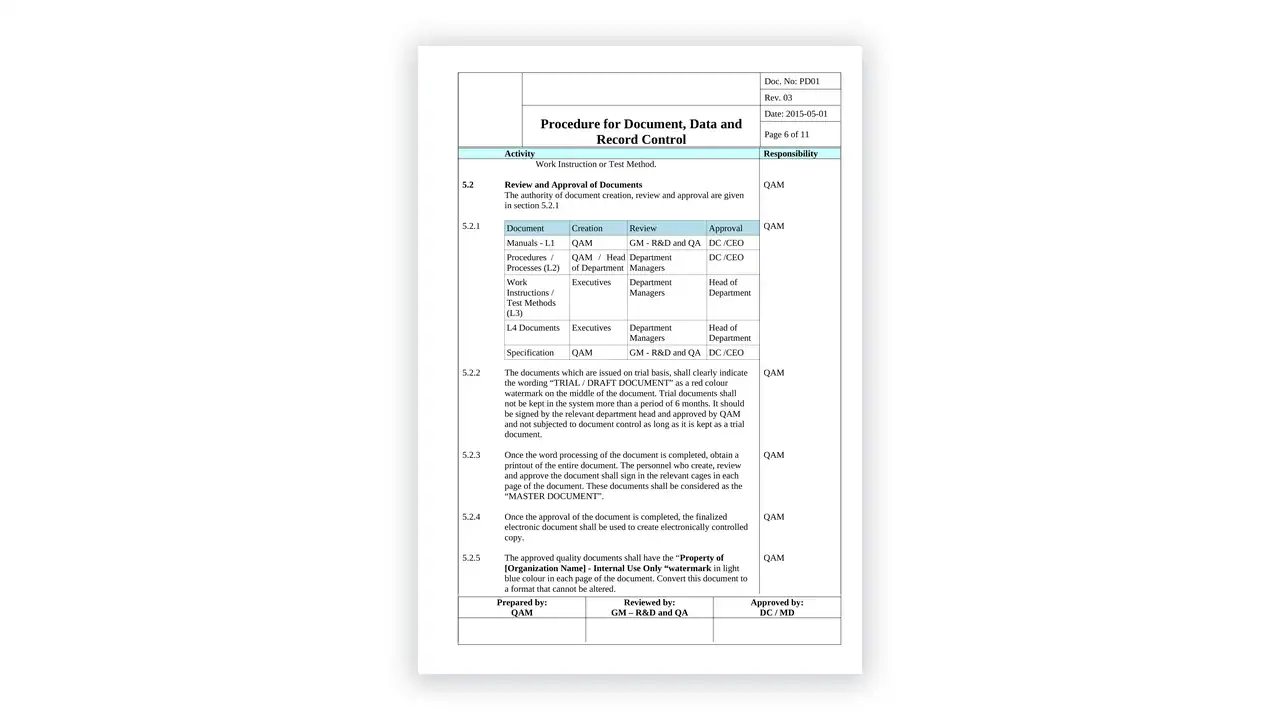
- Verification – verification planning, analysis of results, internal audit and management review
- Updating the FSMS, nonconformity, corrective action and continual improvement
ISO 22000:2018 is current, and a revision is close
ISO 22000:2018 remains the current edition, amended in 2024 to add consideration of climate change. The standard is at draft international standard stage, so a new edition is expected within months rather than years.
What ISO 22000:2018 introduced, and what the pack is structured around, is the two-level risk approach: organisational risk at the management system level, and food safety hazards at the operational level. Conflating the two is the most common structural failure in an FSMS.
The PRP and OPRP determination sits at that boundary. A control measure managed through a prerequisite programme is monitored differently, documented differently and corrected differently from one managed as an OPRP or a CCP. Getting the categories wrong produces either an unmanageable number of critical control points or a system that misses genuine hazards.
Who needs PRP and OPRP determination
Food manufacturers, processors and packers certifying to ISO 22000 or to a GFSI-recognised scheme built on it. Ingredient suppliers, storage and distribution businesses in the food chain. Catering and food service operations required by contract to hold certification. And organisations with a HACCP plan who now need the surrounding management system.
How the PRP and OPRP determination maps to the framework
ISO 22000 is deliberately built on the same management system structure as ISO 9001, which means a food business already certified to ISO 9001 can integrate rather than duplicate. The manual is split into six parts precisely so the management system clauses can be merged with an existing system while the food safety content stays separate and auditable.
Frequently asked questions
What is the difference between a PRP, an OPRP and a CCP?
A PRP maintains basic hygiene conditions throughout. An OPRP controls a significant hazard but without a measurable critical limit at a specific step. A CCP controls a significant hazard at a defined step with a critical limit that is monitored. The determination procedure covers how to decide.
Which edition is this written to?
ISO 22000:2018 with the 2024 climate amendment. A revision is at draft international standard stage but has not been published.
Is this the same as HACCP?
No. HACCP is the hazard analysis methodology; ISO 22000 wraps it in a certifiable management system with prerequisite programmes, leadership and improvement requirements. For HACCP alone see the HACCP Toolkit.
Does this cover FSSC 22000?
FSSC 22000 builds on ISO 22000 with additional requirements and a sector-specific PRP standard. This pack covers the ISO 22000 base.
How many documents are included?
35 editable files – 34 Word documents and an Excel workbook – plus a licence file.
Related toolkits
Food safety systems overlap with quality and safety standards. See the HACCP Toolkit for the hazard methodology, the ISO 9001 Toolkit for the quality system it integrates with, the ISO 45001 Toolkit for plant safety and the ISO 14001 Toolkit for environmental management. Sites certifying to the FSSC scheme need the FSSC 22000 v7 toolkit, which adds the prerequisite standard and the Additional Requirements on top of ISO 22000.
Implementing for clients? The Consultant Package licenses all 86 toolkits and assessment tools on this site for unlimited client engagements, under one firm-wide licence. One payment of $1,399, no subscription and no per-client fee.
Delivery, format and licence
Your PRP and OPRP determination downloads immediately after checkout as native Microsoft Word and Excel files. Nothing is watermarked or locked, so you can rebrand the documents, bring them under your own document control and revise them for as long as you need them.
One-time purchase. No subscription and no annual renewal. Because the source files behind the PRP and OPRP determination are yours, revising a procedure after an audit finding or a change of scope is an internal edit rather than another purchase.



Reviews
There are no reviews yet