
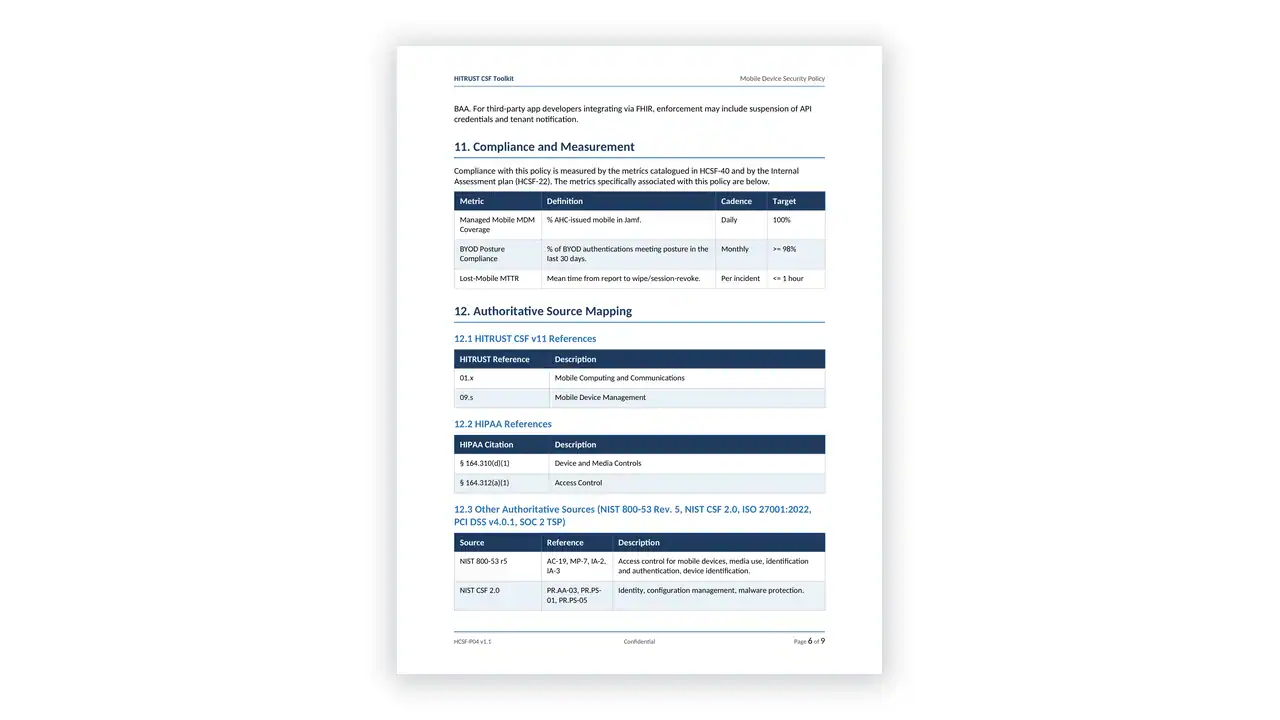
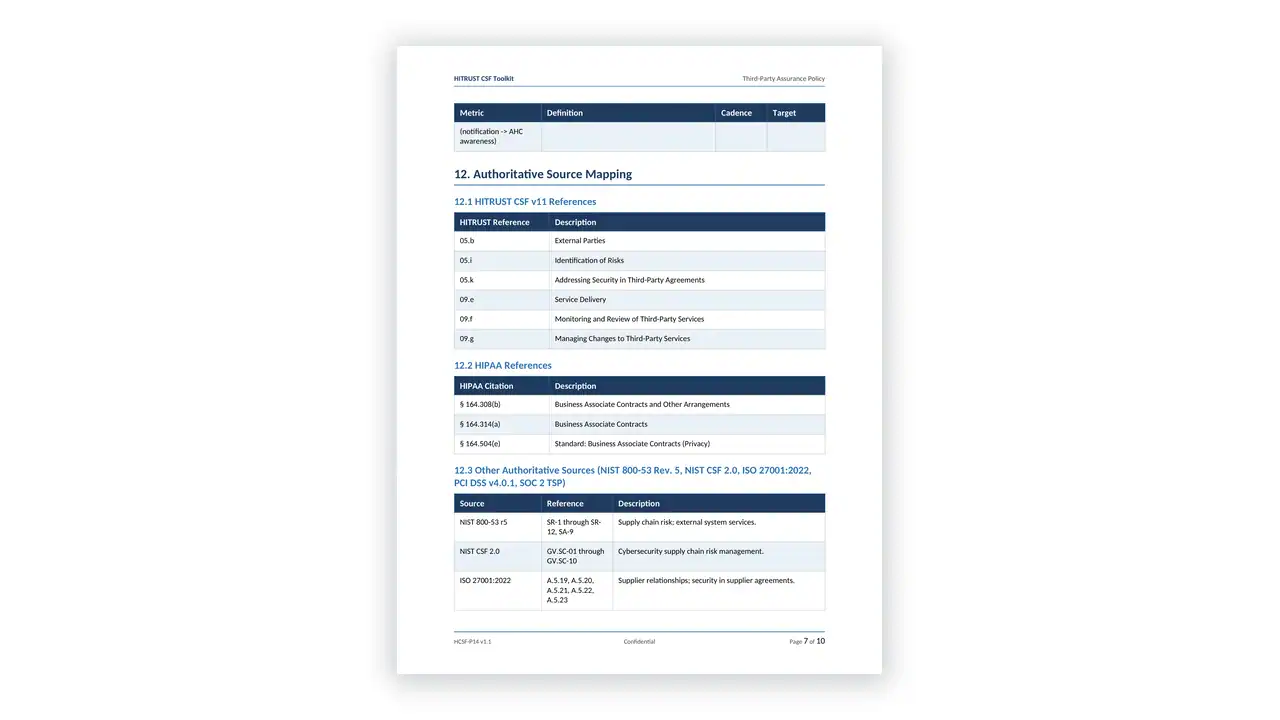
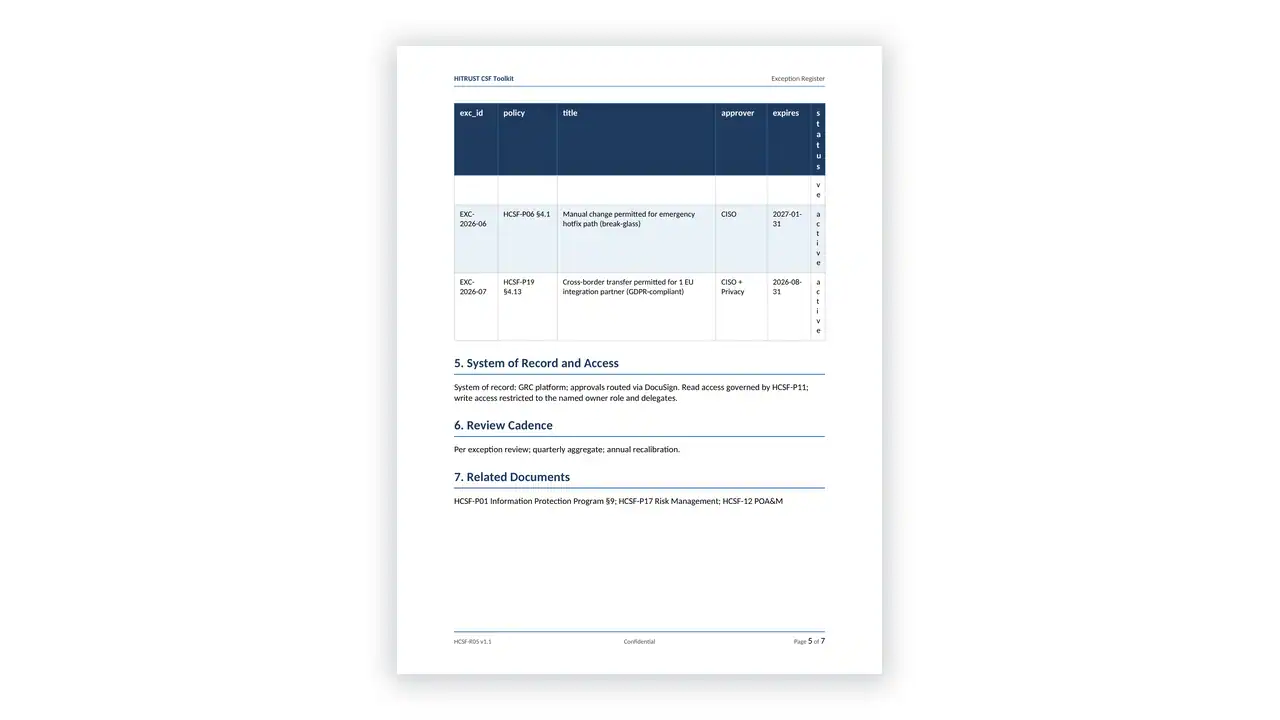
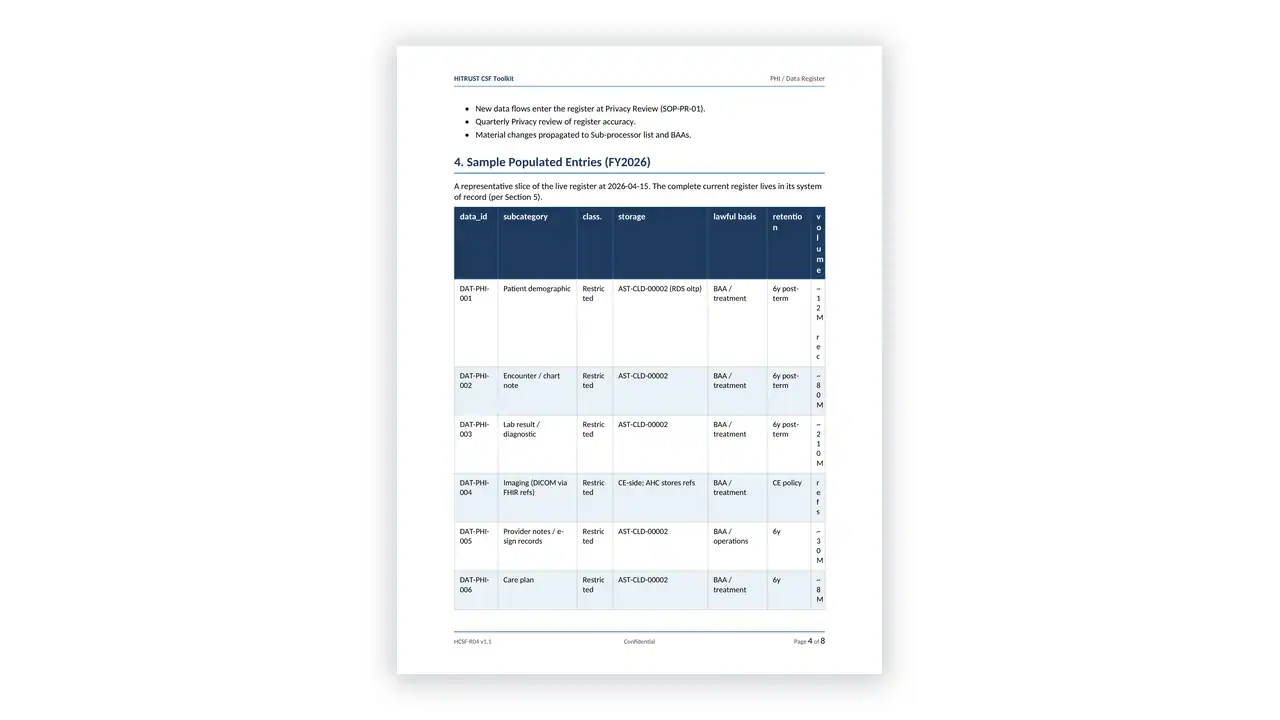
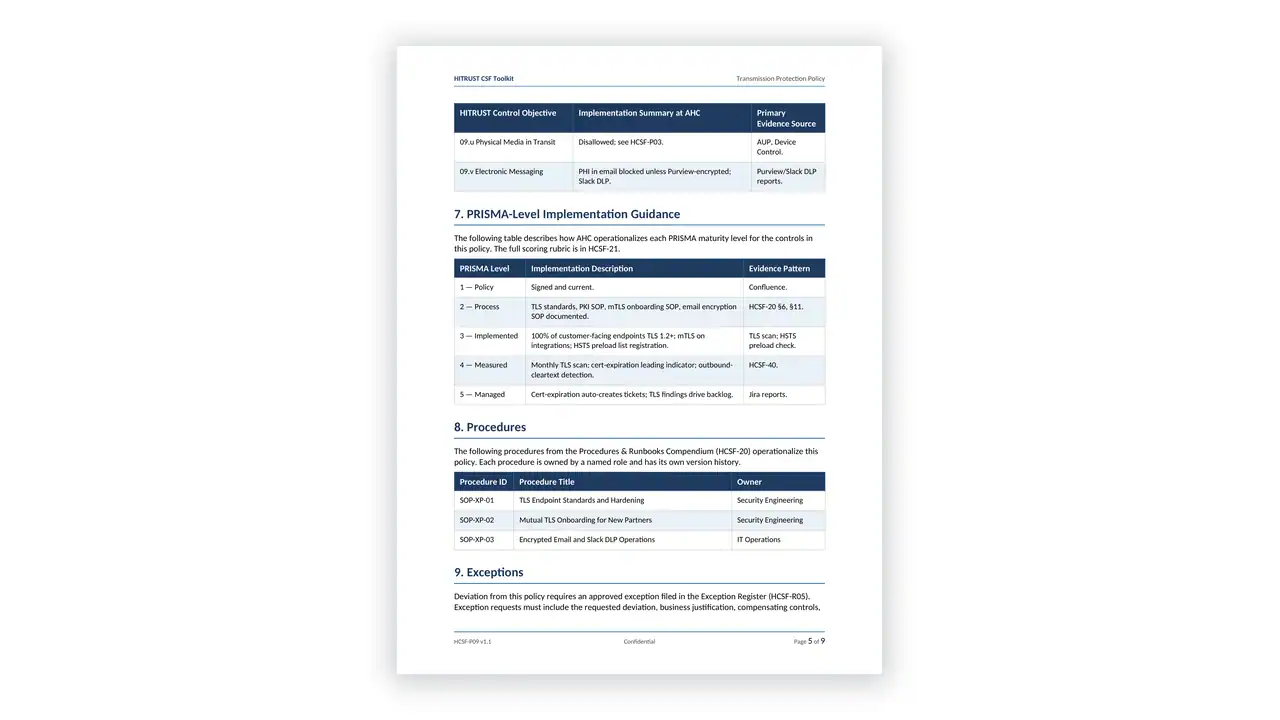
This HITRUST CSF v11.8 pack is the written policy layer a HITRUST assessment tests against, aligned to version 11.8.0 of the framework released in May 2026. 45 editable Word documents, downloadable the moment you check out. On this page:
- What is in the toolkit
- Why the HITRUST CSF v11.8 release matters for your assessment
- Who needs HITRUST CSF v11.8
- How the documents map to the framework
- Frequently asked questions
- Related toolkits
What is in the HITRUST CSF v11.8 pack
HITRUST scores you on policy, process and implementation separately, and the policy dimension is the one organisations most often lose points on because the document does not say what the control requirement asks. The pack covers:
- Information protection programme – governance, scope, roles and the programme charter that anchors the assessment
- Access control, identity and authentication, including remote access and privileged account handling
- Human resources security – screening, onboarding, awareness training and termination
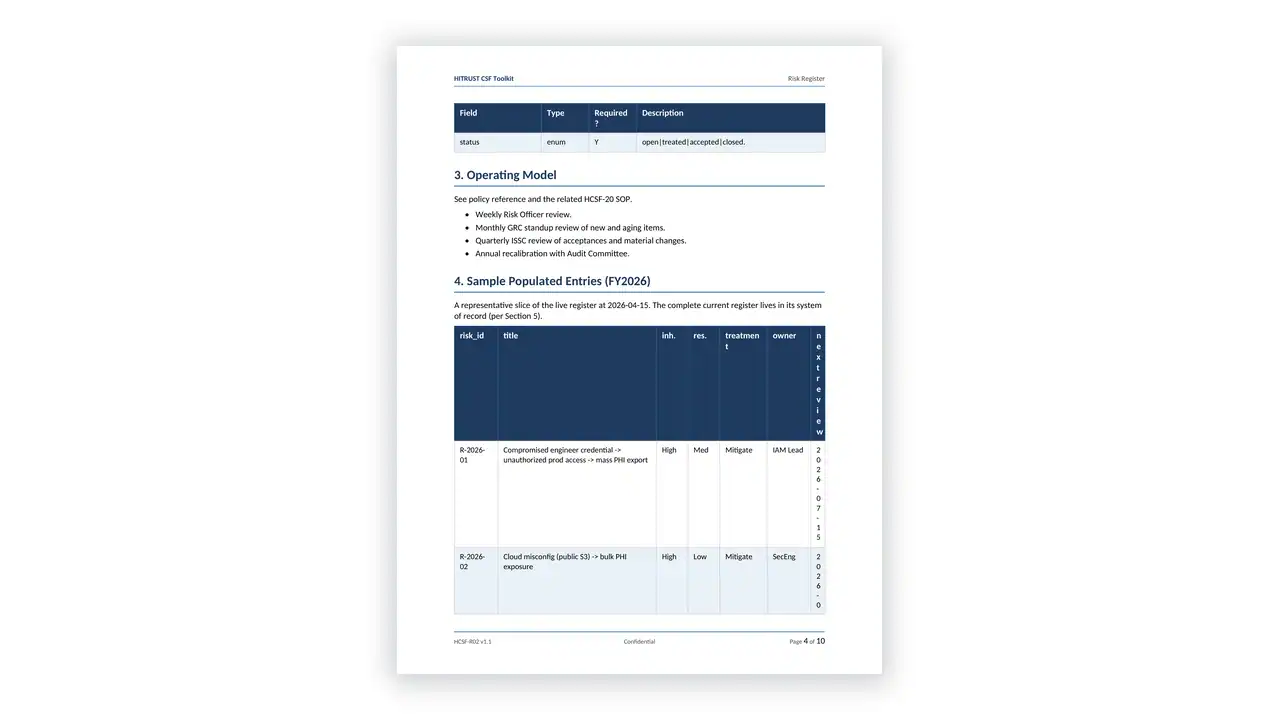
- Risk management – risk assessment methodology, treatment and the risk register HITRUST expects to see maintained
- Third party assurance – vendor risk, contractual security requirements and inheritance handling
- Configuration, vulnerability and patch management, plus change control
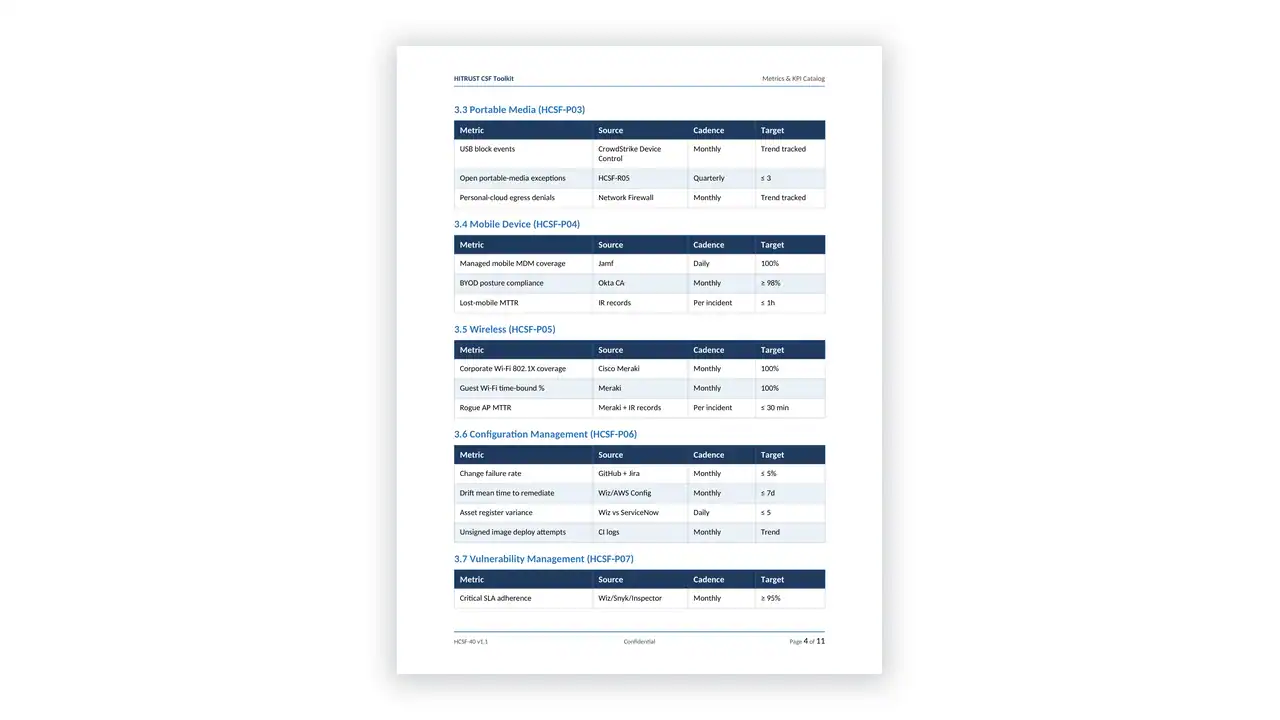
- Audit logging, monitoring and security operations
- Incident management, breach notification and business continuity
- Physical and environmental security, media handling and disposal
- Encryption and key management, network protection and endpoint controls
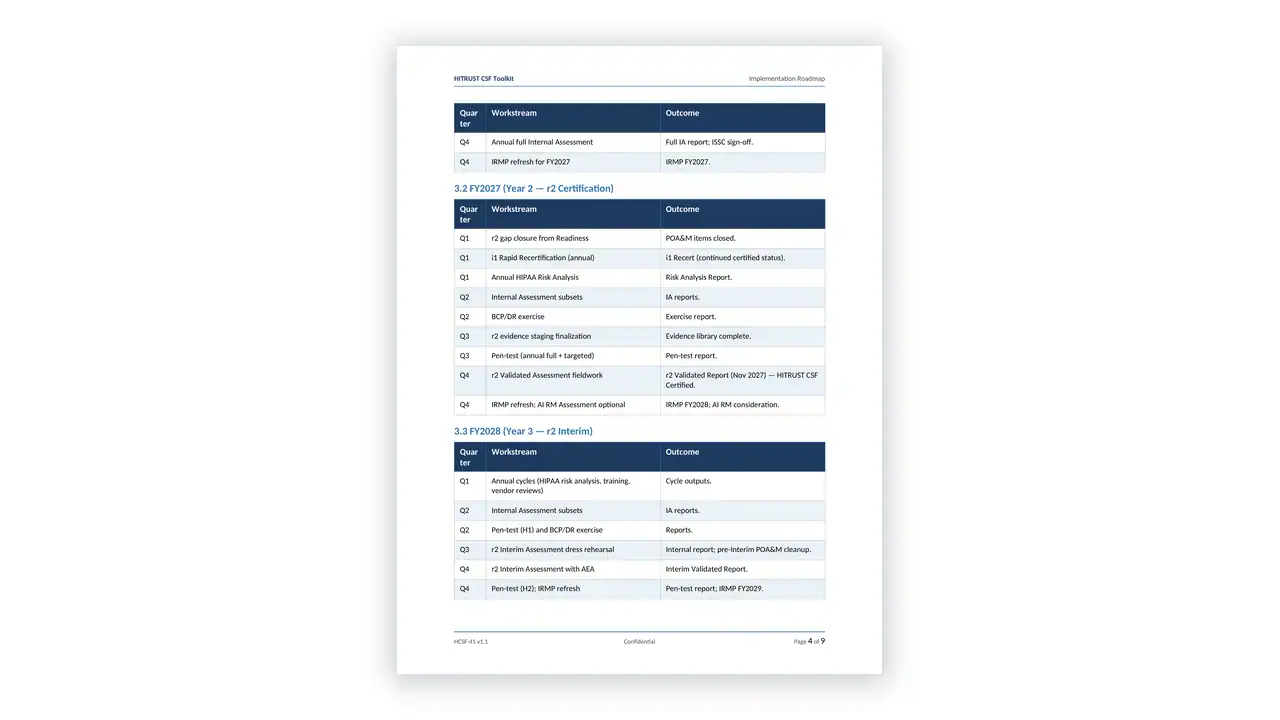
- Assessment support – scoping and boundary documentation, a corrective action plan template and the evidence index an assessor works from
Why the HITRUST CSF v11.8 release matters for your assessment
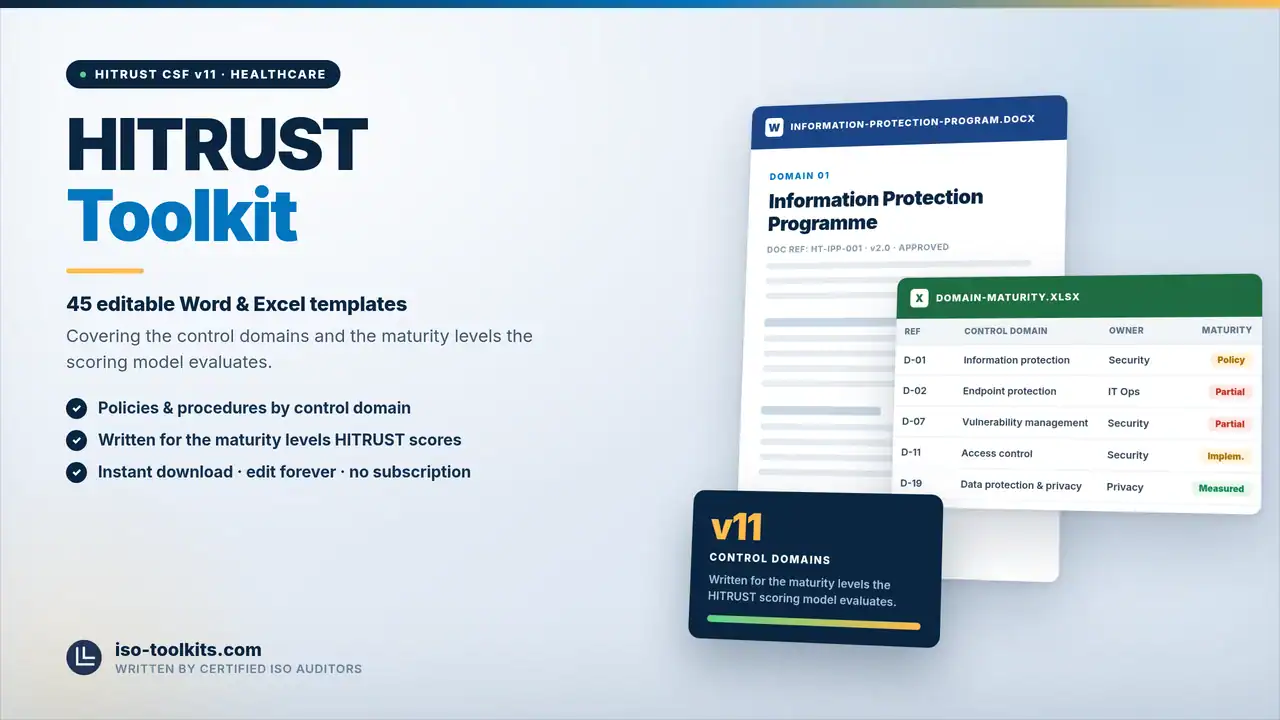
HITRUST versions the CSF frequently: v11.6.0 in August 2025, v11.7.0 in December 2025 and v11.8.0 in May 2026. Each release adjusts control requirements and the authoritative sources they map to, and assessments are created against a specific version.
That versioning has a practical consequence. HITRUST sets creation deadlines by advisory – the v11.7 creation deadline for e1 and i1 assessments was set by HITRUST advisory 2026-003 – so an organisation that drafts policy for one version and creates the assessment months later can find the requirement text has moved underneath it. Writing to HITRUST CSF v11.8 keeps the policy layer aligned with the assessments being created now.
The three assessment types differ in depth rather than in kind: e1 is the one-year essentials assessment, i1 the one-year implemented assessment, and r2 the two-year risk-based assessment with the deepest scrutiny. The same policy set underpins all three, which is why this pack is written once and scoped rather than sold three times. Programme detail is published at hitrustalliance.net.
Who needs HITRUST CSF v11.8
Healthcare organisations and their vendors, where HITRUST has become the de facto answer to a payer or health system security questionnaire. SaaS providers handling protected health information whose customers will accept a HITRUST certificate in place of bespoke due diligence. And organisations moving up from e1 to i1 or r2 who need the policy layer to hold at greater depth.
How the HITRUST CSF v11.8 maps to the framework
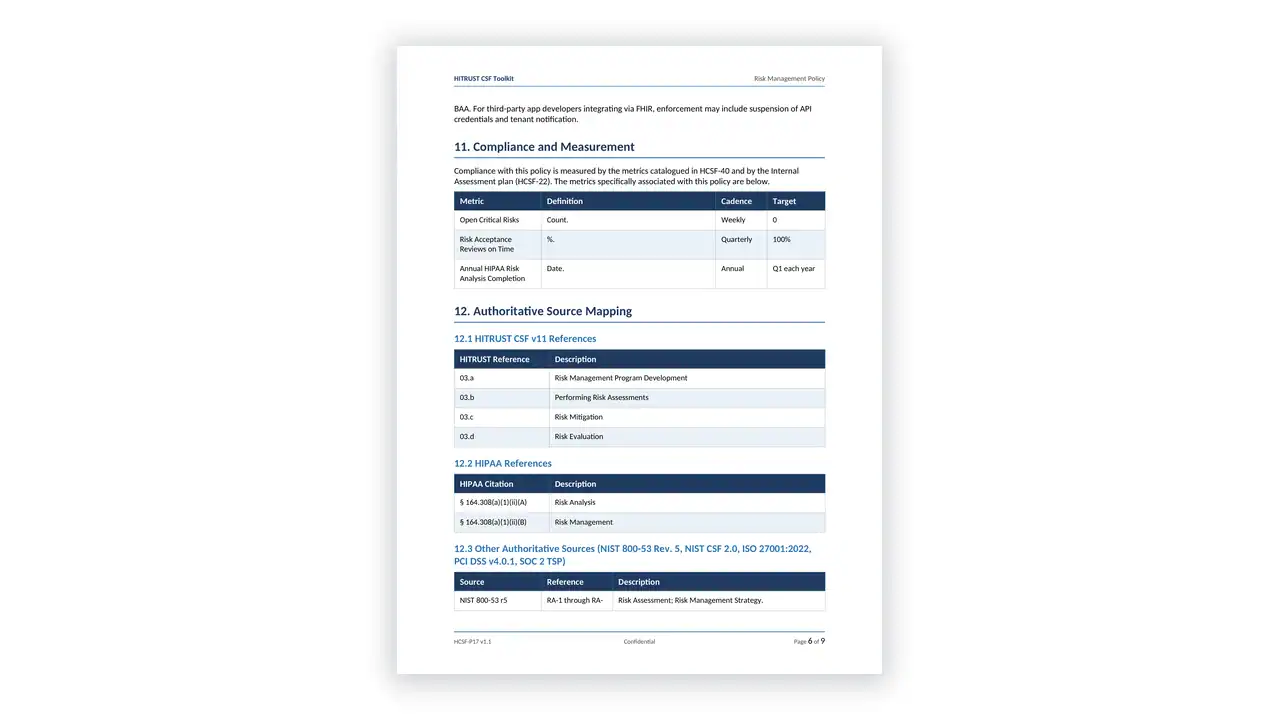
Each policy is written to satisfy the control requirement statement rather than to describe good practice generally, because HITRUST scores the policy dimension against the requirement text. The scoping documentation matters as much as the controls: HITRUST scoring is driven by the factors you declare, and an over-broad scope pulls in requirements you then have to evidence.
Frequently asked questions
Which CSF version is this written to?
v11.8.0, released May 2026. HITRUST versions the framework frequently, so the version your assessment is created against is worth confirming in MyCSF before you finalise policy.
Does it cover e1, i1 and r2?
Yes. The same policy set underpins all three assessment types; what changes between them is the depth of evidence and the number of requirements in scope.
Does this get us certified?
No. HITRUST certification requires an assessment through MyCSF, and for i1 and r2 an external assessor. This gives you the policy layer those assessments test against.
We already hold ISO 27001 or SOC 2. Does that help?
Yes, substantially – HITRUST harmonises many frameworks, so control evidence is reusable. The gap is usually the policy wording, which HITRUST scores against its own requirement statements.
How many documents are included?
45 editable Word documents, plus a usage guide, an FAQ and a licence file.
Related toolkits
HITRUST rarely stands alone in a healthcare security programme. See the HIPAA Toolkit for the underlying US regulatory obligations, the SOC2 Toolkit for commercial assurance, the ISO 27001 Toolkit for international buyers and the NIST SP 800-53 Toolkit for the federal control catalogue. The NIST CSF toolkit is the free framework HITRUST maps to, and is worth holding alongside.
Implementing for clients? The Consultant Package licenses all 86 toolkits and assessment tools on this site for unlimited client engagements, under one firm-wide licence. One payment of $1,399, no subscription and no per-client fee.
Delivery, format and licence
Your HITRUST CSF v11.8 downloads immediately after checkout as native Microsoft Word and Excel files. Nothing is watermarked or locked, so you can rebrand the documents, bring them under your own document control and revise them for as long as you need them.
One-time purchase. No subscription and no annual renewal. Because the source files are yours, revising a procedure after an audit finding or a change of scope is an internal edit rather than another purchase.


Reviews
There are no reviews yet.