
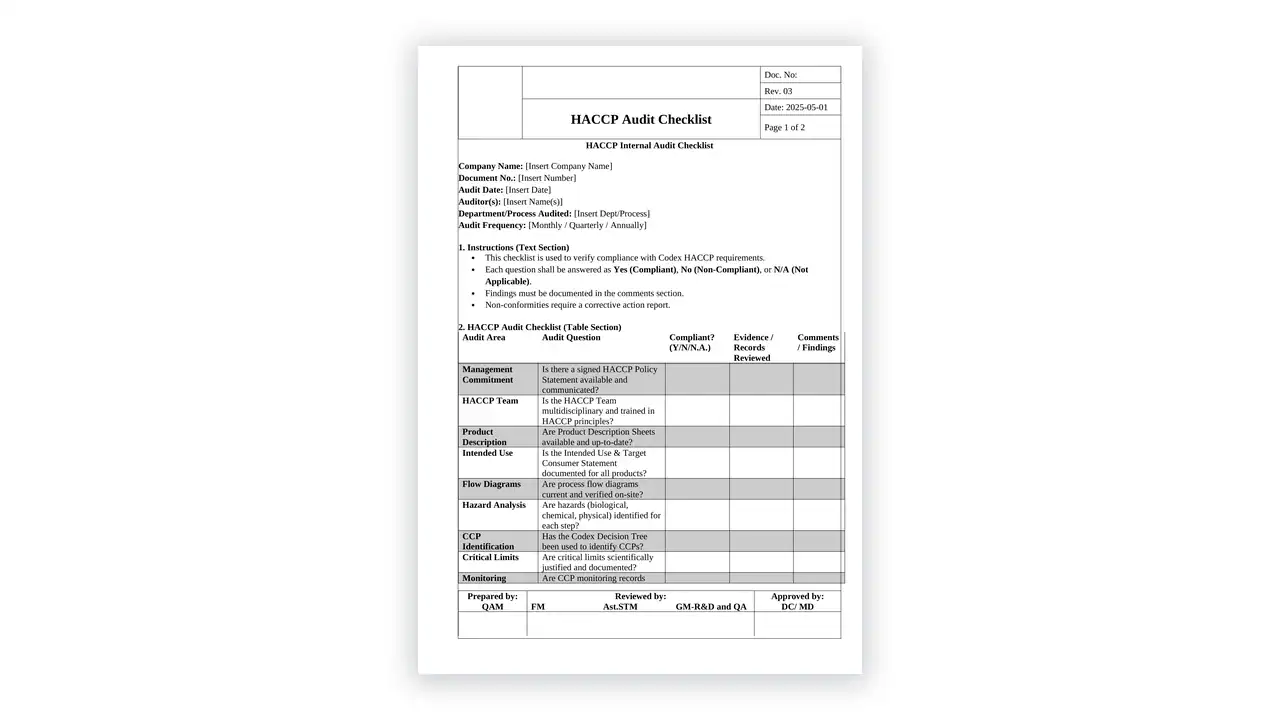
A HACCP plan is judged on whether the records exist and were completed at the time, not on how well the plan reads. CCP monitoring records are the documents an inspector asks for first, and the ones most often found signed retrospectively. 31 editable files, downloadable the moment you check out. On this page:
- What is in the CCP monitoring records pack
- Cite Codex Rev 2022, not the 2003 or 2020 revision
- Who needs CCP monitoring records
- How the documents map to the framework
- Frequently asked questions
- Related toolkits
What is in the CCP monitoring records pack
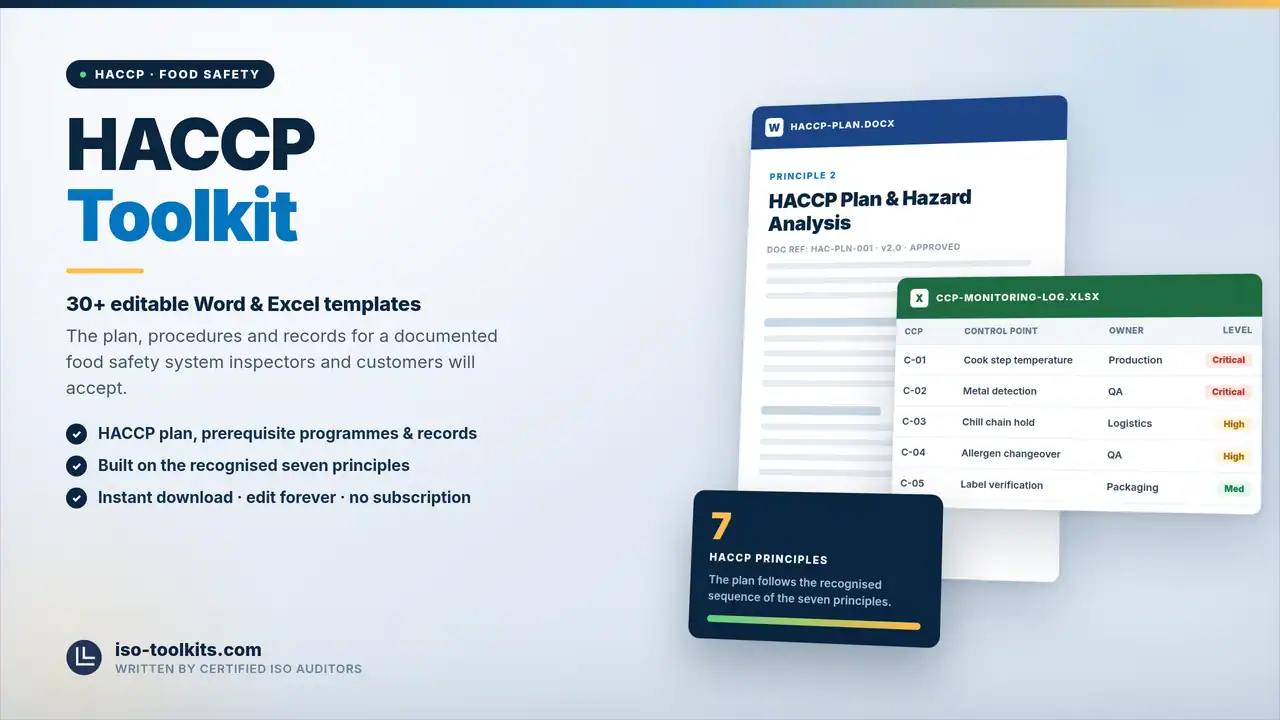
The pack follows the seven Codex principles and the twelve steps around them:
- HACCP Manual, split into management responsibility and planning of realization
- HACCP team formation, scope and product description, intended use and the process flow diagram with on-site verification record
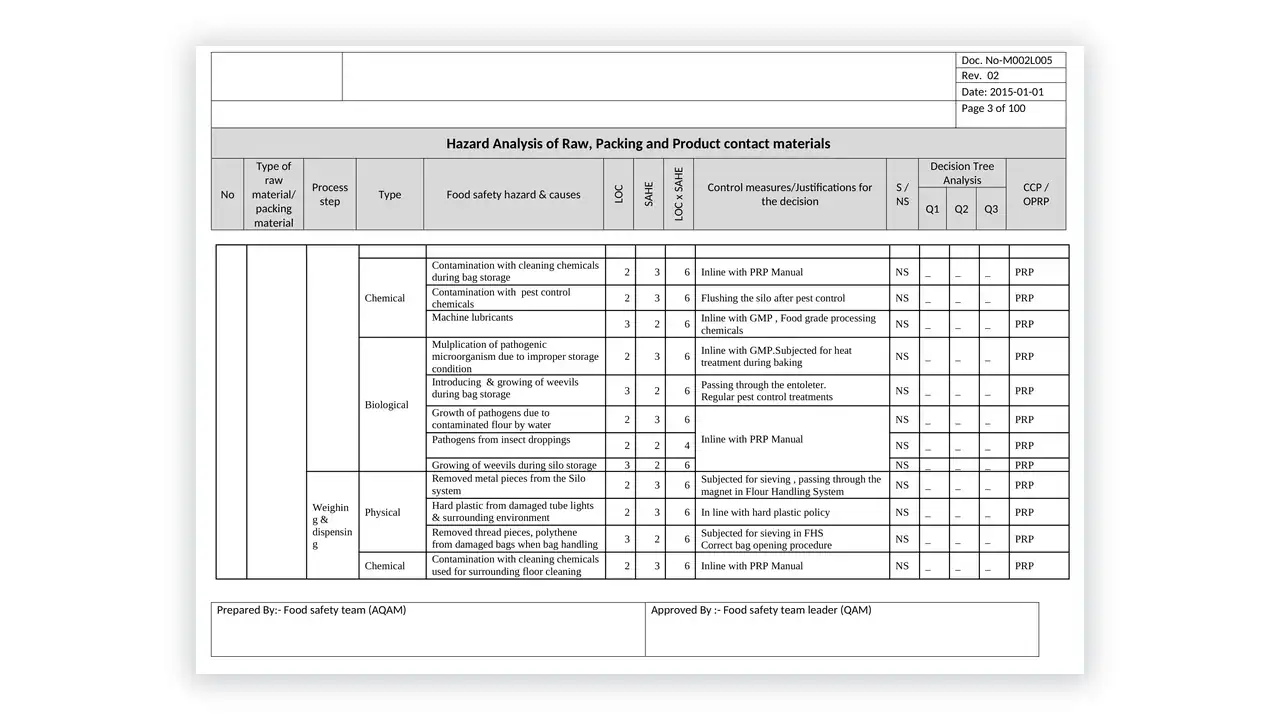
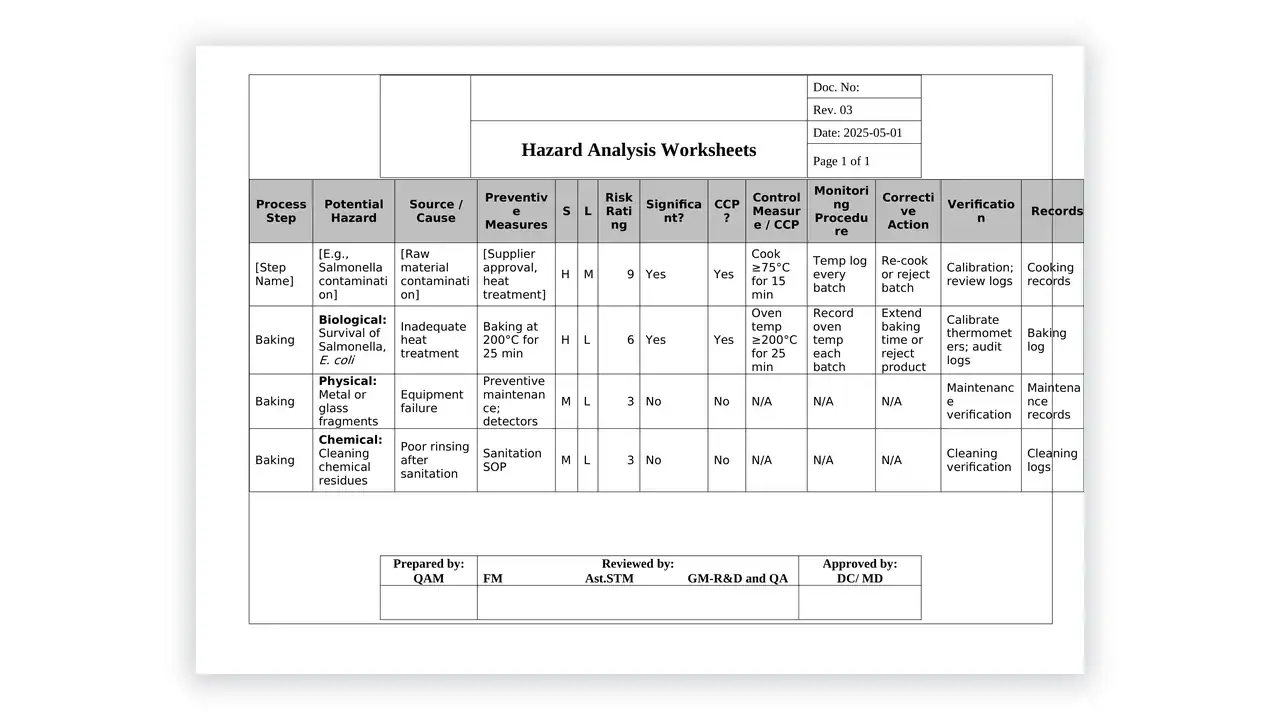
- Hazard analysis – the worksheet covering biological, chemical, physical and allergen hazards at each step, with likelihood and severity assessment
- CCP determination using the decision tree, with the reasoning recorded rather than asserted
- Critical limits register – the validated limits for each CCP and the basis for them
- CCP monitoring plan and CCP monitoring records – what is measured, by whom, how often and on what form
- Corrective action procedure and corrective action records for when a limit is breached
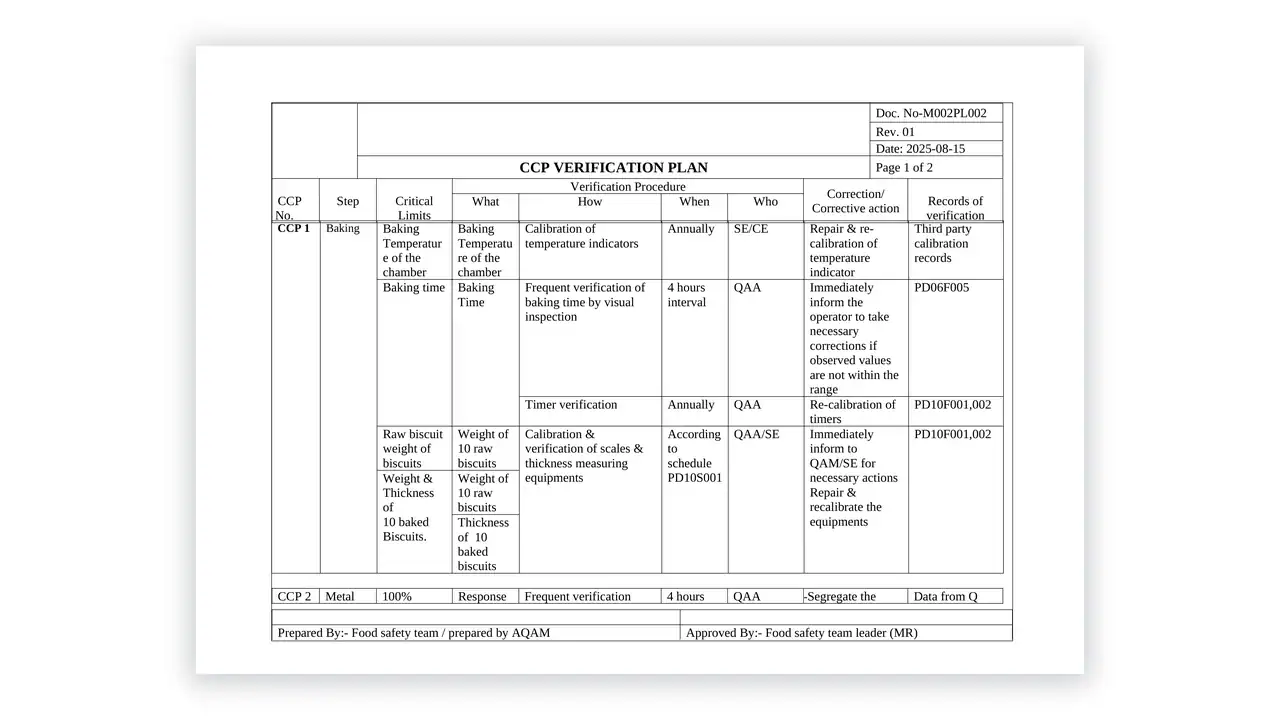
- CCP verification plan, calibration and verification records, and the HACCP audit checklist
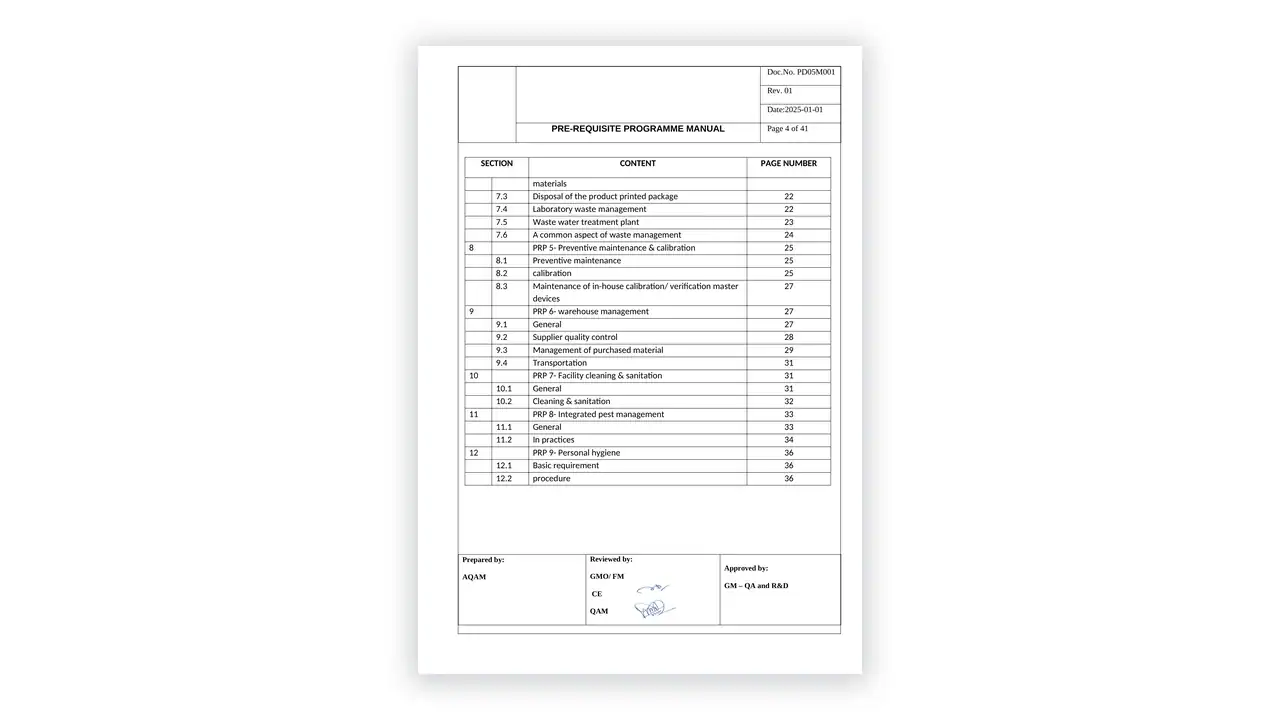
- Prerequisite programmes – cleaning and sanitation, pest control, personal hygiene, premises and equipment maintenance, waste and water
- Allergen control guideline, which Codex Rev 2022 treats with more prominence than earlier revisions
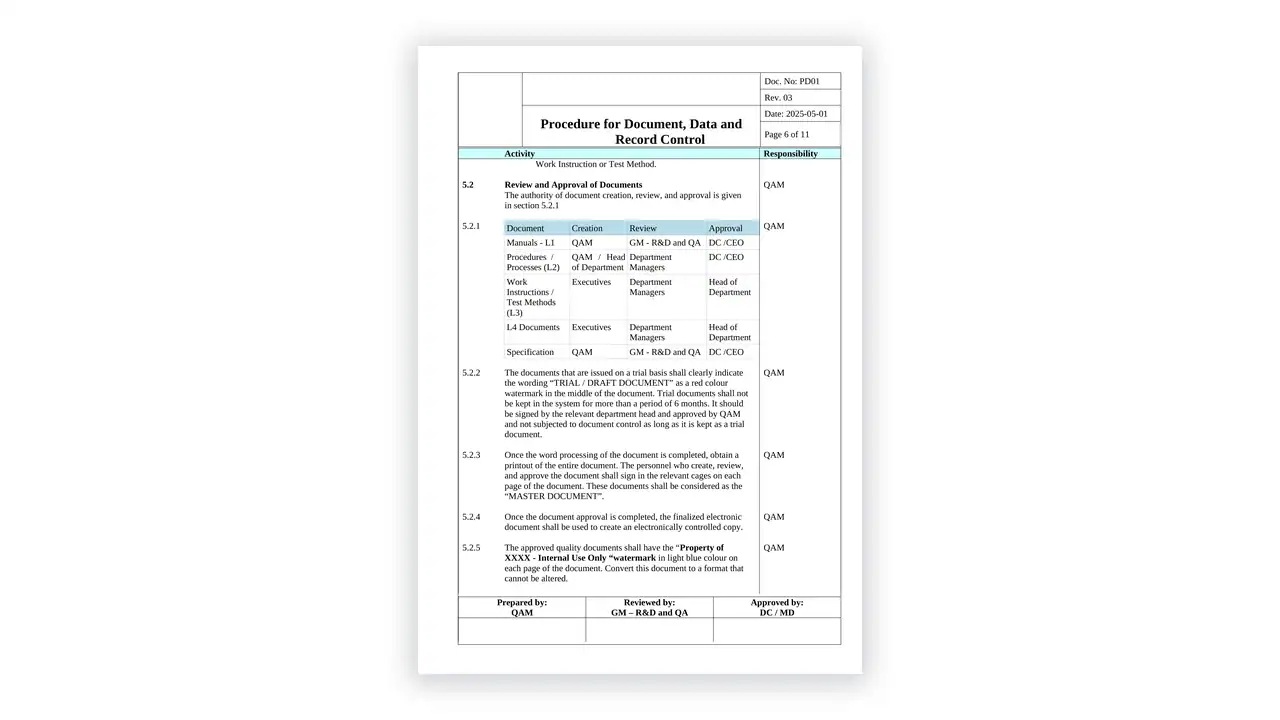
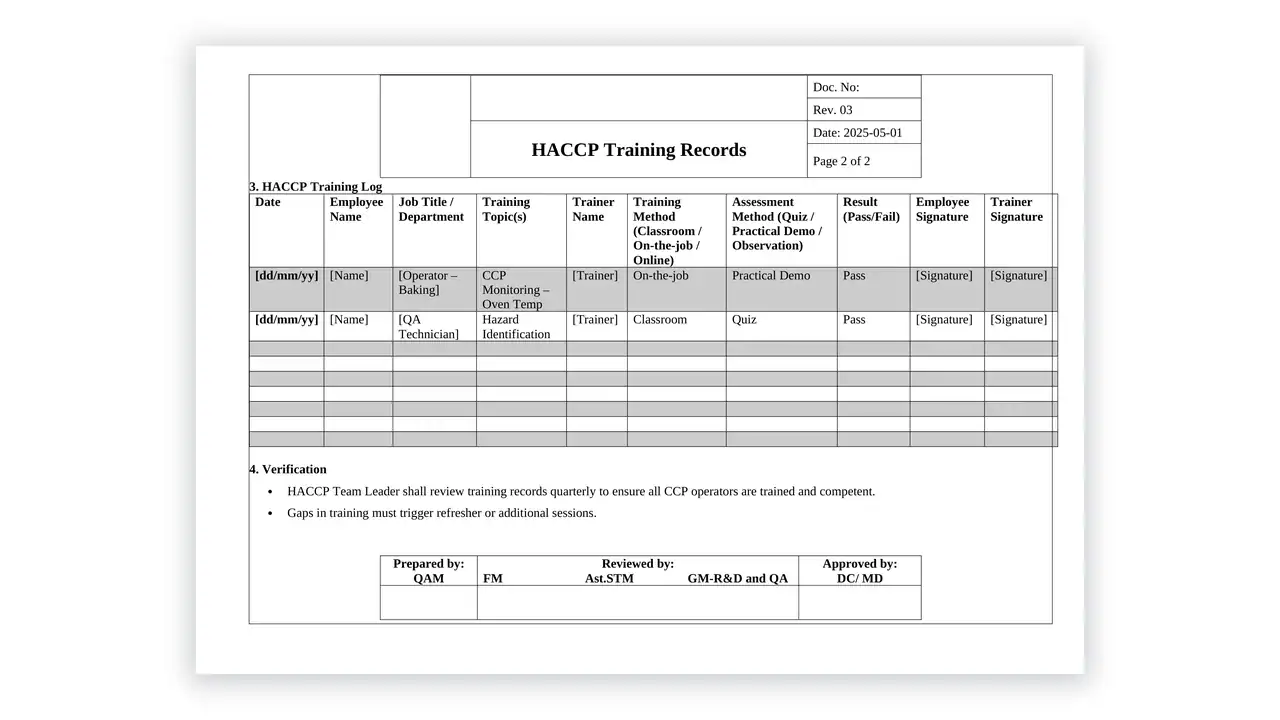
- Document control, training records and the HACCP review procedure
- A complete HACCP process steps workbook tying the whole study together
Cite Codex Rev 2022, not the 2003 or 2020 revision
HACCP is set out in the Codex Alimentarius General Principles of Food Hygiene, CXC 1-1969. The document has been revised repeatedly, most recently in 2022 following the substantial 2020 revision, and a great deal of HACCP documentation in circulation still cites the 2003 text.
The 2020 and 2022 revisions restructured the document, gave prerequisite programmes and food safety culture greater prominence, and strengthened the treatment of allergens. Documentation citing the older revision is not necessarily wrong in method but signals to an auditor that it has not been reviewed in twenty years.
The practical discipline has not changed. CCP monitoring records completed in real time, by a named person, against a validated critical limit, remain the evidence that the system works. Everything else in a HACCP file supports them.
Who needs CCP monitoring records
Food manufacturers, processors and packers where HACCP is a legal requirement rather than a choice. Catering, hospitality and retail food operations subject to inspection. Suppliers asked for a HACCP plan by a customer as a condition of supply. And businesses preparing to move up to ISO 22000 or a GFSI-recognised scheme, where HACCP is the foundation.
How the CCP monitoring records maps to the framework
The most common inspection finding is not an absent plan but records that do not match reality – monitoring sheets completed in identical handwriting at the end of a shift, or critical limits with no validation behind them. The forms here are designed to be filled at the point of monitoring, and the critical limits register requires the basis for each limit to be recorded.
Frequently asked questions
Which Codex revision does this follow?
CXC 1-1969 as revised in 2022. Documentation citing the 2003 or 2020 text is out of date.
Is HACCP the same as ISO 22000?
No. HACCP is the hazard analysis methodology. ISO 22000 wraps it in a certifiable management system. See the ISO 22000 Toolkit if you need certification.
Does it cover allergens?
Yes, including a dedicated allergen control guideline, which the recent Codex revisions give greater prominence.
Are prerequisite programmes included?
Yes – cleaning and sanitation, pest control, personal hygiene, premises and equipment, waste and water. HACCP does not work without them.
How many documents are included?
31 editable files – 30 Word documents and an Excel workbook – plus a licence file.
Related toolkits
Food safety usually escalates from HACCP upwards. See the ISO 22000 Toolkit for the certifiable management system, the ISO 9001 Toolkit for quality management and the ISO 45001 Toolkit for food plant safety. Sites seeking certification rather than a standalone plan need the FSSC 22000 v7 toolkit.
Implementing for clients? The Consultant Package licenses all 86 toolkits and assessment tools on this site for unlimited client engagements, under one firm-wide licence. One payment of $1,399, no subscription and no per-client fee.
Delivery, format and licence
Your CCP monitoring records downloads immediately after checkout as native Microsoft Word and Excel files. Nothing is watermarked or locked, so you can rebrand the documents, bring them under your own document control and revise them for as long as you need them.
One-time purchase. No subscription and no annual renewal. Because the source files behind the CCP monitoring records are yours, revising a procedure after an audit finding or a change of scope is an internal edit rather than another purchase.


Reviews
There are no reviews yet