
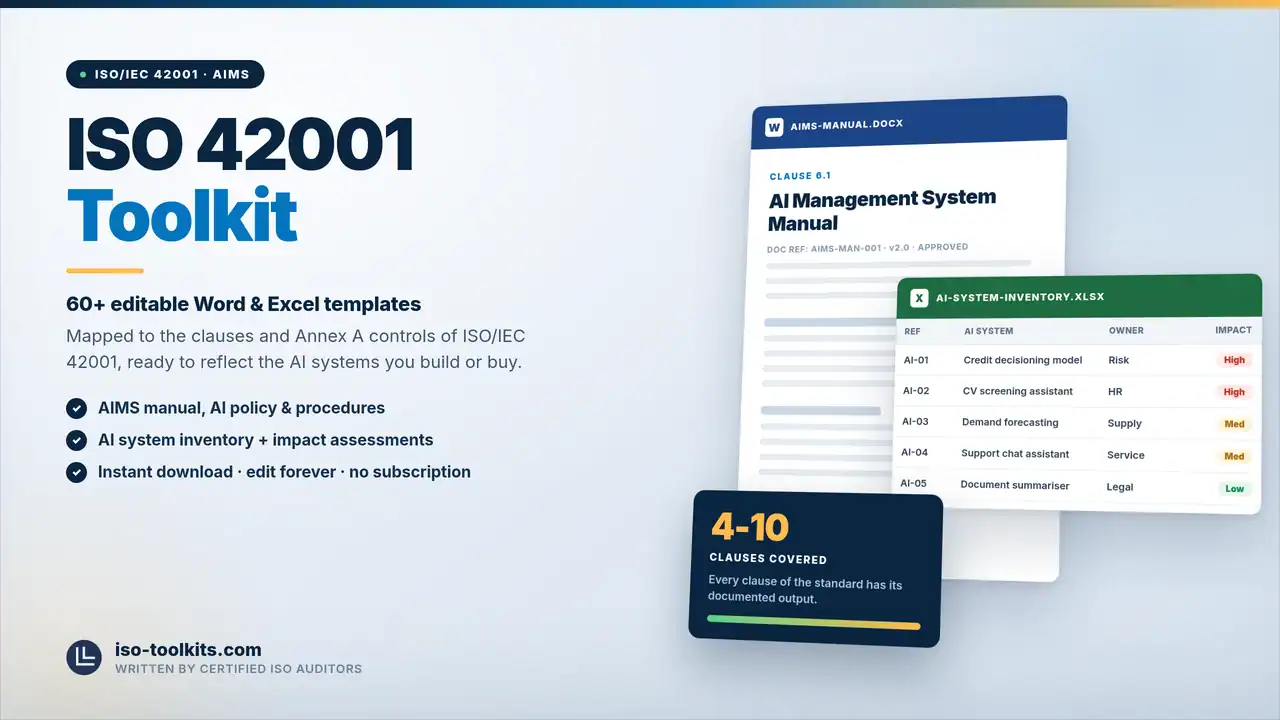
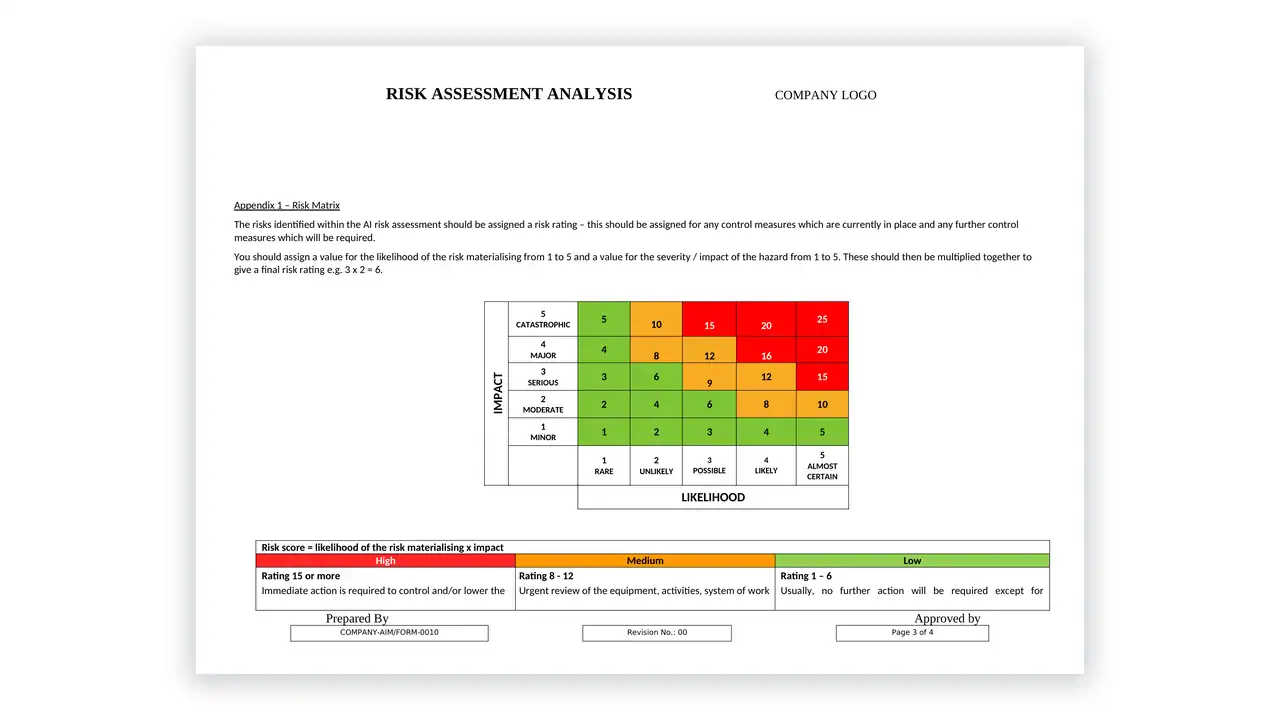
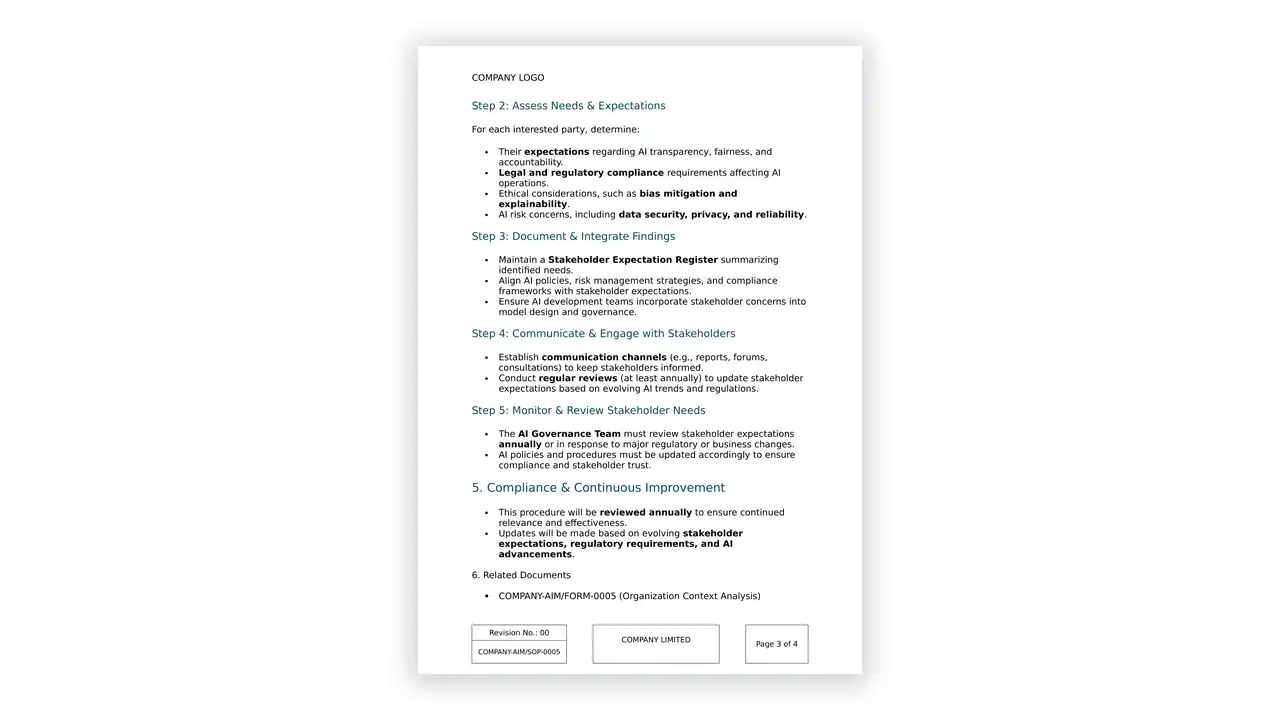
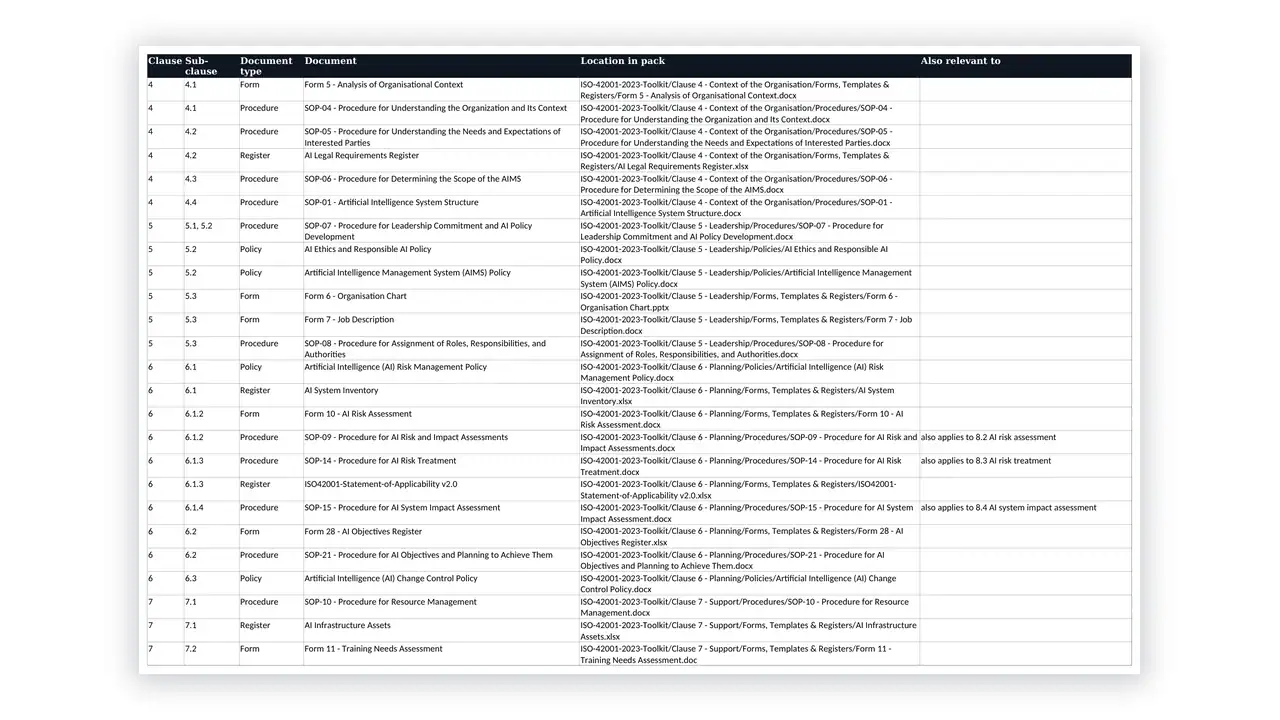
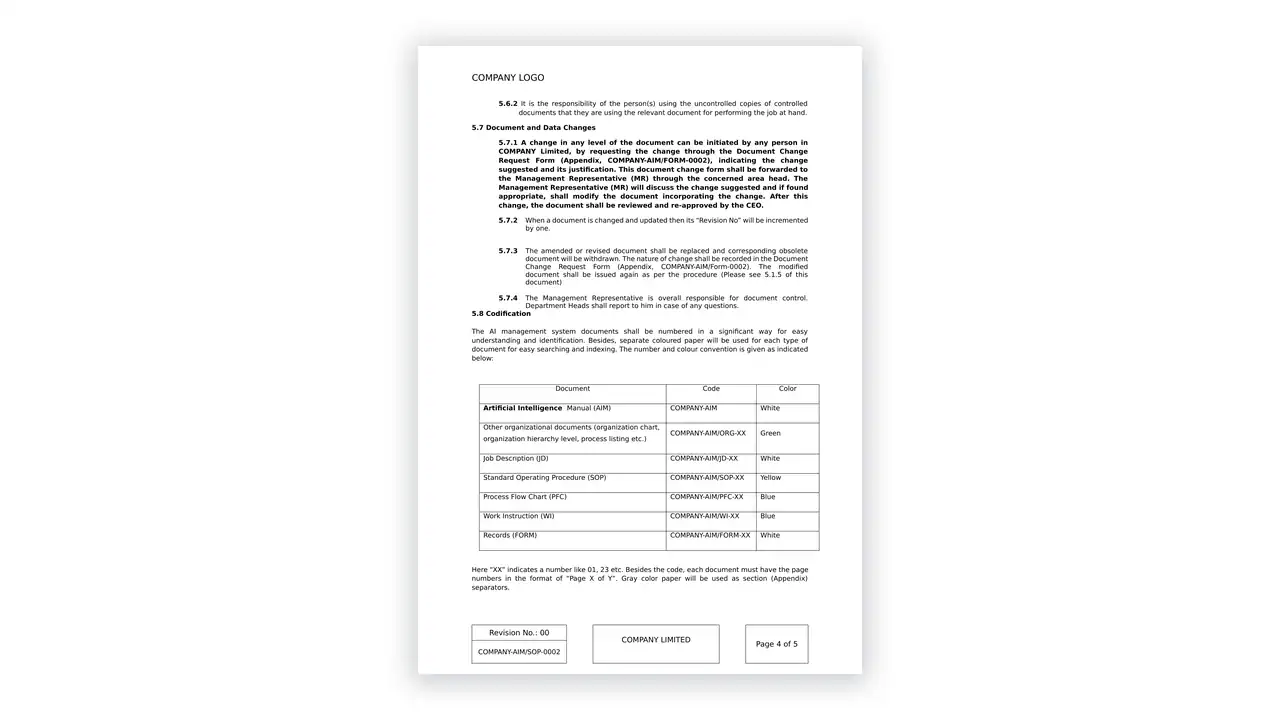
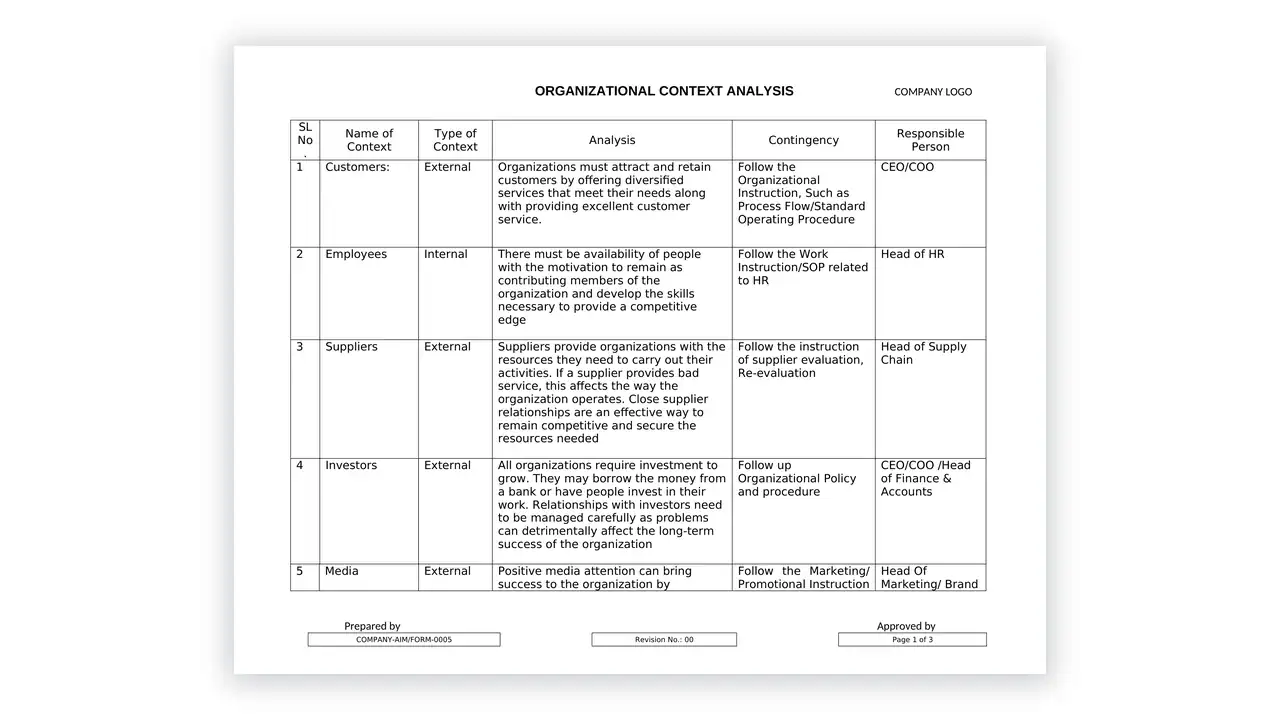
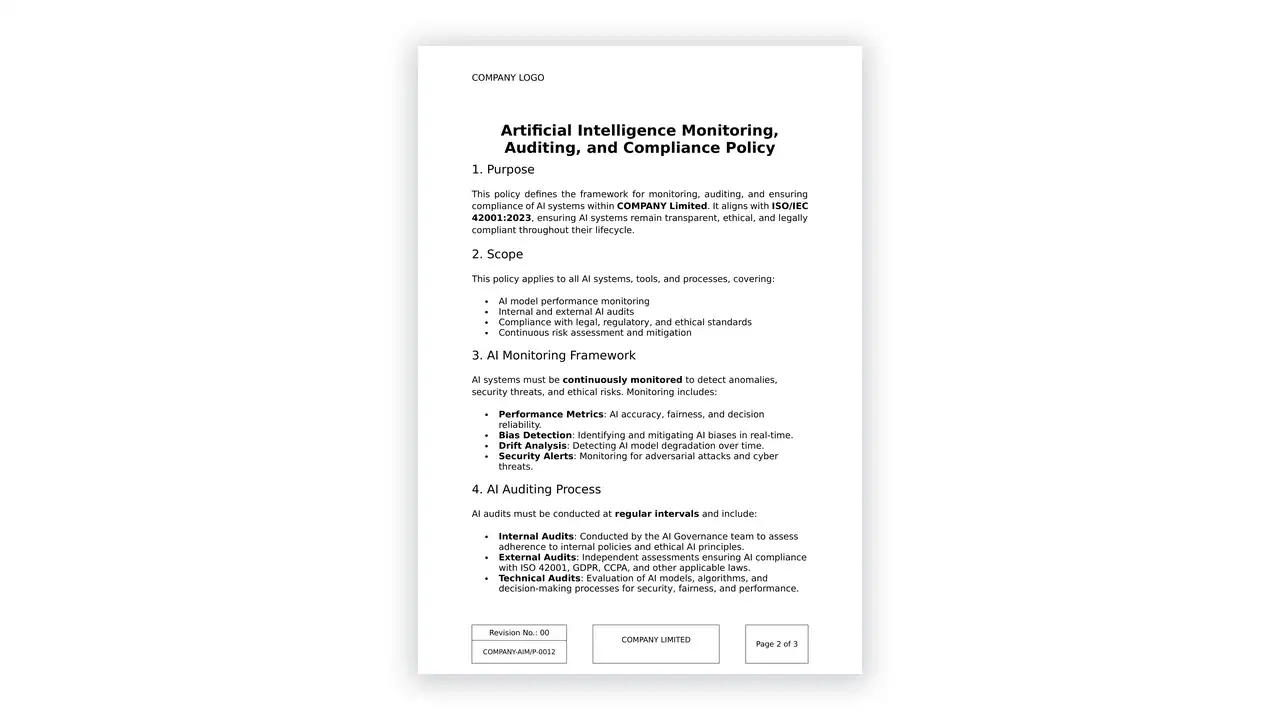
The ISO 42001 Toolkit equips you with the documented AI Management System the standard requires: 60+ editable Word and Excel templates mapped to the clauses and Annex A controls of ISO/IEC 42001, ready to reflect the AI systems you actually build or buy.
On this page:
- What is inside the ISO 42001 Toolkit
- Who this toolkit is for
- How the toolkit maps to ISO/IEC 42001
- Why buy instead of drafting AI governance from scratch
- Frequently asked questions
- Related AI and governance toolkits
What is inside the ISO 42001 Toolkit
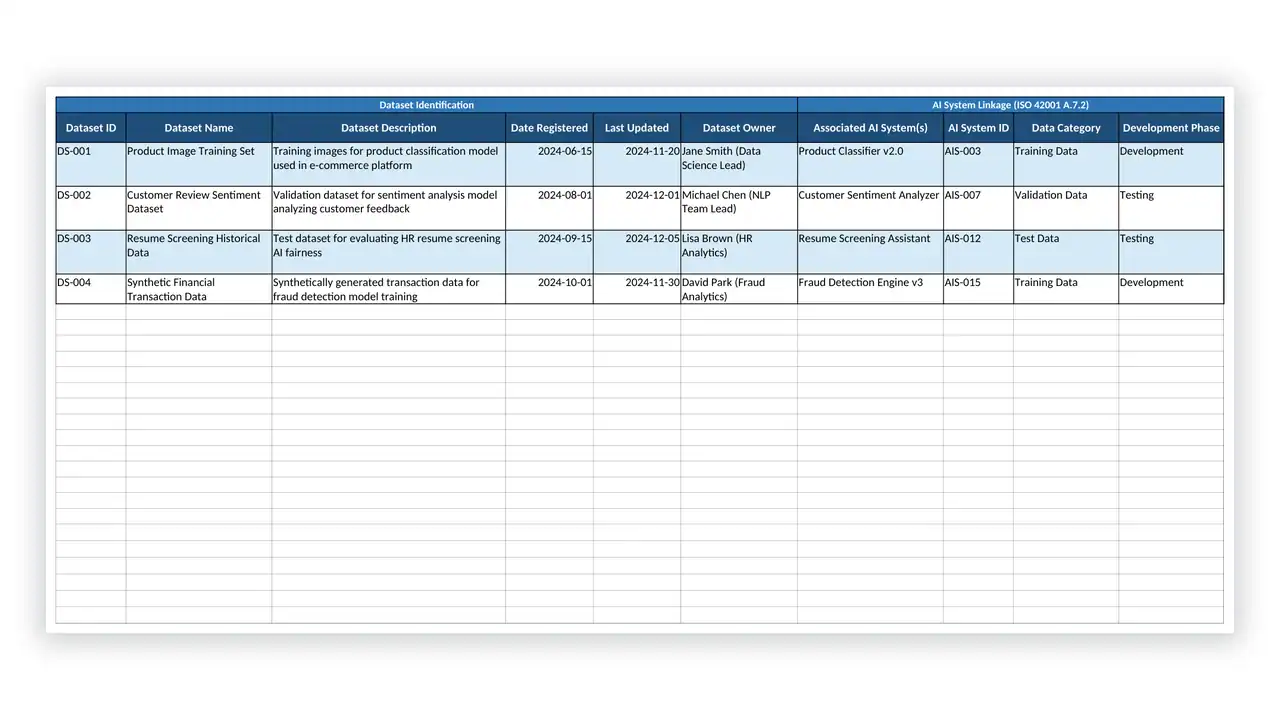
The ISO 42001 Toolkit covers the full AI management system, from the policy the board signs to the impact assessment a regulator asks for. Documents are cross-referenced, so an AI system in the inventory links to a risk assessment, a lifecycle record and a human oversight control.
- AI management system manual, scope statement and AI policy
- AI risk assessment methodology and register, including impact on individuals and society
- AI system impact assessment template
- Data governance and data quality management procedures
- AI system lifecycle procedure covering design, development, verification and deployment
- Roles, responsibilities and competence records for AI oversight
- Transparency, explainability and human oversight controls
- Third-party and supplier management for AI components and models
- Internal audit, management review and continual improvement documentation

Who the ISO 42001 Toolkit is for
Artificial intelligence has outrun most organisations’ governance. Developers of AI products, enterprises embedding third-party models into their own services, and public bodies answerable to regulators are the natural adopters.
In practice, buyers are answering an enterprise customer’s AI assurance questionnaire, preparing for EU AI Act obligations, or putting structure around model development that has so far run on engineering judgement alone.
How the ISO 42001 Toolkit maps to the standard
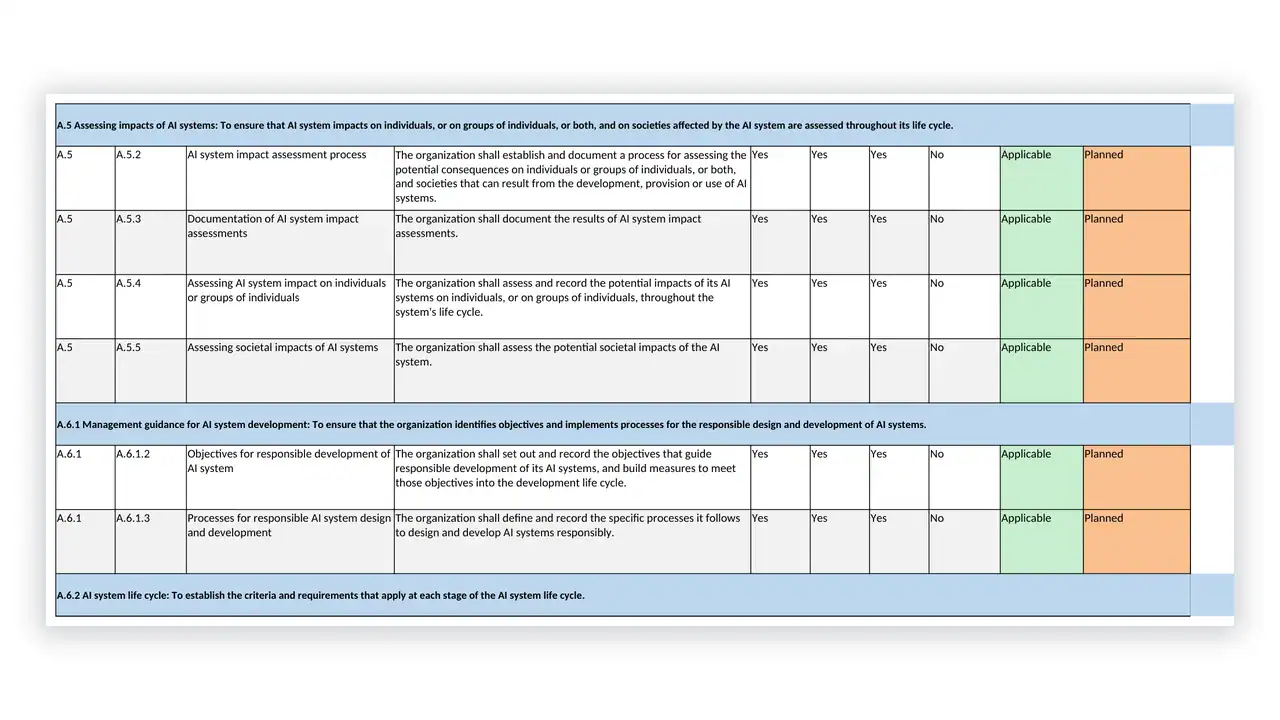
Clauses 4 to 10 follow the familiar Annex SL management-system structure, while Annex A carries the AI-specific controls covering policies, internal organisation, resources, impact assessment, lifecycle, data, information for interested parties, use of AI systems and third-party relationships.
Each document is placed against the clause or control it satisfies, so responsibility, risk treatment and evidence all line up for an assessor. You can confirm the current edition on the ISO website.
Why the ISO 42001 Toolkit beats a blank document
Because the standard is new territory, drafting conformant documentation without help is slow and error-prone, and the AI impact assessment in particular has no established house style to borrow from. This set removes that friction.
Everything is fully editable, which means genuine audit readiness, dozens of hours saved, and a governance framework you can defend to a regulator or an enterprise customer without paying consultant rates to get there.
ISO 42001 Toolkit frequently asked questions
Does it help with the EU AI Act?
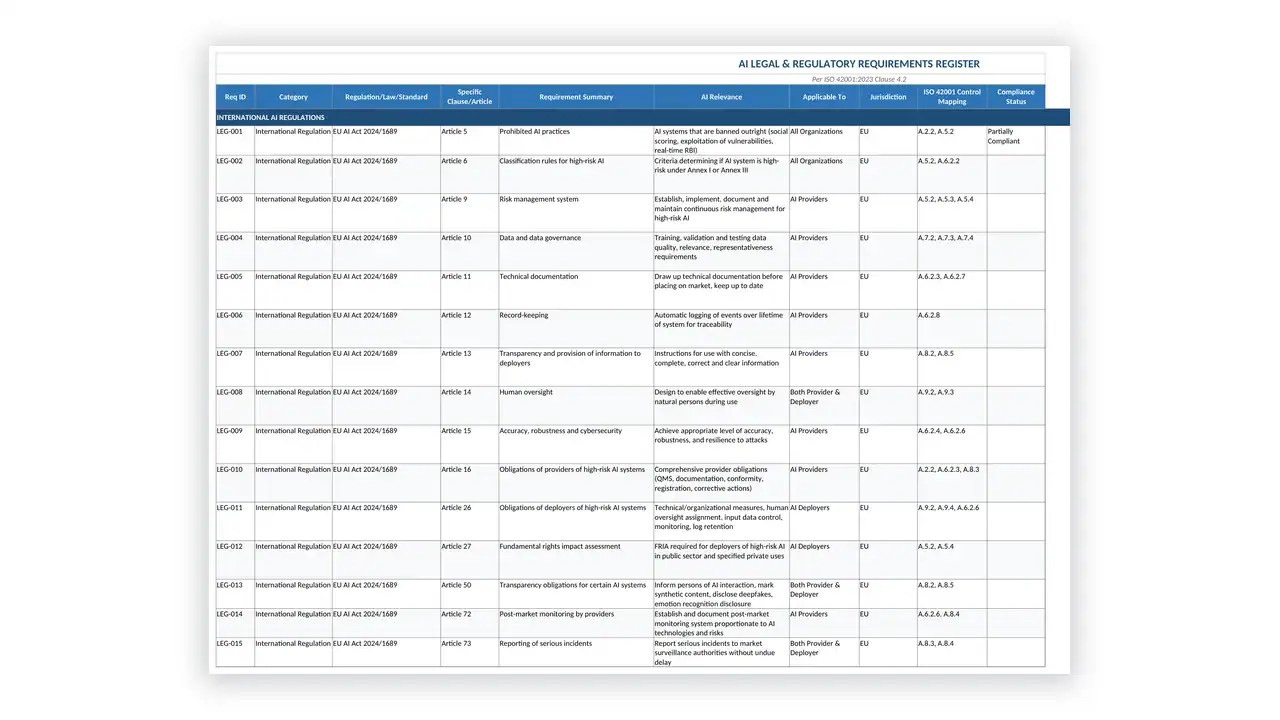
Substantially. The risk management, data governance, transparency, human oversight and record-keeping documents align closely with the Act’s obligations for high-risk systems, though the Act adds conformity assessment steps this pack does not replace.
We only use third-party models. Is it still relevant?
Yes. Deployers carry obligations too, and the supplier management, impact assessment and human oversight controls are written for organisations that embed models rather than train them.
Can it sit on our existing ISO 27001 system?
It can. The shared Annex SL structure means the manual, audit programme and management review documents integrate cleanly with an existing ISMS.
Related AI and governance toolkits
Pair this with the EU AI Act Toolkit for regulatory conformity work and the NIST AI RMF Toolkit if your customers reference the US framework. The ISO 27001 Toolkit supplies the underlying security management system, and the Data Governance Toolkit covers the data foundations that AI governance depends on.


Reviews
There are no reviews yet.