
COBIT is often bought and rarely tailored, which is why so many implementations end up as a filing system nobody uses. The COBIT design factors workbook is the step that prevents that – it narrows a 40-objective framework down to the objectives that actually matter for your organisation. 31 editable Word documents, downloadable the moment you check out. On this page:
- What is in the COBIT design factors workbook pack
- COBIT 2019 is still current, and tailoring is still the point
- Who needs COBIT design factors workbook
- How the documents map to the framework
- Frequently asked questions
- Related toolkits
What is in the COBIT design factors workbook pack
Documents are numbered in the order you would work through them:
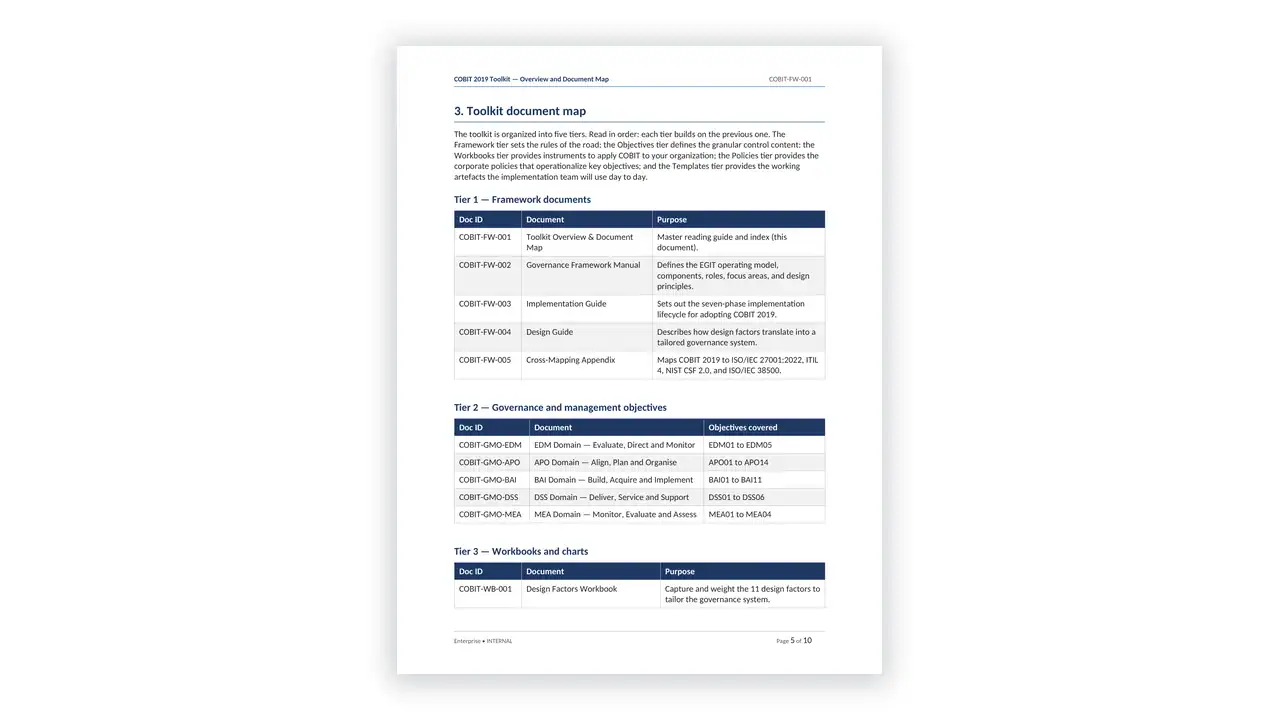
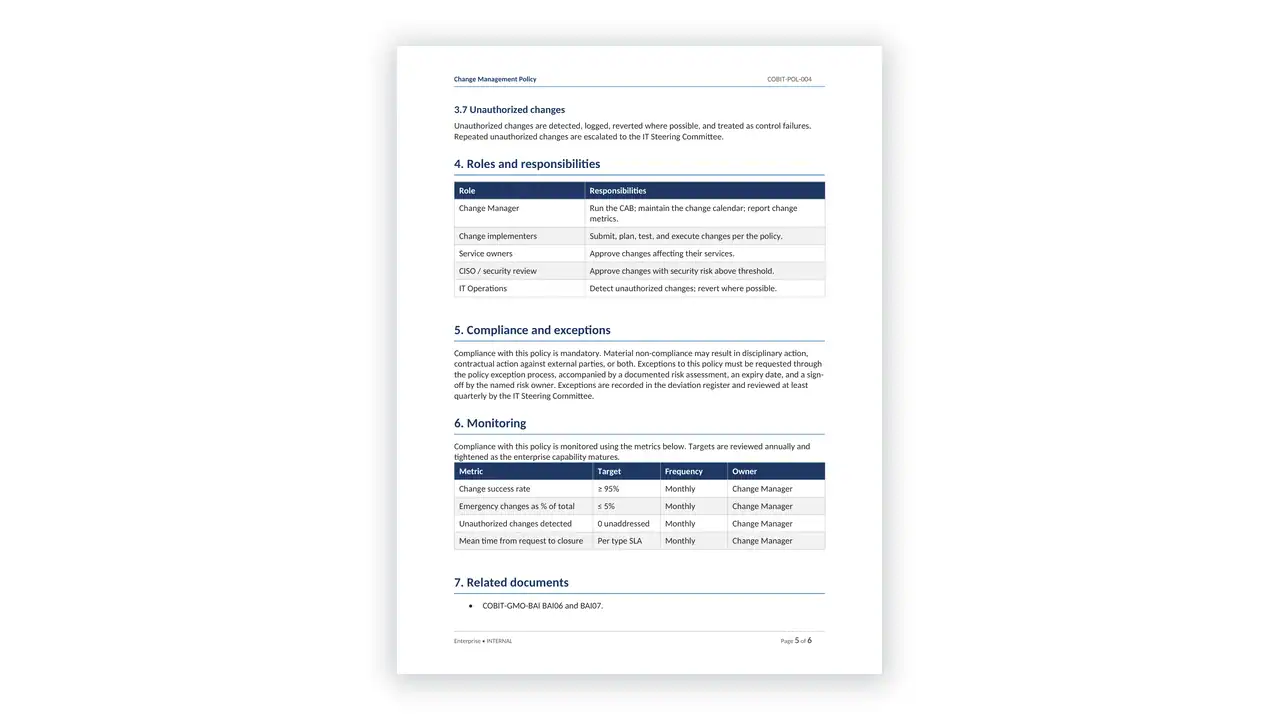
- Framework set – toolkit overview, the governance framework manual, the implementation guide and the design guide
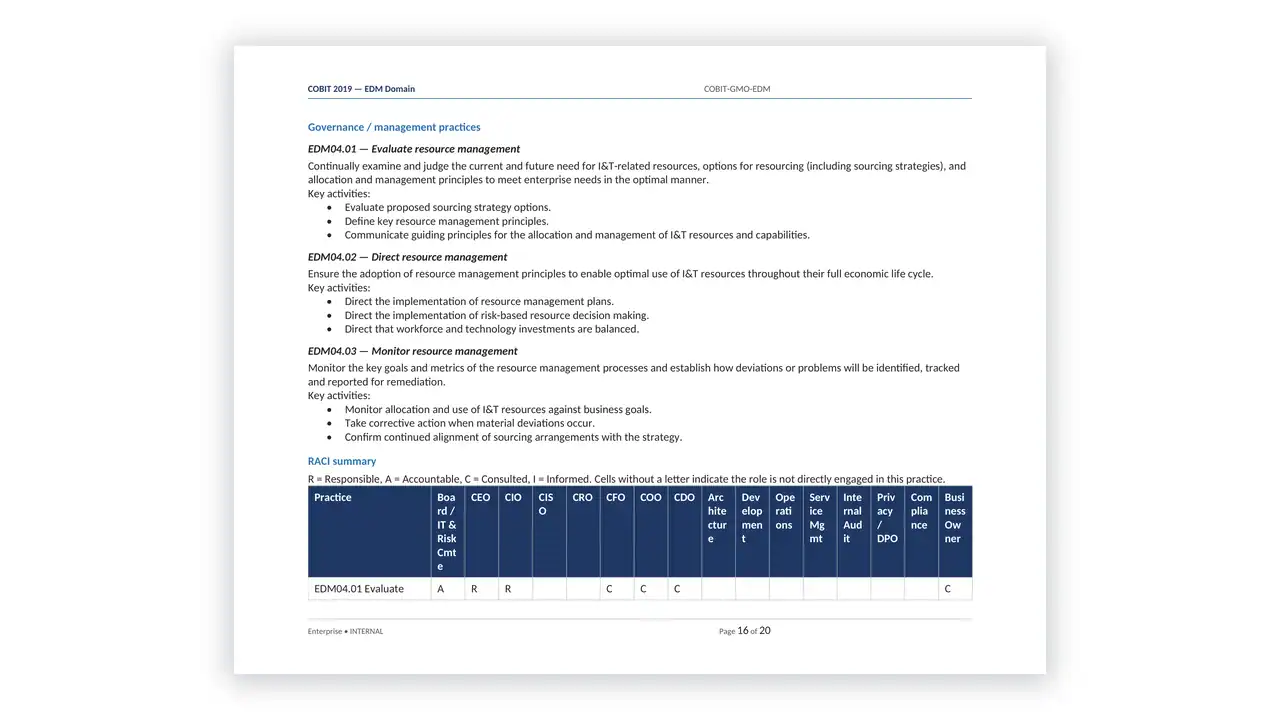
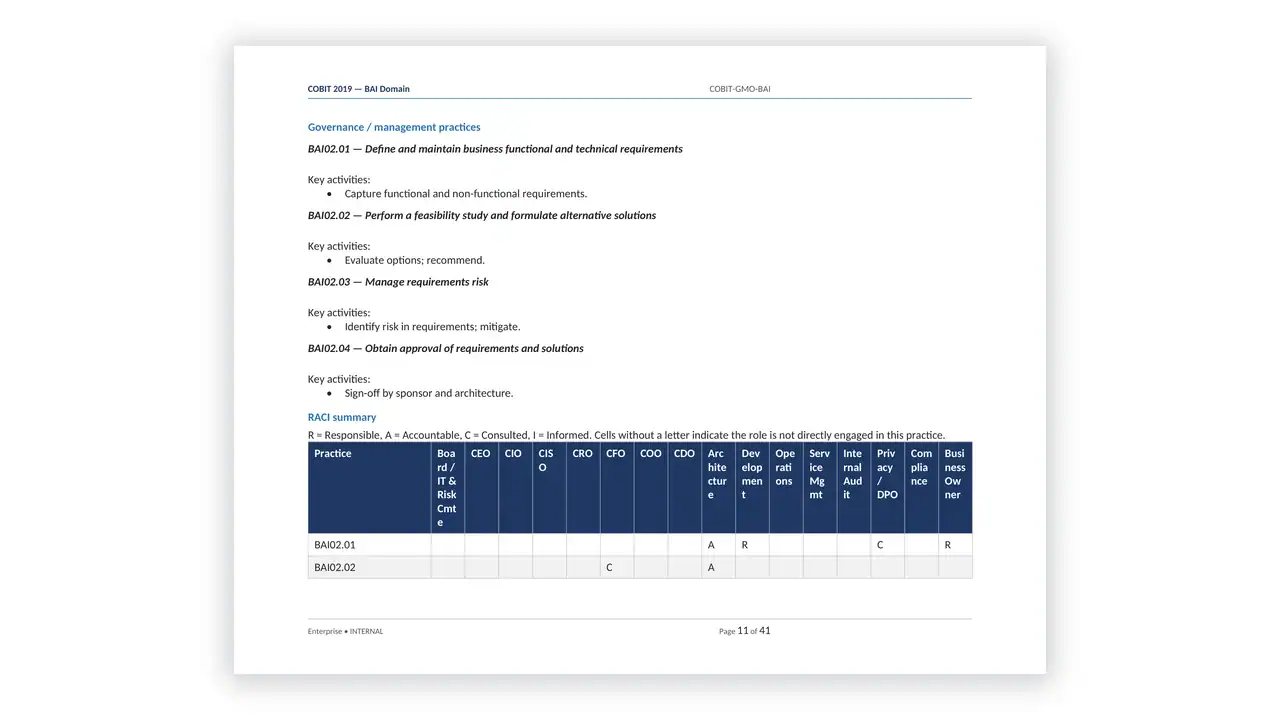
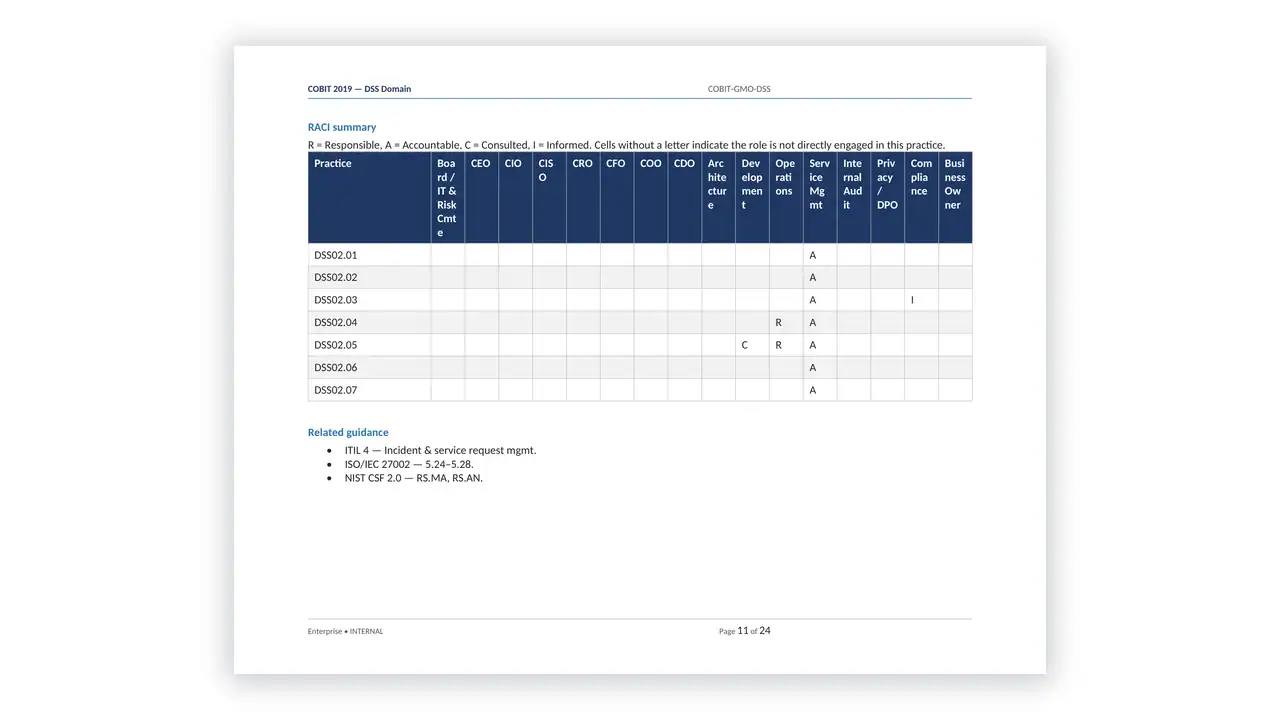
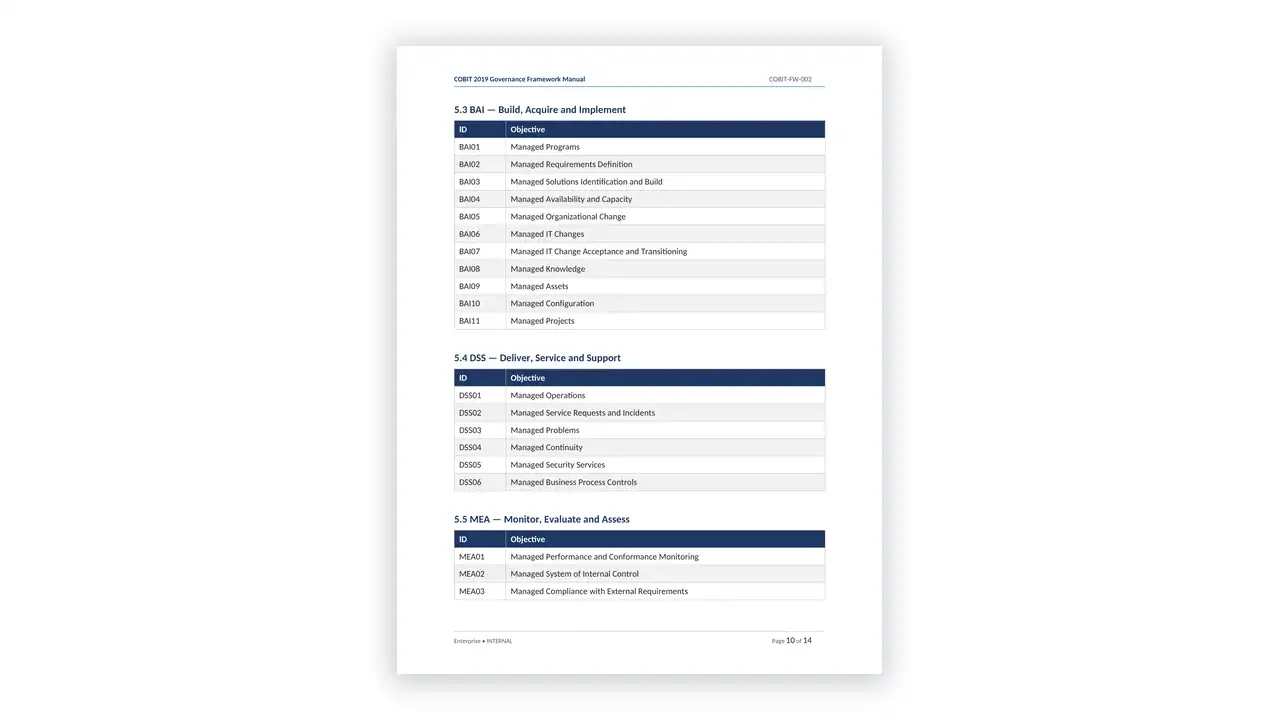
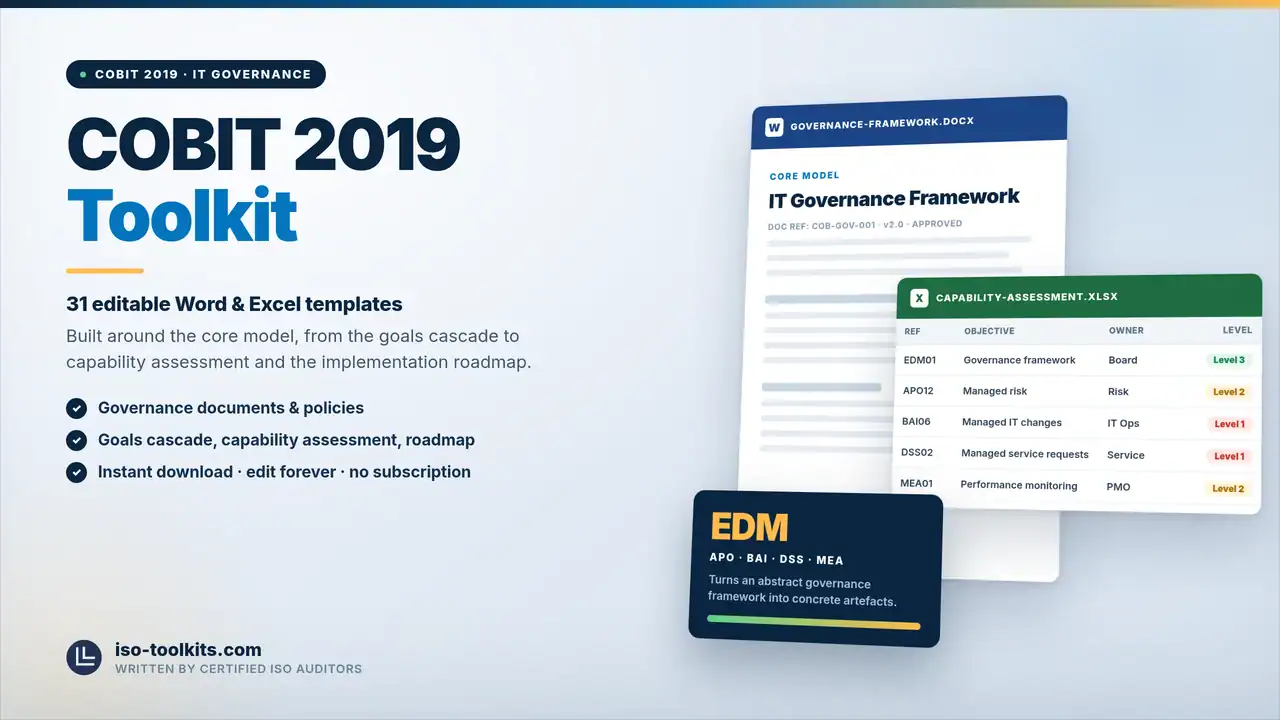
- The five domains, one document each – EDM Evaluate, Direct and Monitor for the governance objectives, then the four management domains: APO Align, Plan and Organise, BAI Build, Acquire and Implement, DSS Deliver, Service and Support, and MEA Monitor, Evaluate and Assess
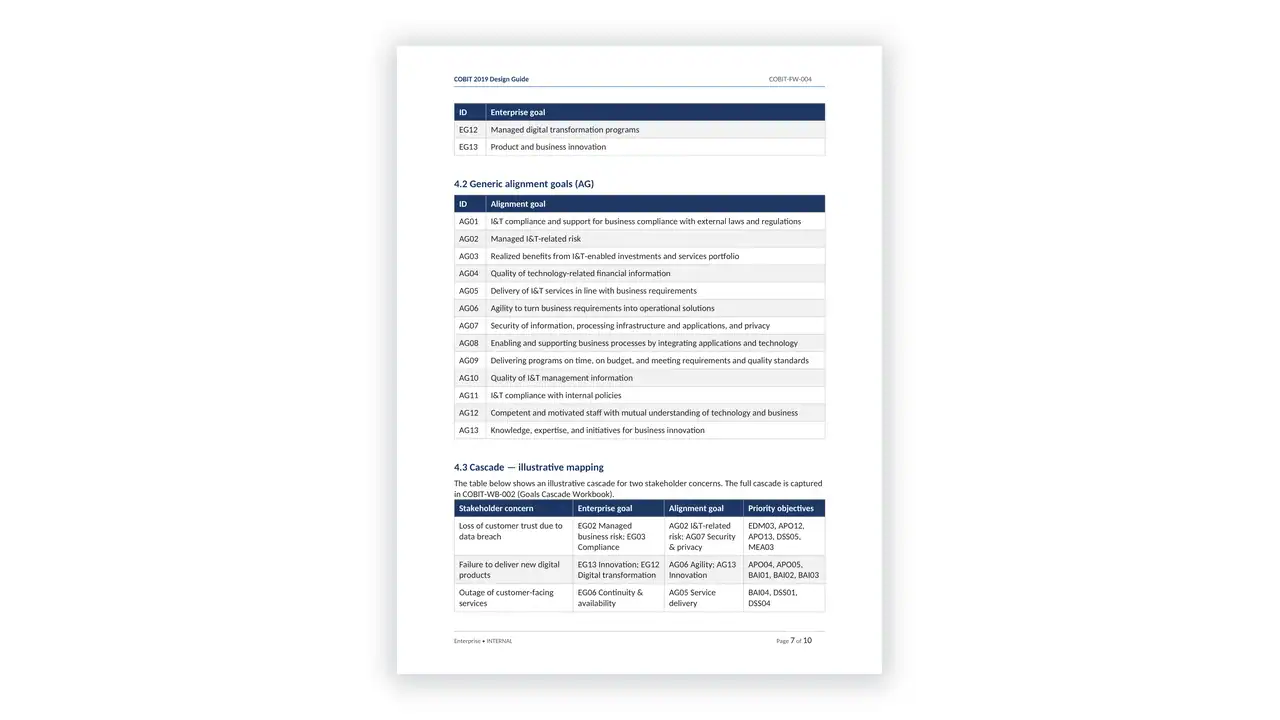
- Design factors workbook – enterprise strategy, goals, risk profile, IT-related issues, threat landscape, compliance requirements, role of IT, sourcing model, IT implementation methods and technology adoption strategy
- Goals cascade workbook – translating enterprise goals into alignment goals and then into the governance and management objectives that support them
- Capability and maturity assessment material, so you can state a current position and a target rather than an aspiration
- Cross-mapping appendix – how COBIT objectives relate to ISO 27001, ITIL and the other frameworks you are likely to run alongside
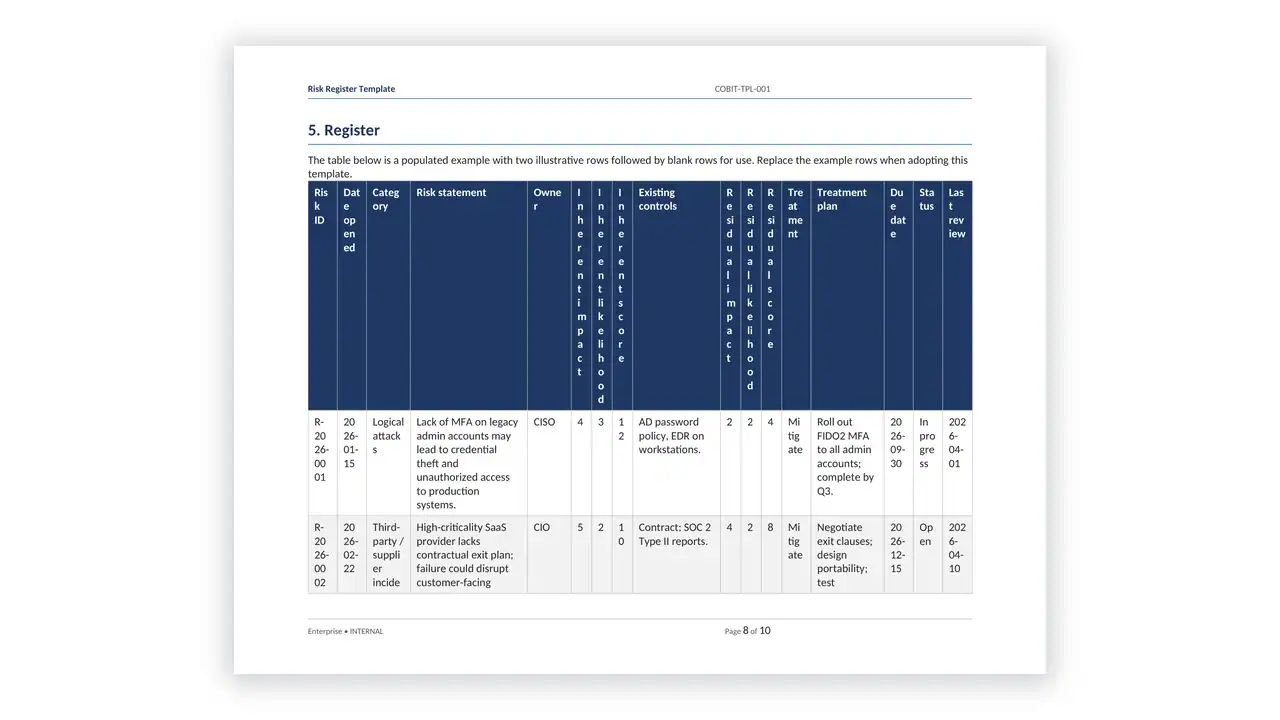
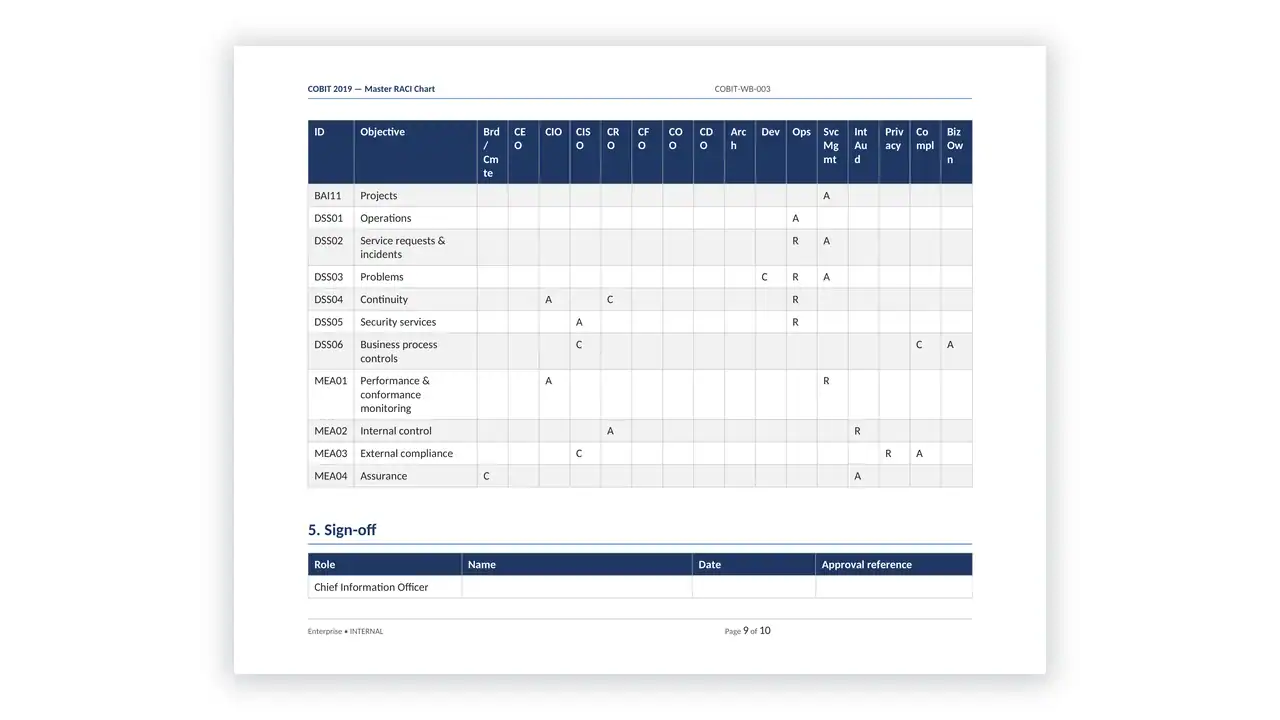
- Supporting registers, RACI material and the reporting pack for governance bodies
COBIT 2019 is still current, and tailoring is still the point
COBIT 2019 remains the current release. ISACA has not published a COBIT 2025 or 2026 – what it has issued is additional guidance, including material on AI governance in 2025 and a framework timeline infographic in 2026. Anyone offering a newer edition of the framework is describing something that does not exist.
The change COBIT 2019 introduced over COBIT 5 was precisely this tailoring mechanism. Rather than presenting one governance system to be adopted wholesale, it provides design factors that produce a governance system fitted to your context, priorities and risk profile.
That is why the COBIT design factors workbook sits at the centre of this pack rather than in an appendix. An organisation that skips it ends up documenting all 40 objectives at equal weight, which is both enormous and useless. One that works through it typically finds a focused subset where governance attention actually changes outcomes.
Who needs COBIT design factors workbook
IT governance functions being asked by a board or audit committee to show how IT is governed rather than managed. Organisations aligning several frameworks and needing a governance layer above them. CIOs preparing for an IT governance audit. And those pursuing COBIT-based certification or using it as the reference model for a maturity assessment.
How the COBIT design factors workbook maps to the framework
COBIT separates governance from management explicitly – EDM objectives belong to the board, the other four domains to executive management. That distinction is what makes COBIT useful to an audit committee and what most implementations blur. The pack keeps the EDM material separate and written for a governance audience rather than a technical one.
Frequently asked questions
Is there a newer version than COBIT 2019?
No. COBIT 2019 is current. ISACA publishes supplementary guidance, including on AI governance, but has not released a new framework edition.
What are design factors?
Eleven contextual factors – strategy, goals, risk profile, threat landscape, compliance needs, role of IT, sourcing, methods, technology adoption and more – that tailor the framework to your organisation rather than applying all 40 objectives equally.
How does COBIT relate to ITIL and ISO 27001?
COBIT governs, the others deliver. The cross-mapping appendix sets out the relationships. See the ITIL Toolkit and the ISO 27001 Toolkit.
Is COBIT certifiable for an organisation?
Individuals certify; organisations do not. COBIT is used as a governance reference model and as the basis for maturity assessment rather than as a certification scheme.
How many documents are included?
31 editable Word documents, plus guidance and a licence file.
Related toolkits
Governance frameworks work best layered. See the ITIL Toolkit for service management delivery, the ISO 20000 Toolkit for the certifiable service management standard, the ISO 27001 Toolkit for information security and the ISO 31000 Toolkit for enterprise risk.
Implementing for clients? The Consultant Package licenses all 86 toolkits and assessment tools on this site for unlimited client engagements, under one firm-wide licence. One payment of $1,399, no subscription and no per-client fee.
Delivery, format and licence
Your COBIT design factors workbook downloads immediately after checkout as native Microsoft Word and Excel files. Nothing is watermarked or locked, so you can rebrand the documents, bring them under your own document control and revise them for as long as you need them.
One-time purchase. No subscription and no annual renewal. Because the source files behind the COBIT design factors workbook are yours, revising a procedure after an audit finding or a change of scope is an internal edit rather than another purchase.


Reviews
There are no reviews yet.