
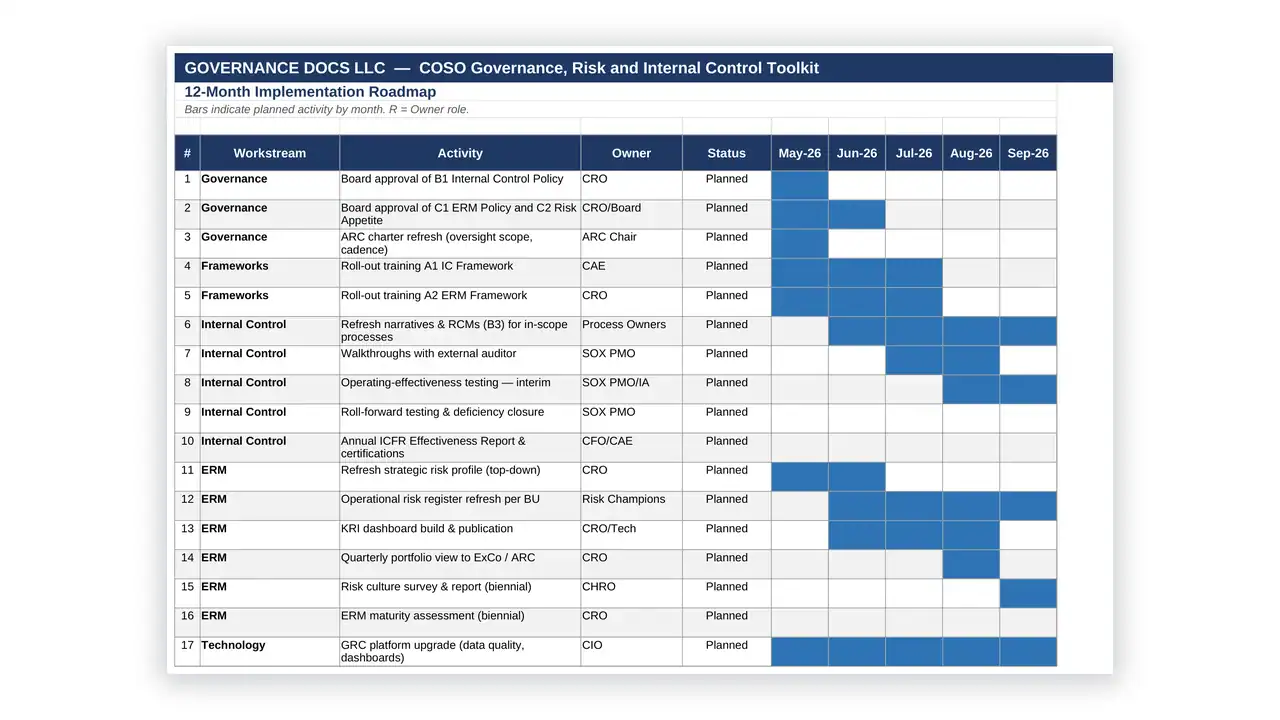
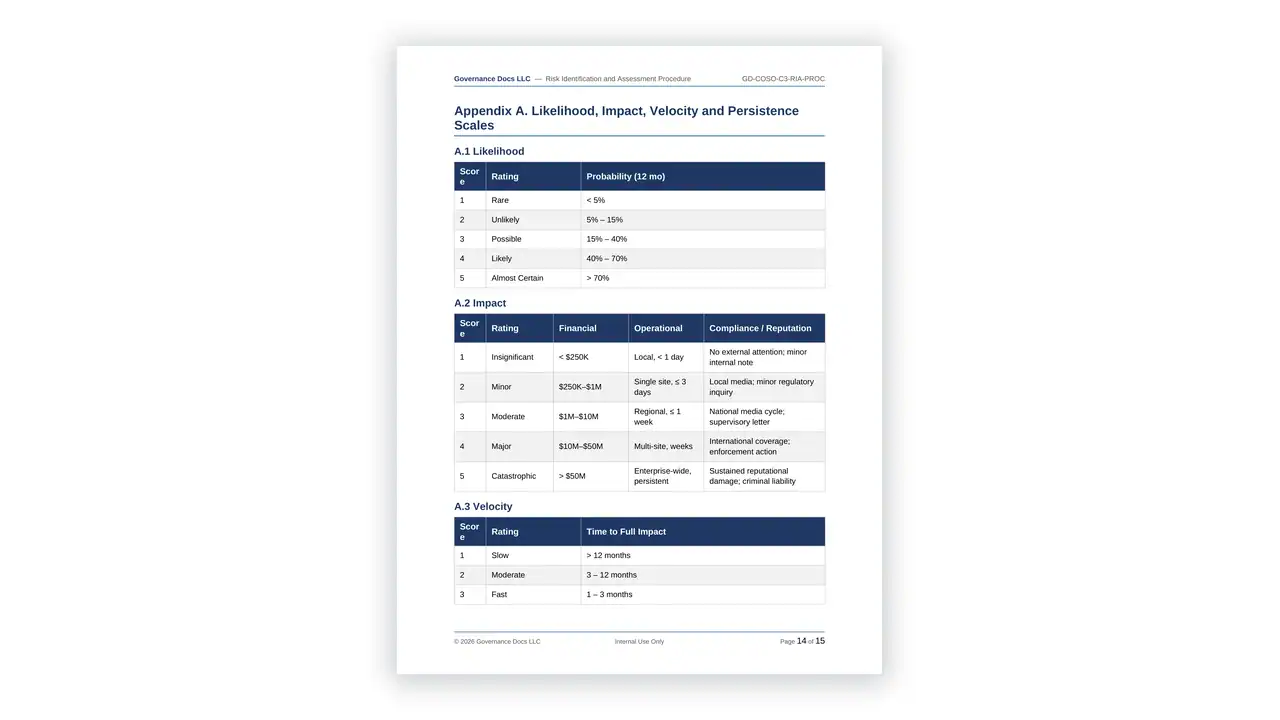
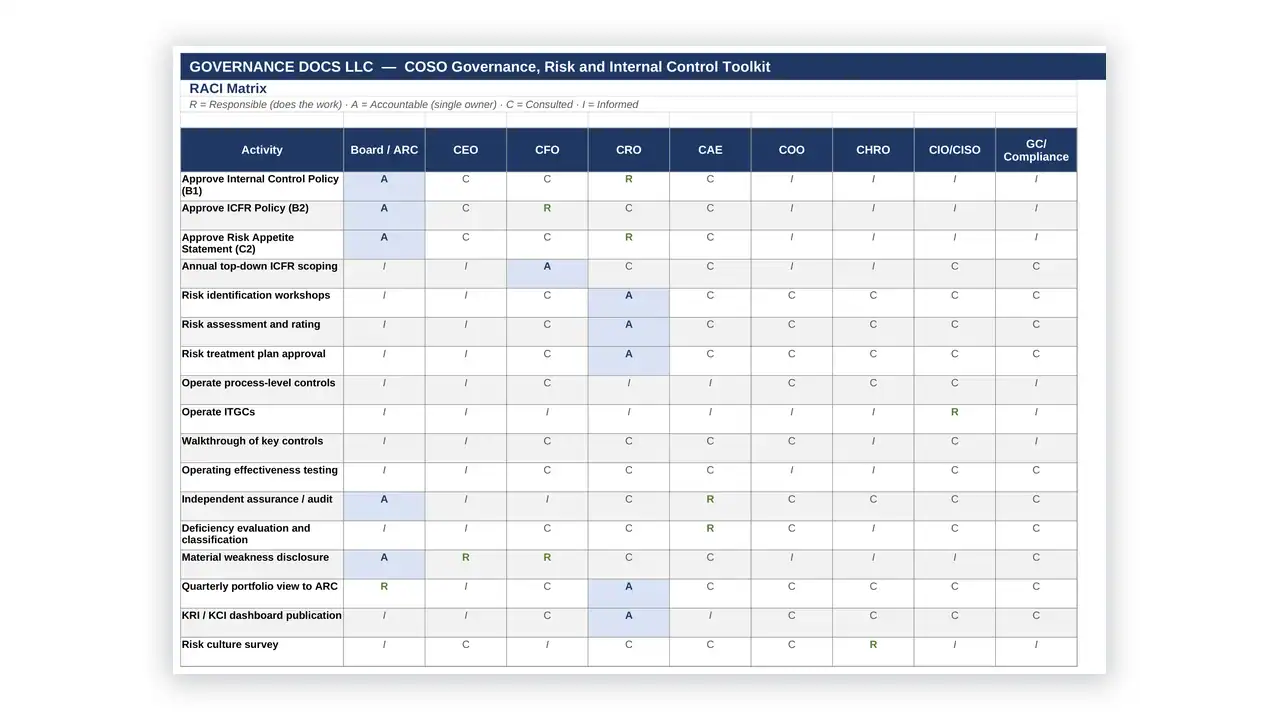
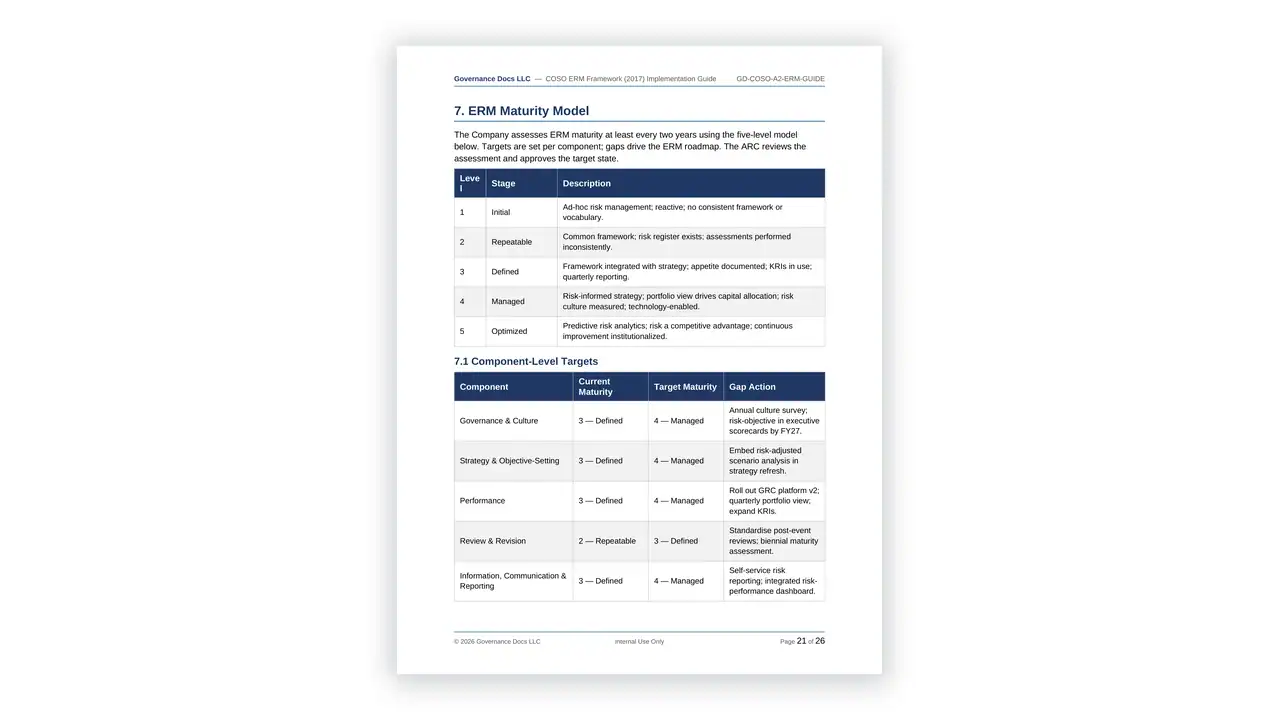
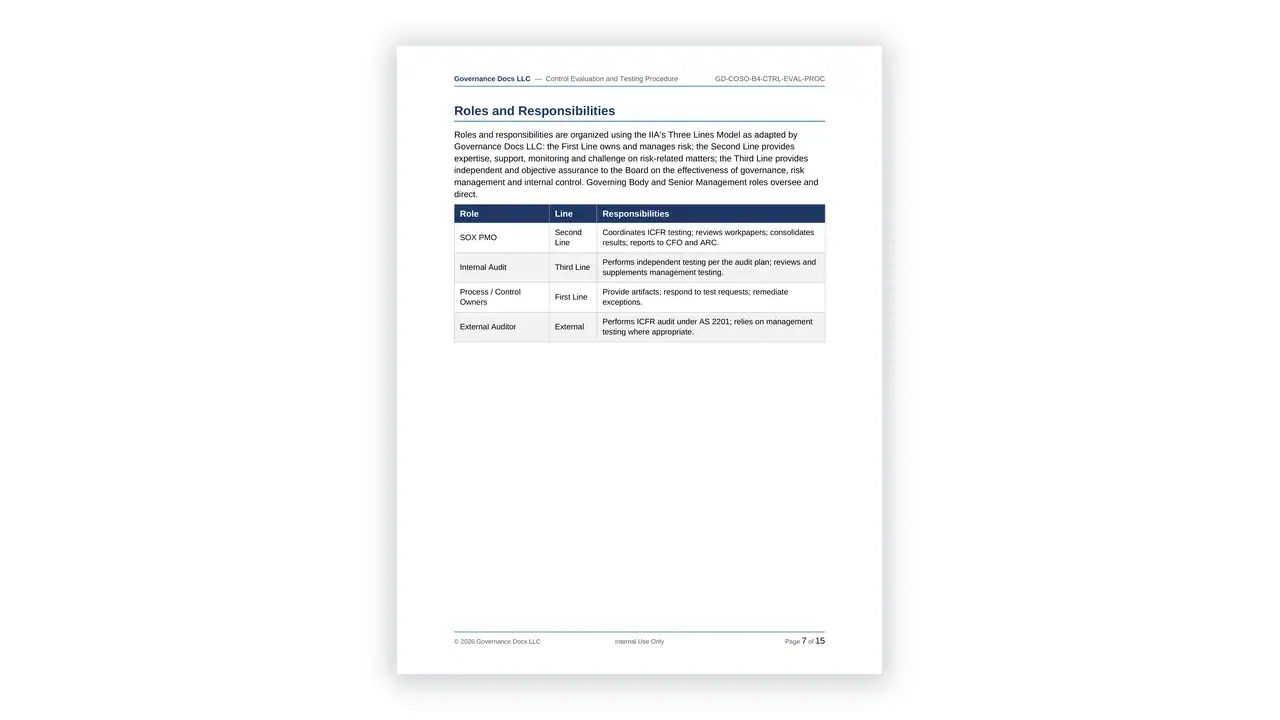
COSO is the framework nearly every ICFR programme claims to follow and comparatively few can evidence. The COSO 17 principles mapping is what turns that claim into something an auditor can test – each of the seventeen principles tied to the controls that satisfy it. 21 editable Word and Excel files, downloadable the moment you check out. On this page:
- What is in the COSO 17 principles mapping pack
- What is current, and what the 2026 supplement adds
- Who needs COSO 17 principles mapping
- How the documents map to the framework
- Frequently asked questions
- Related toolkits
What is in the COSO 17 principles mapping pack
Five lettered sections, separating the two COSO frameworks rather than blending them:
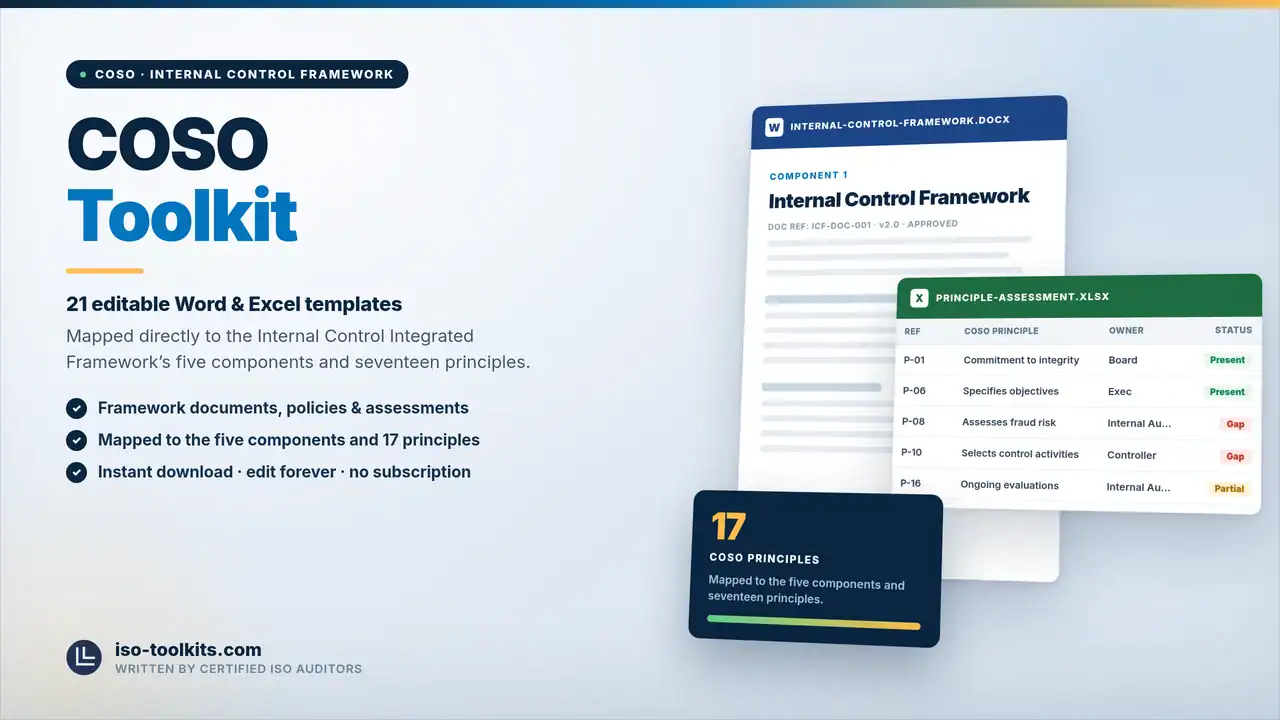
- A – Frameworks: the Internal Control Integrated Framework position and the Enterprise Risk Management framework, kept distinct because they answer different questions
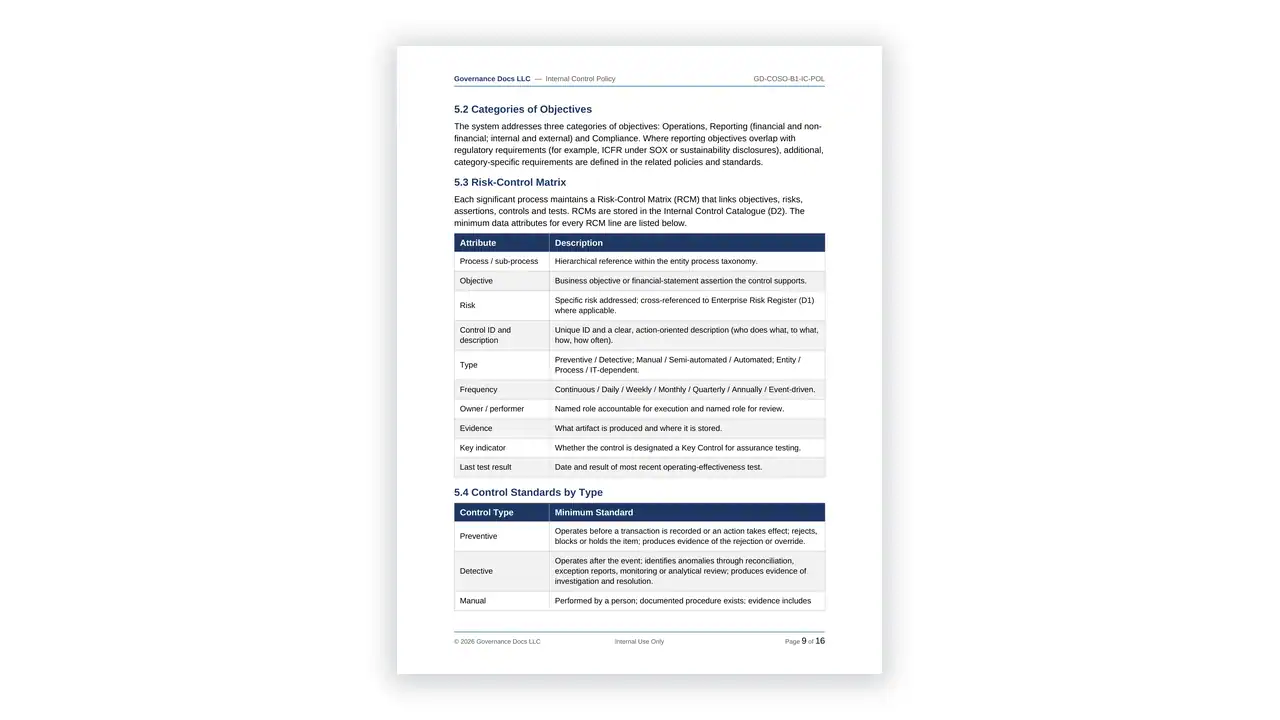
- B – Internal Control Policies: the control environment, risk assessment, control activities, information and communication, and monitoring components, written as policy rather than description
- C – ERM Policies: risk governance and culture, strategy and objective setting, risk appetite, performance, review and revision, and risk reporting
- D – Registers and Tools: the principles mapping matrix, entity level controls assessment, control deficiency evaluation form, risk register and the monitoring tracker
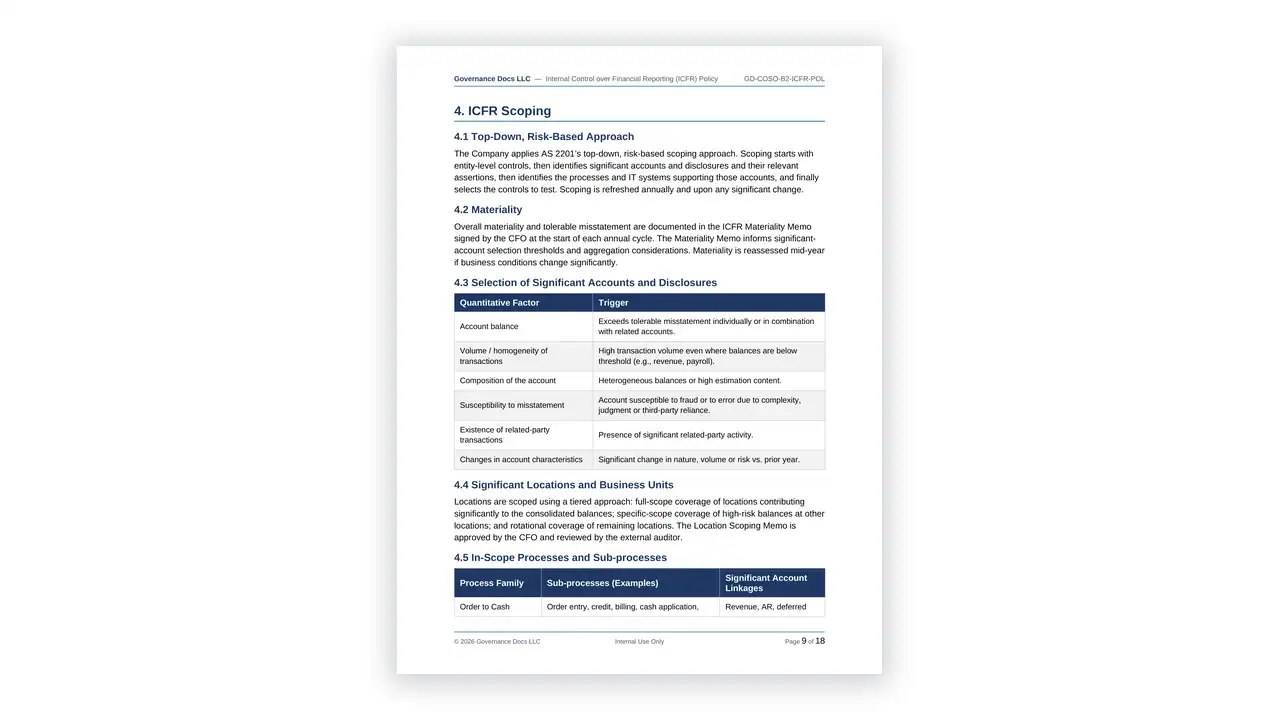
- E – Cross-Mapping: how COSO components relate to SOX requirements and to other control frameworks you may already run
What is current, and what the 2026 supplement adds
The Internal Control Integrated Framework dates from 2013 and Enterprise Risk Management Integrating with Strategy and Performance from 2017. Neither has been replaced, and anyone offering a newer core framework is describing something that does not exist.
What COSO does publish is supplemental guidance. The 2023 supplement on internal control over sustainability reporting, the 2024 guidance on robotic process automation, and in 2026 guidance on internal control over generative AI. The last of those matters most right now, because organisations are putting generative AI into processes that feed financial reporting without extending controls over it.
The COSO 17 principles mapping here accommodates that: the principles are unchanged, but the controls you map to them now have to cover automated and AI-assisted processing, not only human activity.
Who needs COSO 17 principles mapping
Organisations running SOX programmes who need to evidence the framework their assessment rests on. Internal audit functions building an entity level controls assessment. Boards and audit committees who want risk appetite and governance documented rather than asserted. And organisations adopting generative AI inside financial or operational processes who now have a control gap to close.
How the COSO 17 principles mapping maps to the framework
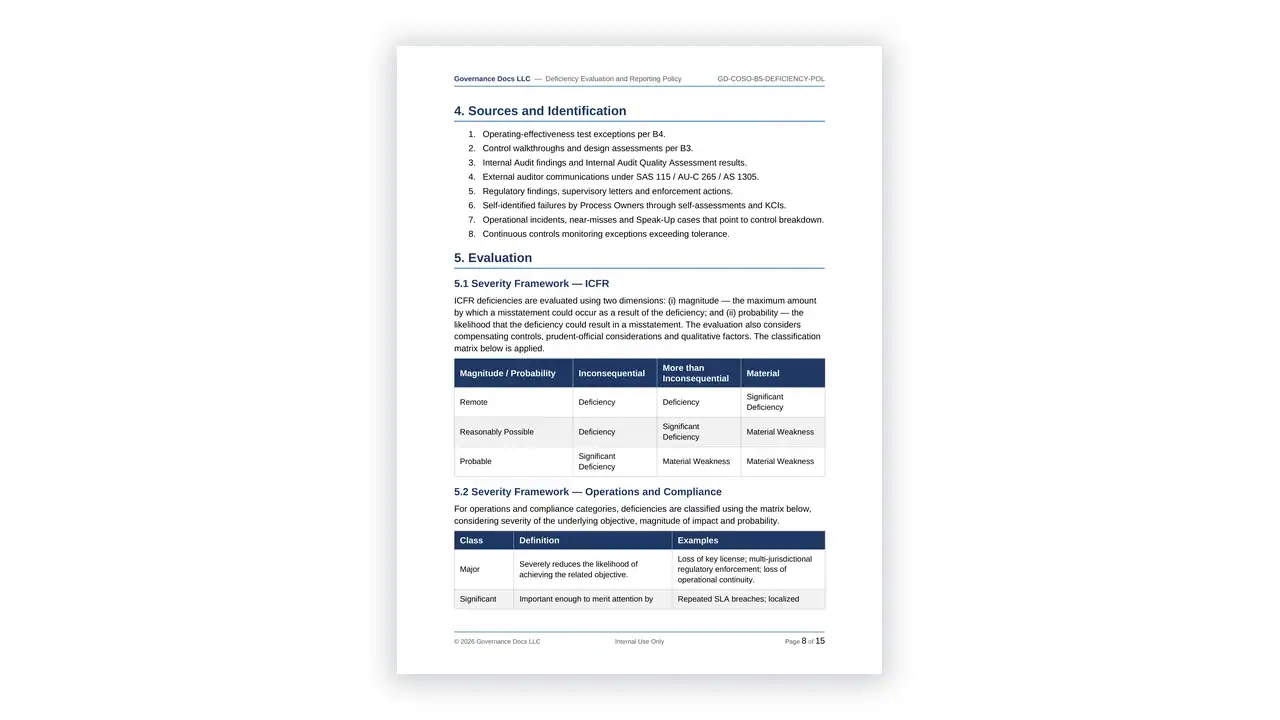
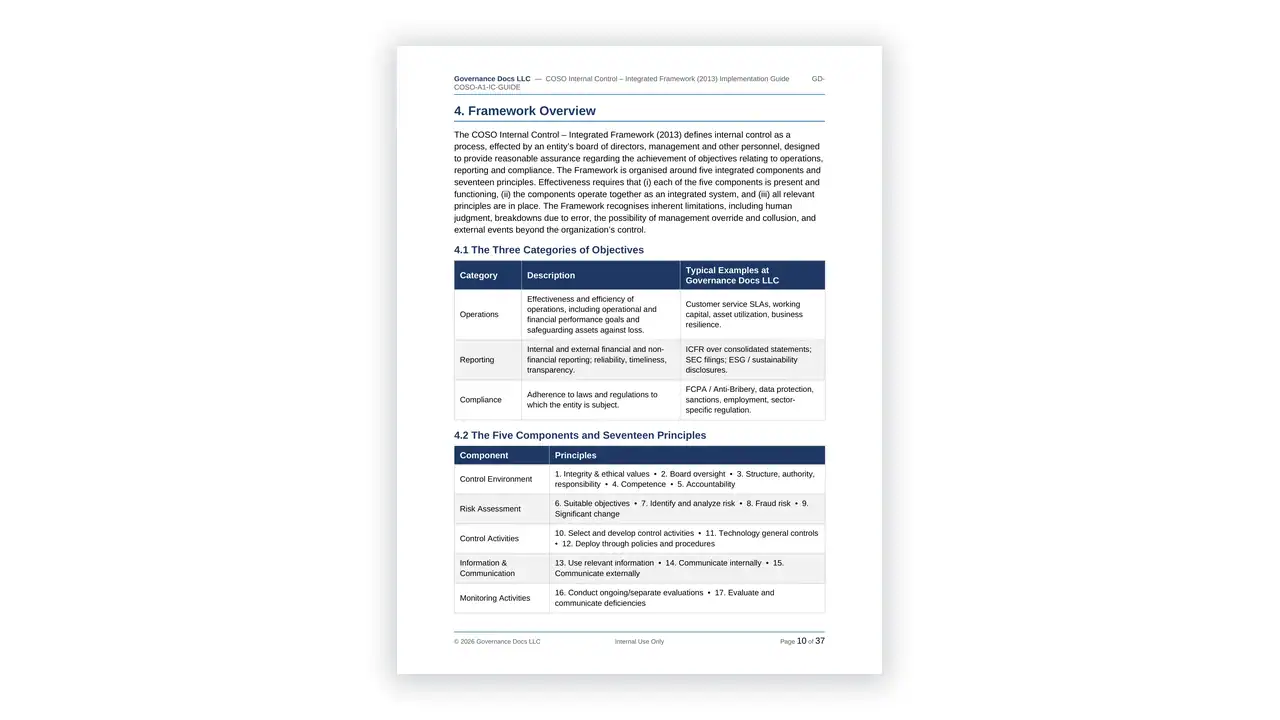
The most common failure is treating COSO as a narrative rather than a set of testable assertions. Each of the seventeen principles has points of focus, and the mapping document pairs them with the specific control, owner and evidence source. The deficiency evaluation form then gives you the severity framework that distinguishes a deficiency from a significant deficiency from a material weakness.
Frequently asked questions
Which COSO frameworks does this cover?
Both – the 2013 Internal Control Integrated Framework and the 2017 ERM framework, kept in separate sections because they serve different purposes.
Has COSO issued a new framework?
No. The core frameworks are unchanged. COSO publishes supplemental guidance instead, most recently on internal control over generative AI in 2026.
Do we need this if we already have a SOX programme?
SOX programmes are built on COSO, and auditors ask which framework management used and how it was applied. See the SOX Toolkit for the ICFR programme itself.
Is COSO certifiable?
No. It is a framework, not a certification scheme. Its value is as the recognised basis for a management assertion on internal control.
How many documents are included?
21 editable files – 14 Word documents and 7 Excel workbooks – plus guidance and a licence file.
Related toolkits
COSO underpins several programmes. See the SOX Toolkit for Section 404, the ISO 31000 Toolkit for the ISO approach to risk management, the COBIT 2019 Toolkit for IT governance and the ISO 37301 Toolkit for compliance management. Service organisations reporting on controls to their clients use the SOC 1 toolkit, which builds its control environment section on the same COSO components.
Implementing for clients? The Consultant Package licenses all 86 toolkits and assessment tools on this site for unlimited client engagements, under one firm-wide licence. One payment of $1,399, no subscription and no per-client fee.
Delivery, format and licence
Your COSO 17 principles mapping downloads immediately after checkout as native Microsoft Word and Excel files. Nothing is watermarked or locked, so you can rebrand the documents, bring them under your own document control and revise them for as long as you need them.
One-time purchase. No subscription and no annual renewal. Because the source files behind the COSO 17 principles mapping are yours, revising a procedure after an audit finding or a change of scope is an internal edit rather than another purchase.


Reviews
There are no reviews yet.