
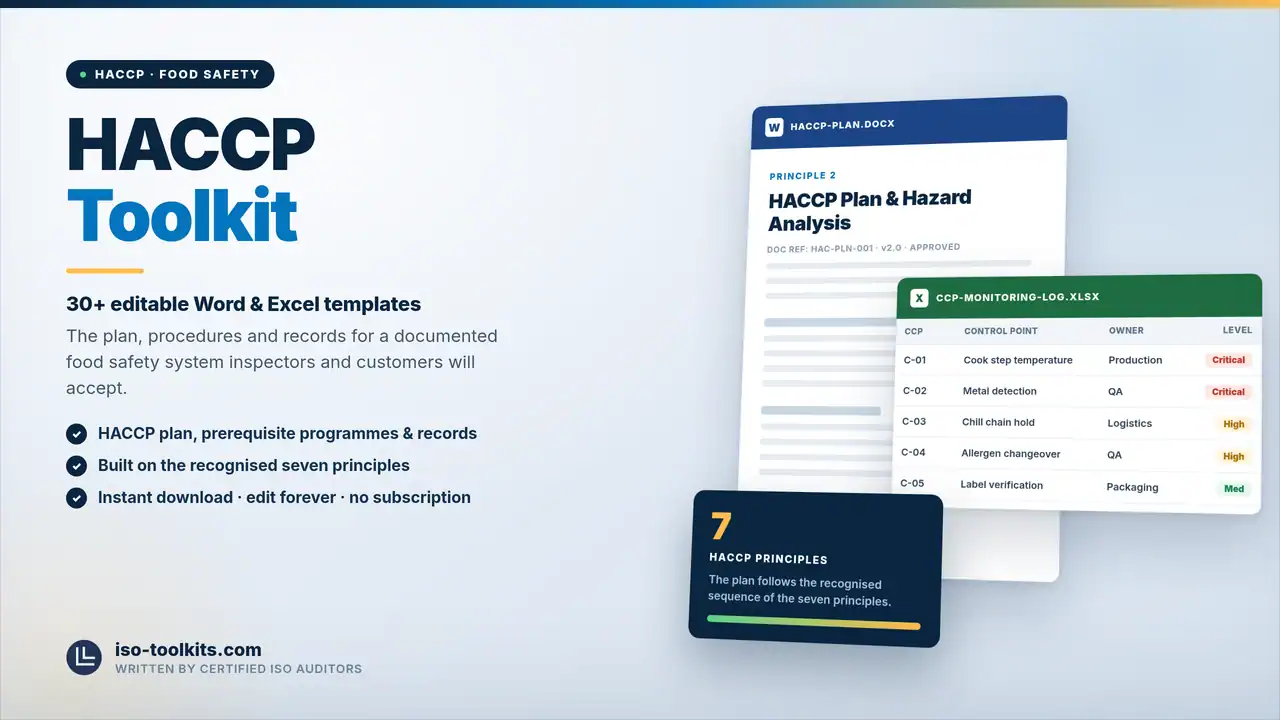
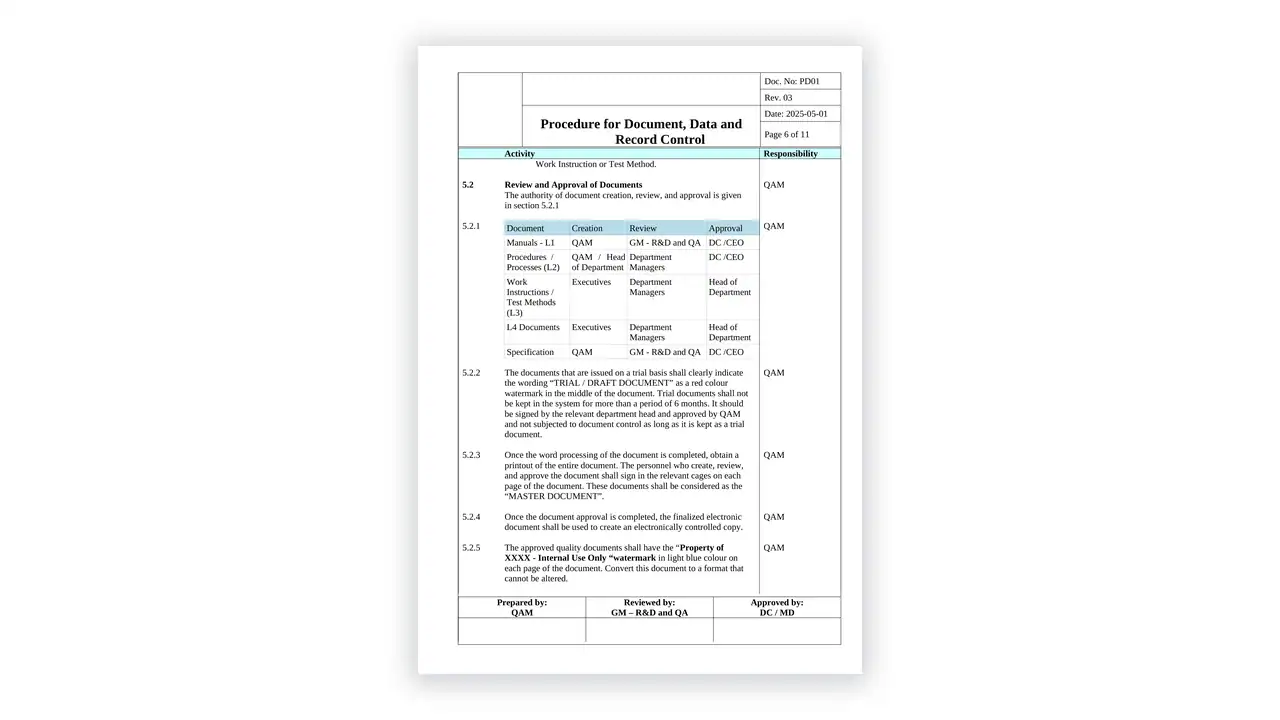
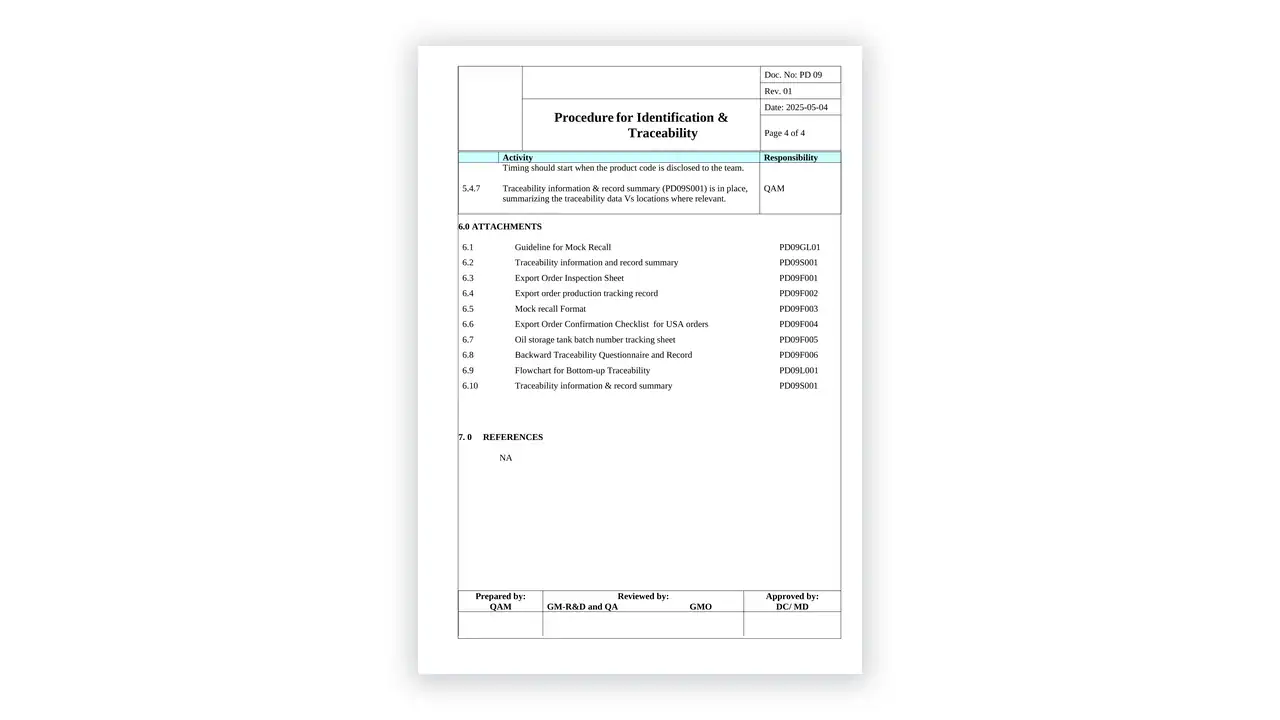
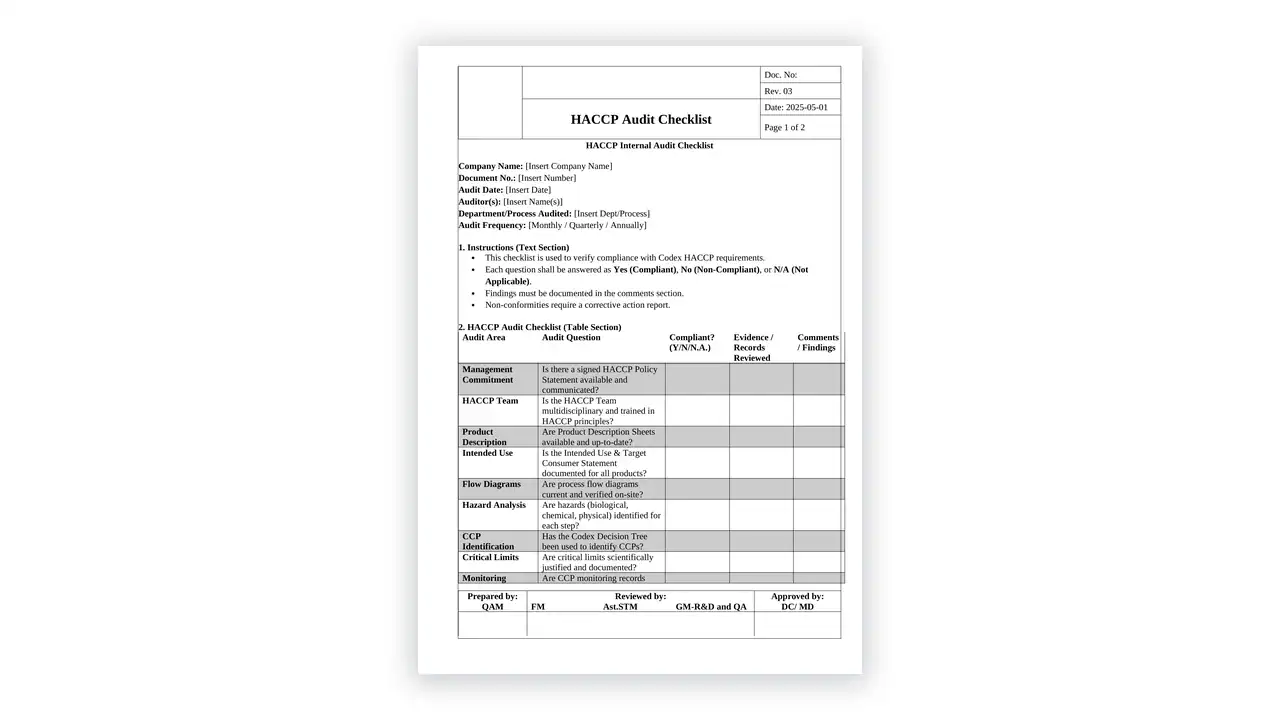
The HACCP Toolkit supplies the plan, procedures and records needed to run a documented food safety system that inspectors and customers will accept: 30+ editable Word and Excel templates following the recognised sequence of the seven principles.
On this page:
- What is inside the HACCP Toolkit
- Who this toolkit is for
- How the toolkit maps to the seven principles
- Why buy instead of researching and drafting a plan
- Frequently asked questions
- Delivery, format and licence
- Related food safety toolkits
What is inside the HACCP Toolkit
Hazard Analysis and Critical Control Points is the internationally accepted, science-based method for controlling food safety hazards. This pack turns the method into the paperwork a plant actually runs on.
- Complete HACCP plan template covering all seven principles
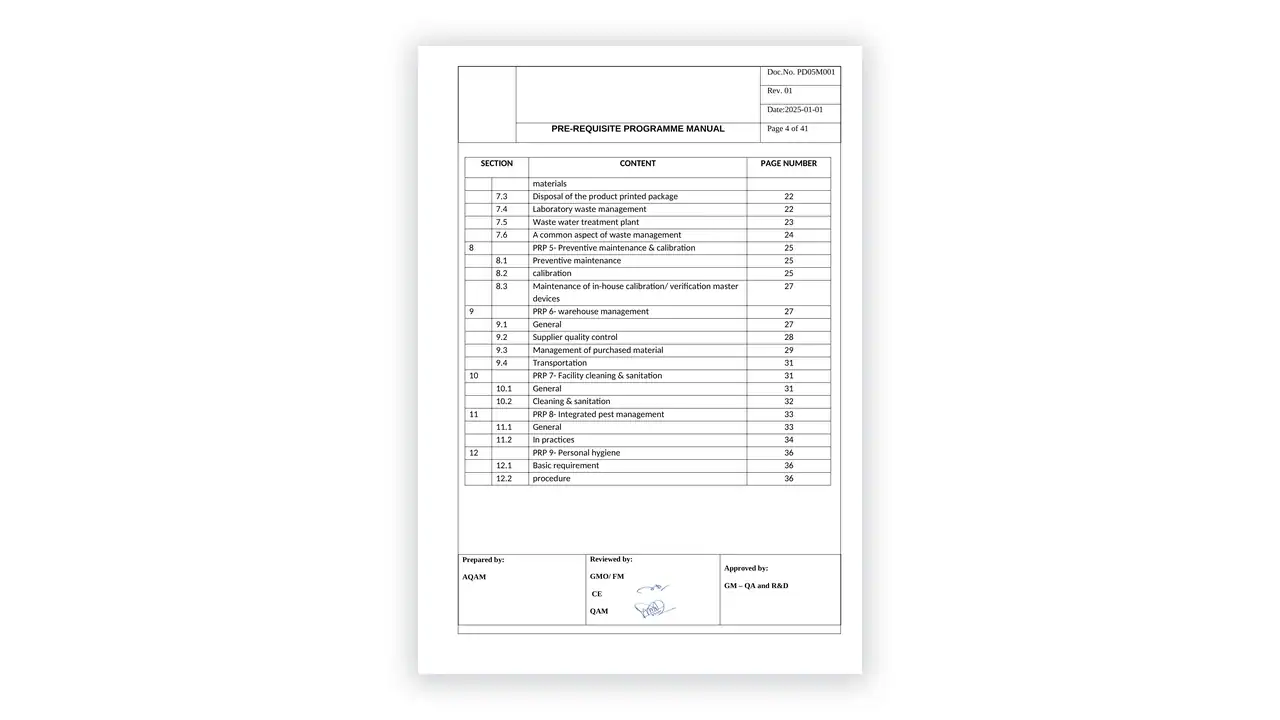
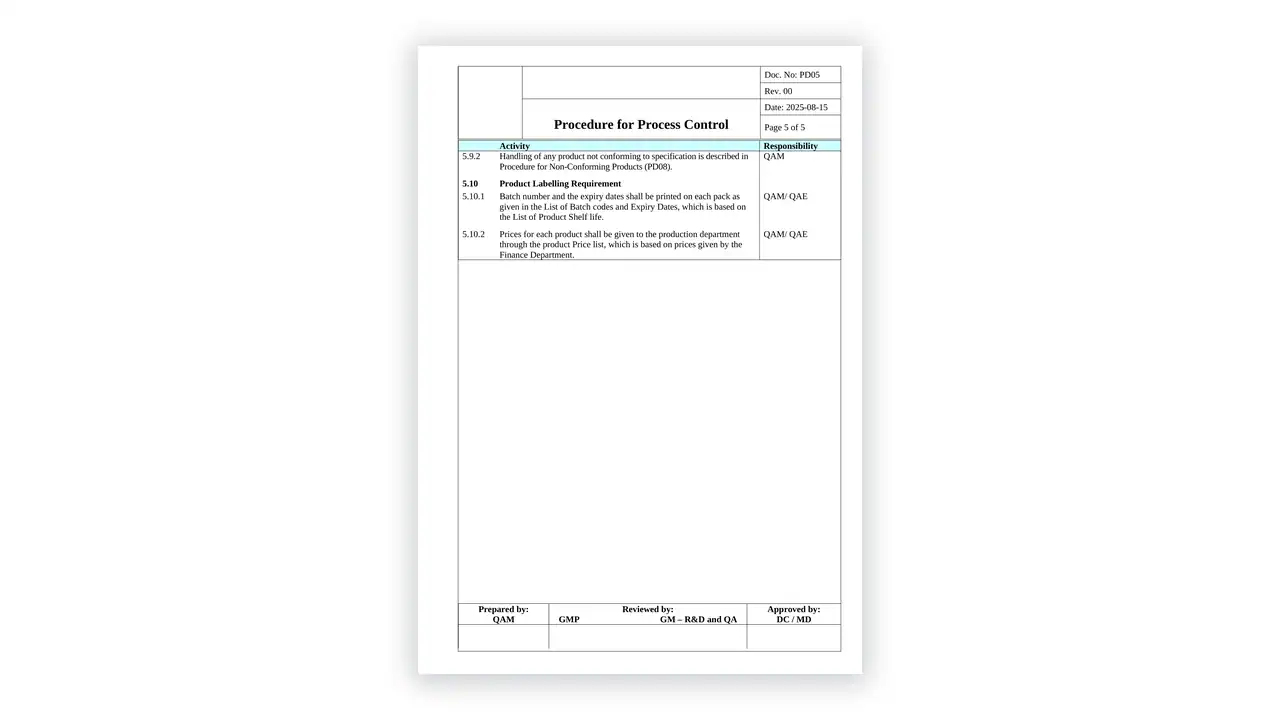
- Prerequisite programme procedures: cleaning, pest control, personal hygiene, maintenance and supplier approval
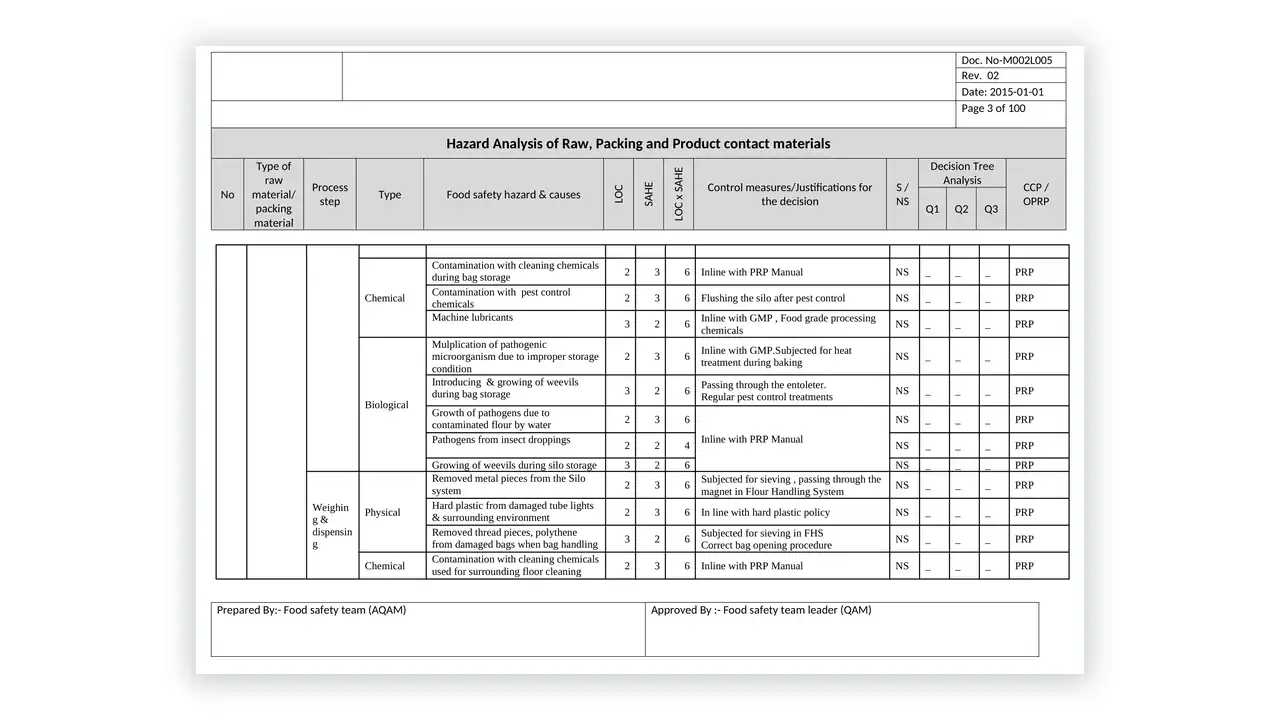
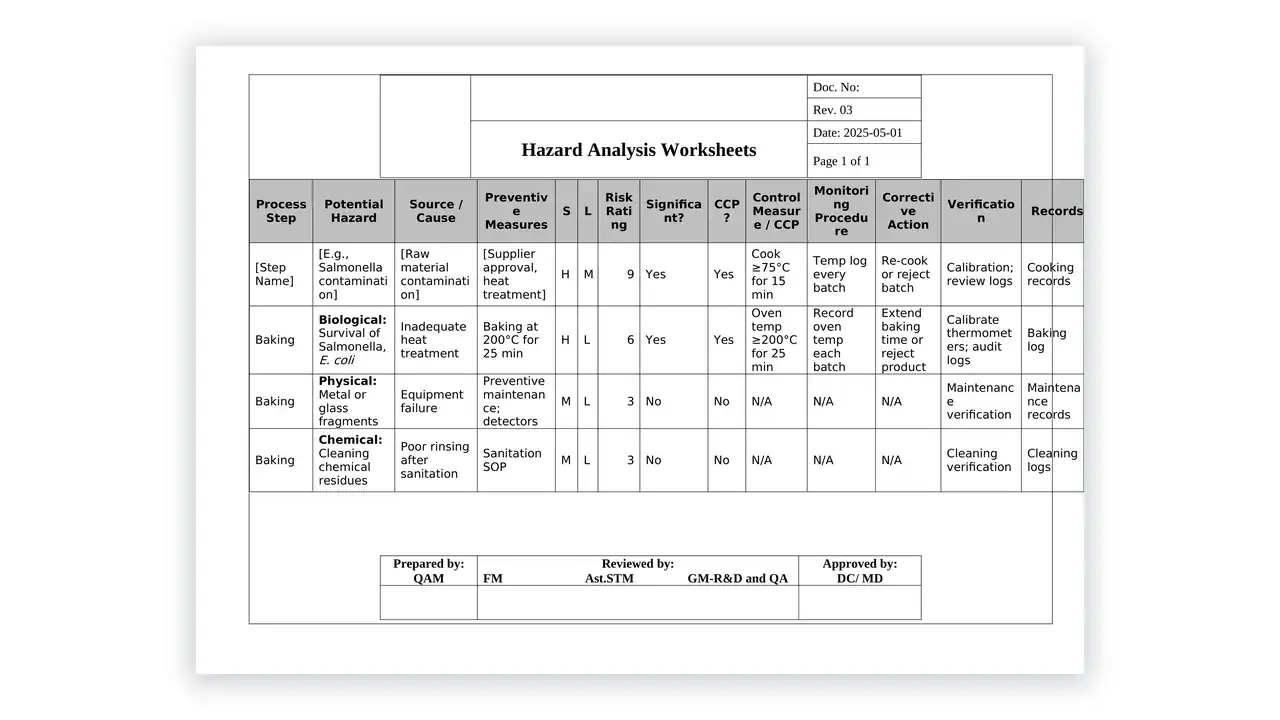
- Hazard analysis worksheets for biological, chemical, physical and allergen hazards
- Critical control point determination and decision-tree templates
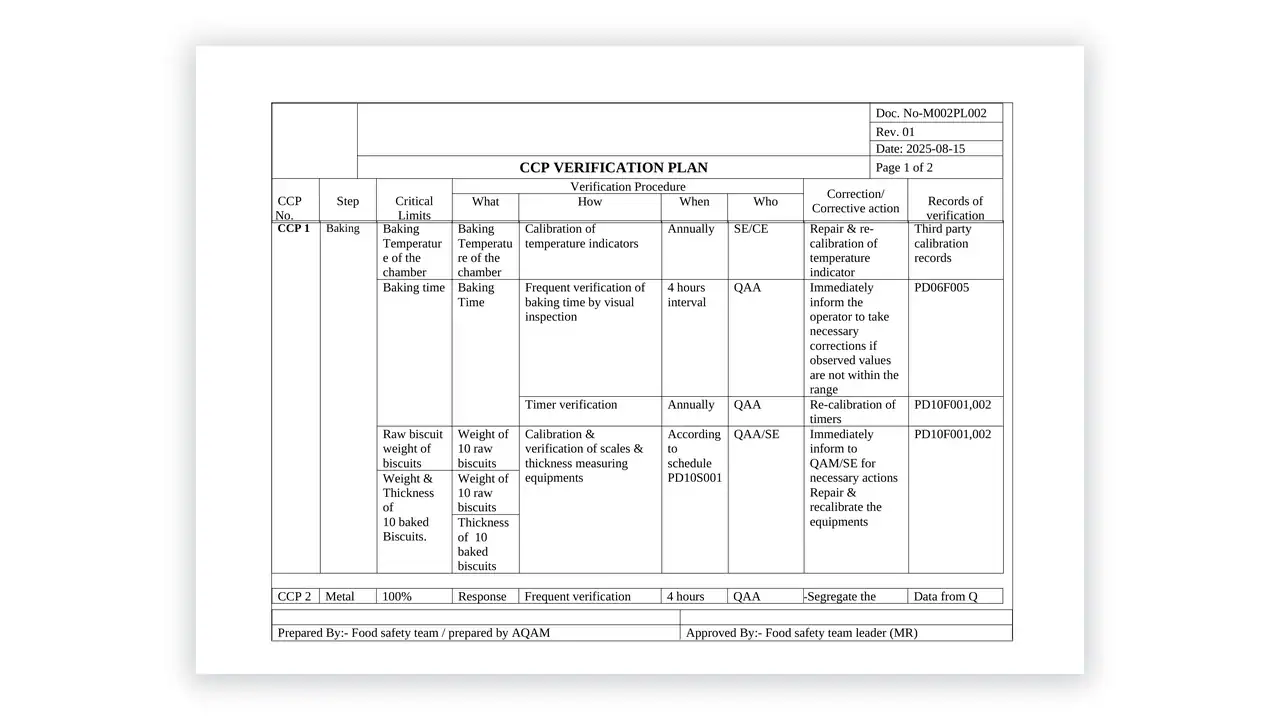
- Critical limit, monitoring and corrective action documentation
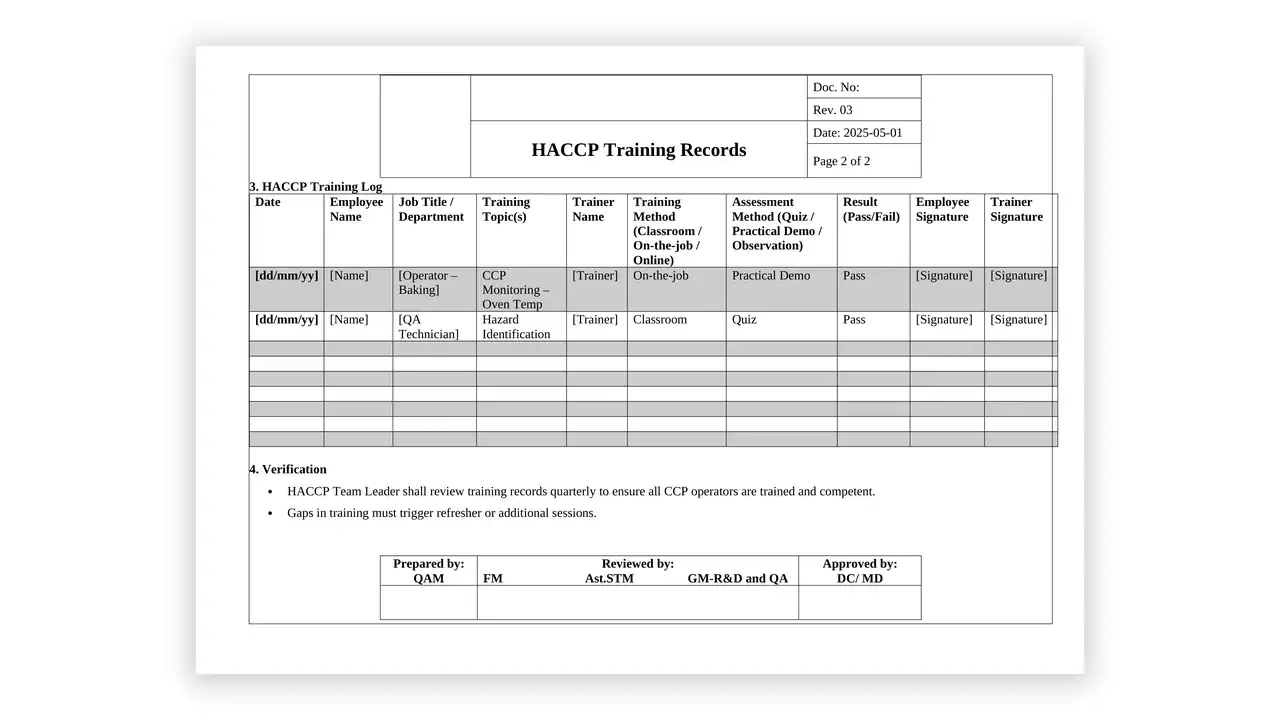
- Verification, validation and internal audit procedures
- Temperature logs, cleaning schedules, traceability and receiving records
- Product description, process flow diagram and CCP monitoring forms

Who the HACCP Toolkit is for
Food manufacturers, caterers, importers, packers and hospitality operators are expected to run a documented system, and enforcement officers ask to see it rather than take it on trust.
Typical buyers are opening a new site, preparing for a first inspection or a retailer audit, or replacing a plan that was written years ago and no longer matches the process on the floor.
How the HACCP Toolkit maps to the principles
The templates follow the recognised sequence: conduct a hazard analysis, determine critical control points, establish critical limits, establish monitoring, establish corrective actions, establish verification, and establish documentation and record keeping.
That ordering means your team works from hazard identification to record keeping logically rather than guessing what an auditor expects. The method underpins Codex Alimentarius guidance and food safety regulation worldwide.
Why the HACCP Toolkit beats drafting a plan yourself
Researching and drafting a compliant plan from scratch takes many hours, and the CCP determination and critical limit justification are the parts inspectors challenge hardest when they are written from memory.
Everything is editable Microsoft Word and Excel, letting you describe your own products, processes and control points precisely, without paying a food safety consultant for documents you can readily tailor yourself.
HACCP Toolkit frequently asked questions
Is this the same as ISO 22000?
No. This is the hazard control method on its own. ISO 22000 wraps the same principles in a certifiable management system with leadership, planning and improvement requirements around them.
Does it cover allergens?
Yes. Allergen hazards are treated alongside biological, chemical and physical hazards in the analysis worksheets, and allergen controls flow into the cleaning and changeover records.
Will it suit a small catering operation?
Yes. The plan and prerequisite programmes scale down cleanly, and the temperature logs and cleaning schedules are the everyday records small operators are most often asked for.
Delivery, format and licence
Your HACCP Toolkit downloads immediately after checkout as native Microsoft Word and Excel files. Nothing is watermarked or locked, so you can rebrand the documents, bring them under your own document control and revise them for as long as you need them.
It is a one-time purchase with no subscription and no annual renewal. Because the source files are yours, updating a procedure after an audit finding or a change of scope is an internal edit rather than a new purchase.
Related food safety toolkits
For a certifiable management system built on the same principles, see the ISO 22000 Toolkit. Add the ISO 9001 Toolkit for general quality management, the ISO 45001 Toolkit for workplace safety and the ISO 14001 Toolkit for environmental controls, or take the combined QHSE Documentation Bundle.


Reviews
There are no reviews yet.