
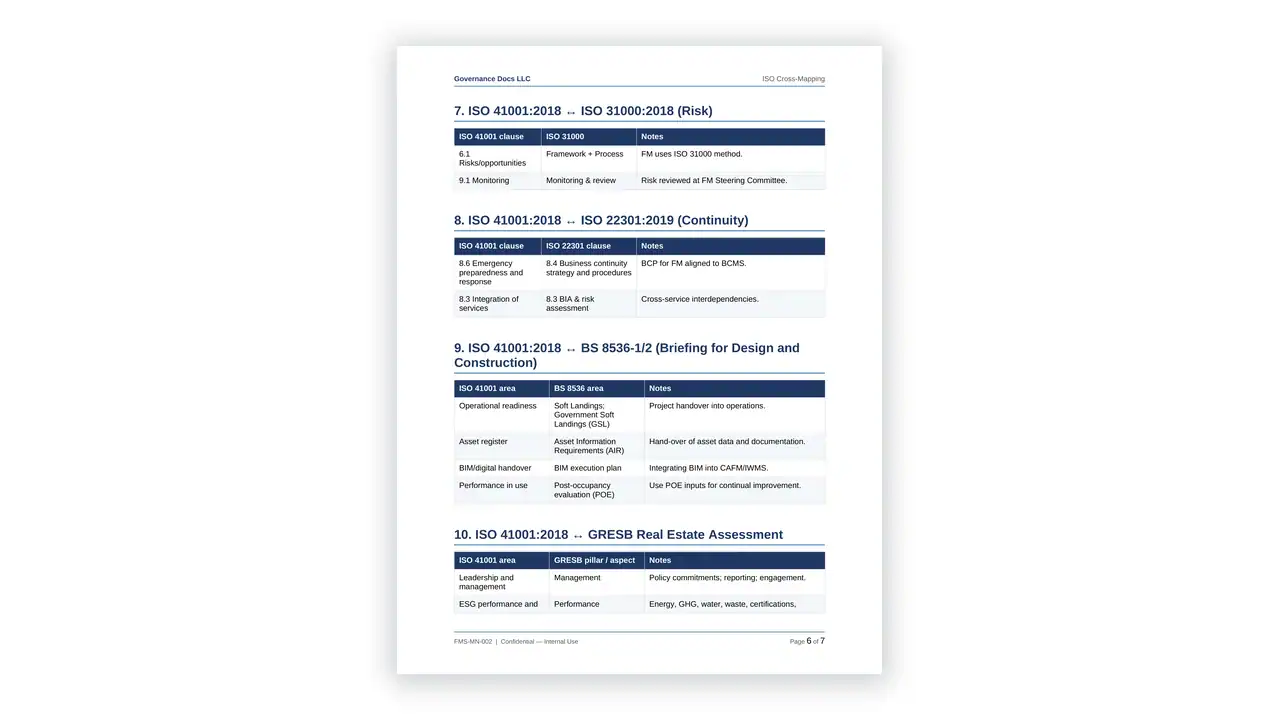
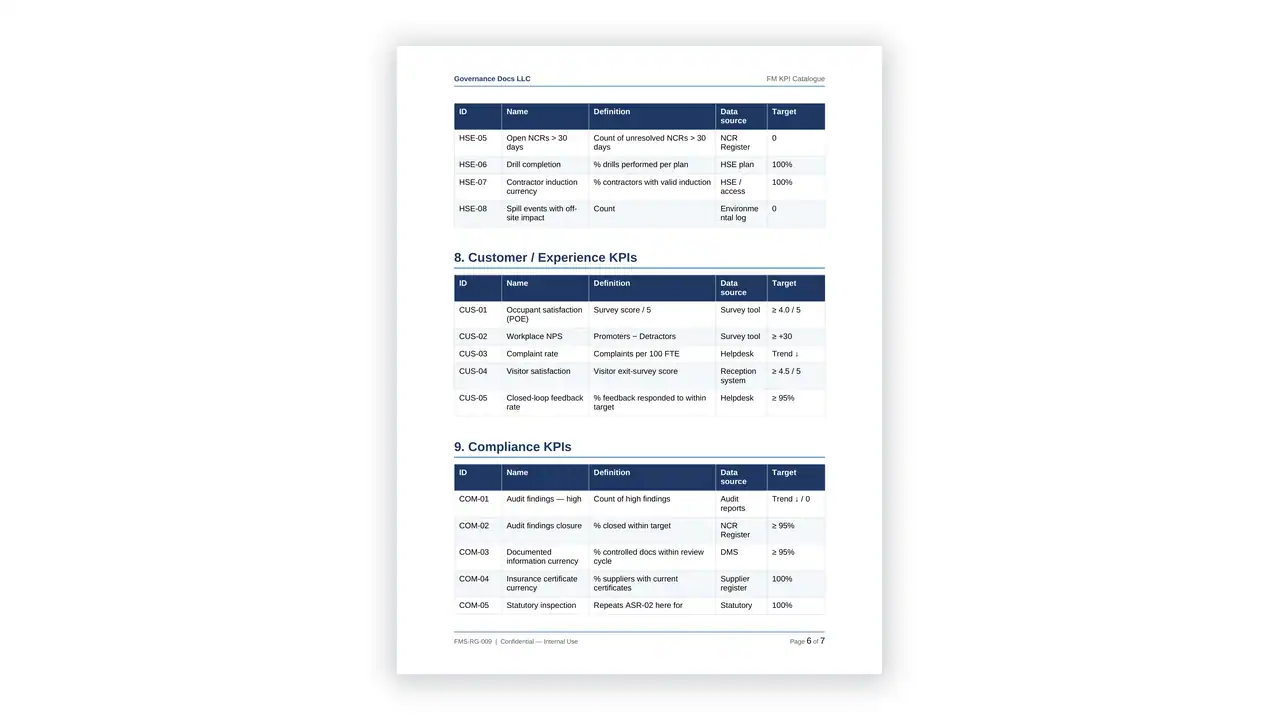
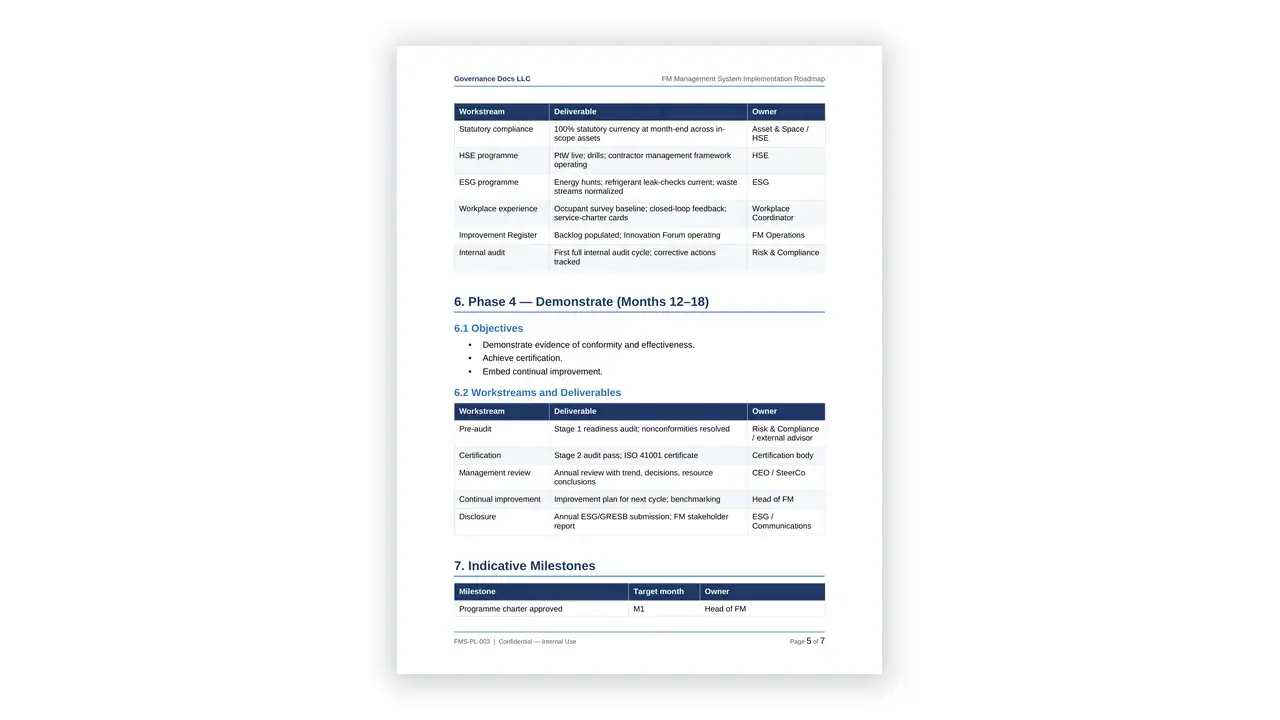
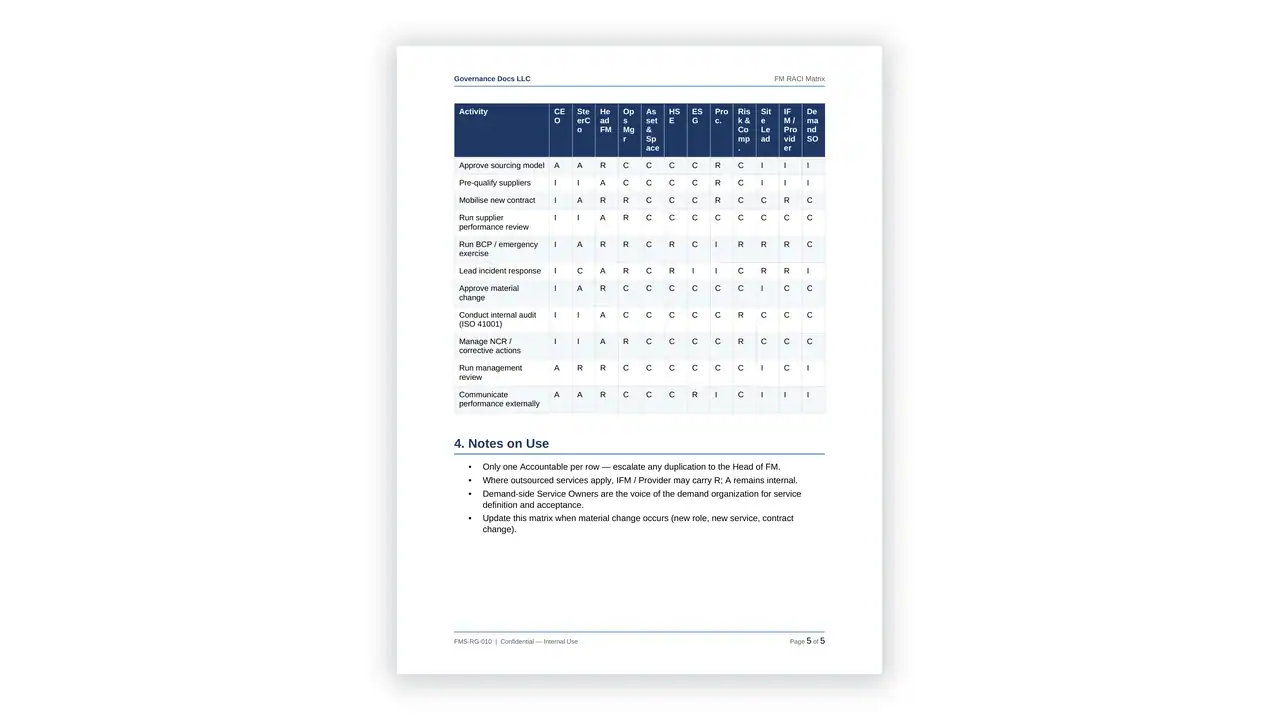
Facility management is defined by a relationship the standard names explicitly: the demand organization that needs the services, and the FM function that supplies them. Getting the demand organization and SLAs right is what stops FM being judged on effort rather than on outcomes. 18 editable files, downloadable the moment you check out. On this page:
- What is in the demand organization and SLAs pack
- ISO 41001:2018 is current, with a revision imminent
- Who needs demand organization and SLAs
- How the documents map to the framework
- Frequently asked questions
- Related toolkits
What is in the demand organization and SLAs pack
A compact, operational set rather than a large policy library:
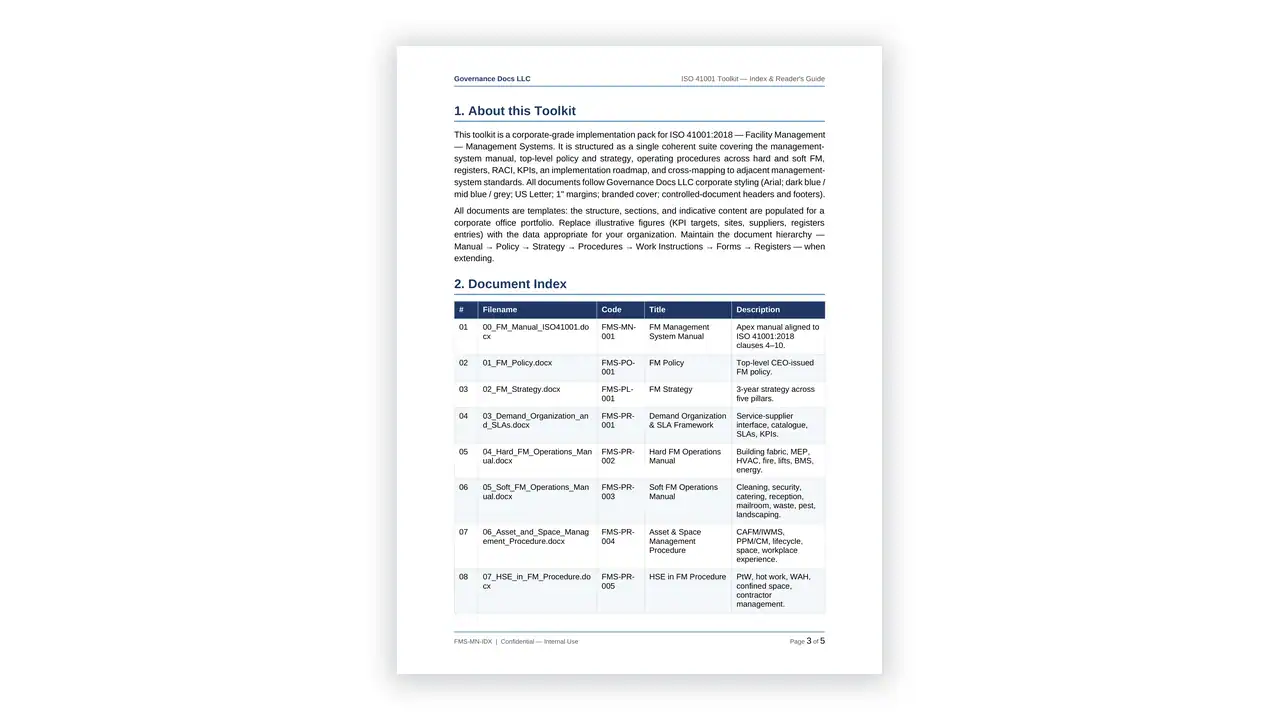
- 00 FM Manual to ISO 41001 – the facility management system scope, context and structure
- 01 FM Policy and 02 FM Strategy – the commitment and the approach to delivering it
- 03 Demand Organization and SLAs – identifying who the demand organization is, what it actually requires, and the service levels agreed with it
- 04 Hard FM Operations Manual – building fabric, mechanical and electrical, HVAC, lifts and planned preventive maintenance
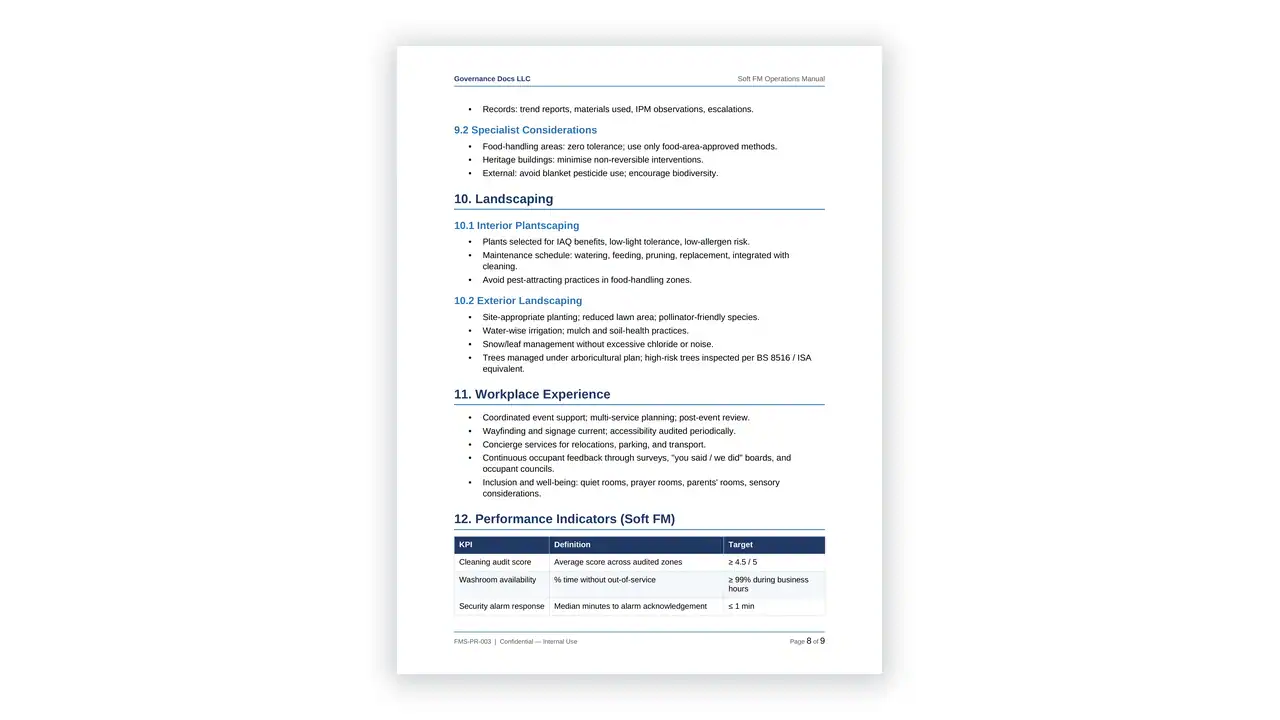
- 05 Soft FM Operations Manual – cleaning, security, catering, reception, waste and grounds
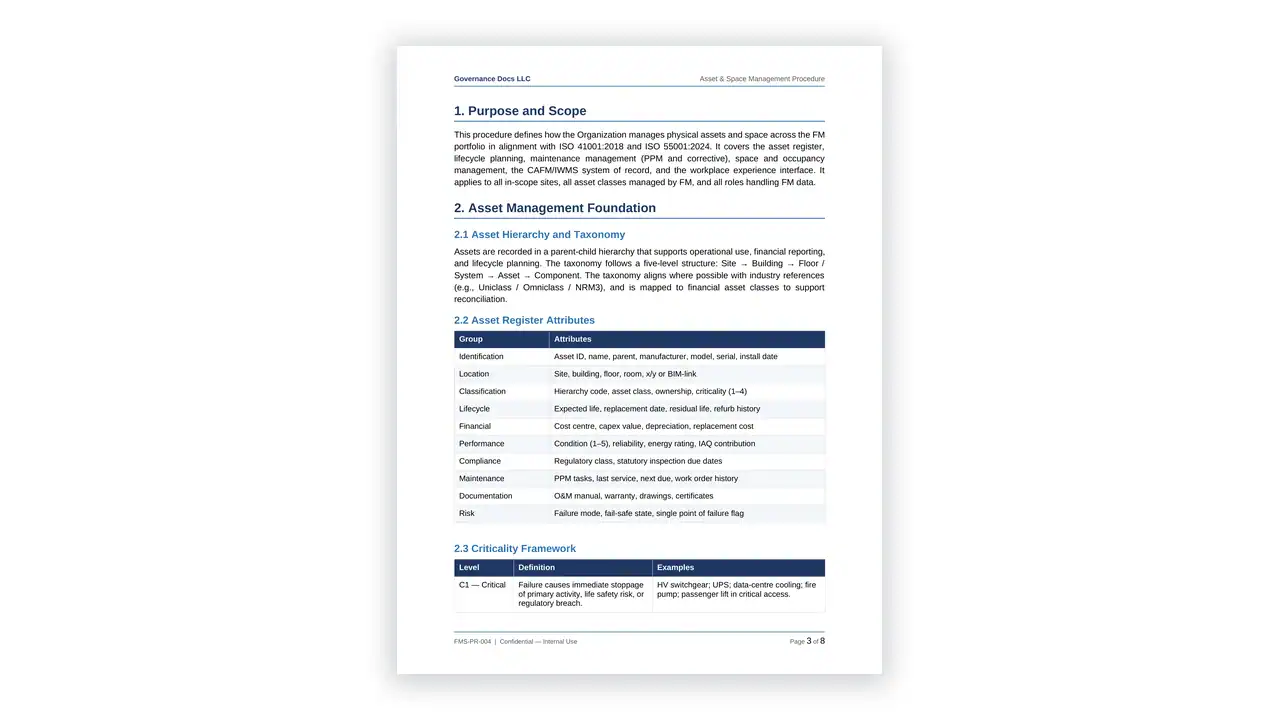
- 06 Asset and Space Management Procedure – the asset register, space allocation and utilisation
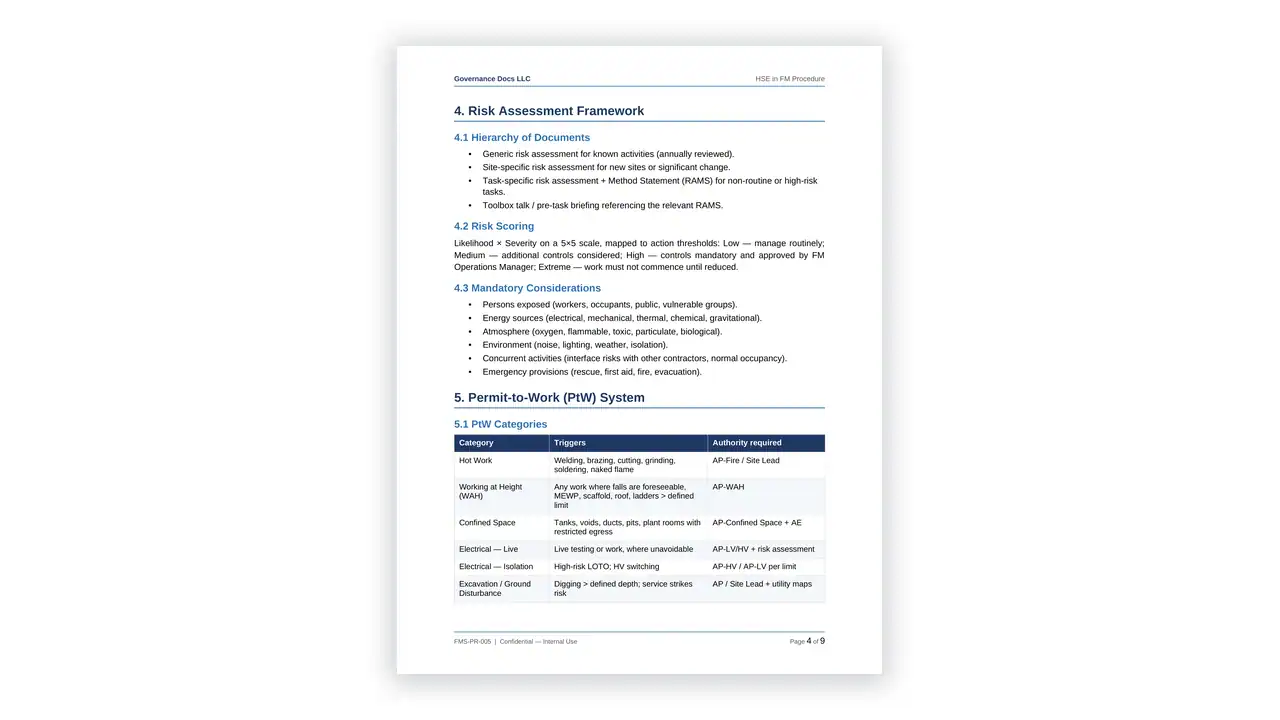
- 07 HSE in FM Procedure – the health, safety and environmental requirements specific to facility operations and to contractors on site
- 08 Supplier and Contractor Management – selection, mobilisation, performance management and the permit regime
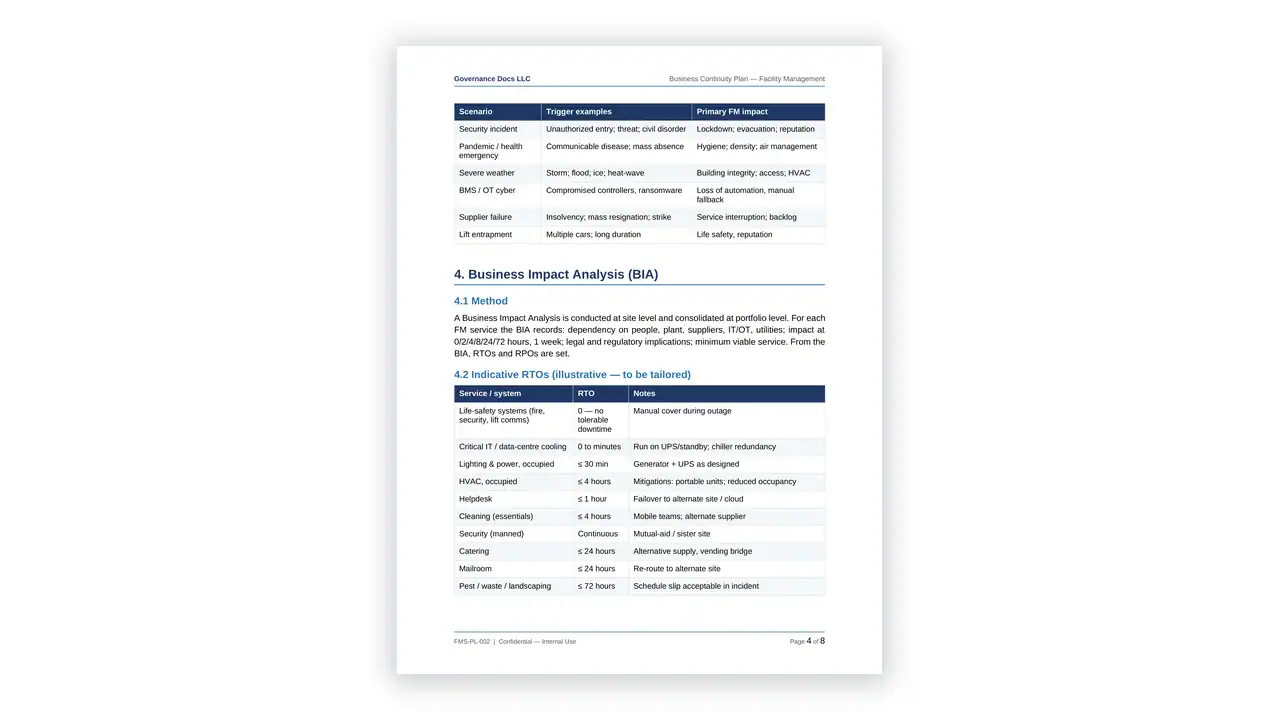
- 09 Business Continuity Plan for FM – continuity of the facility services other operations depend on
- 10 Sustainability and ESG in FM – energy, waste, water and the reporting contribution FM makes
- Performance measurement, internal audit, management review and improvement
- A master workbook carrying the registers, SLA tracking and audit programme
ISO 41001:2018 is current, with a revision imminent
ISO 41001:2018 is the current edition, amended in 2024 to add consideration of climate change. The standard is at draft international standard stage, so a new edition is expected within months rather than years.
That timing is worth planning around rather than waiting for. Certification bodies assess against the 2018 edition today, and the substance of facility management – the demand organization relationship, service levels, hard and soft operations, supplier control – is not going to be redefined by a revision.
What a revision will likely sharpen is the sustainability content, since facility management is where a large share of an organisation energy use, waste and occupant wellbeing actually sit. The sustainability and ESG document here is written with that direction of travel in mind.
Who needs demand organization and SLAs
In-house facility management functions being asked to demonstrate a managed service rather than a reactive one. FM service providers tendering where certification is a requirement or a differentiator. Organisations with multi-site property portfolios wanting consistency between sites. And FM teams moving from an output-based to an outcome-based relationship with the business they serve.
How the demand organization and SLAs maps to the framework
The demand organization concept is the part most FM documentation misses. Without a written statement of what the demand organization requires, FM performance gets measured by activity – tickets closed, inspections done – rather than by whether the facilities supported the organisation objectives. The SLA documents force that conversation to happen and be recorded.
Frequently asked questions
Which edition is current?
ISO 41001:2018 with the 2024 climate amendment. A revision is at draft international standard stage and is expected within months.
Should we wait for the new edition?
No. Certification bodies assess against 2018, and the core content is stable. The management system structure means a transition is manageable rather than a rewrite.
What is the demand organization?
The entity that needs the facility services – typically the business the FM function serves. The standard treats the relationship between demand and supply as central, which is why it has its own document here.
Does it cover both in-house and outsourced FM?
Yes. The supplier and contractor management documents cover outsourced delivery, and the operations manuals apply whether services are delivered internally or by a provider.
How many documents are included?
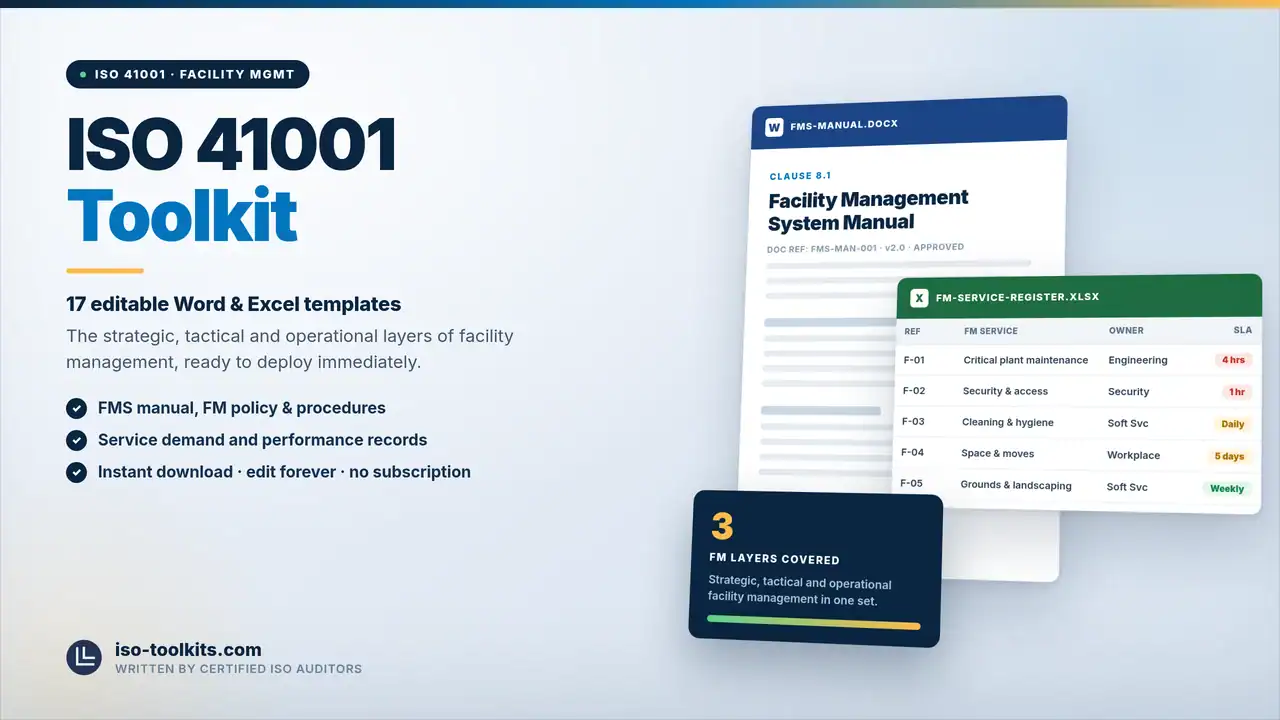
18 editable files – 17 Word documents and a master Excel workbook – plus guidance and a licence file.
Related toolkits
Facility management overlaps with asset, energy and safety systems. See the ISO 55001 Toolkit for asset management, the ISO 50001 Toolkit for energy performance, the ISO 45001 Toolkit for occupational safety and the ISO 14001 Toolkit for environmental management.
Implementing for clients? The Consultant Package licenses all 86 toolkits and assessment tools on this site for unlimited client engagements, under one firm-wide licence. One payment of $1,399, no subscription and no per-client fee.
Delivery, format and licence
Your demand organization and SLAs downloads immediately after checkout as native Microsoft Word and Excel files. Nothing is watermarked or locked, so you can rebrand the documents, bring them under your own document control and revise them for as long as you need them.
One-time purchase. No subscription and no annual renewal. Because the source files behind the demand organization and SLAs are yours, revising a procedure after an audit finding or a change of scope is an internal edit rather than another purchase.


Reviews
There are no reviews yet.