
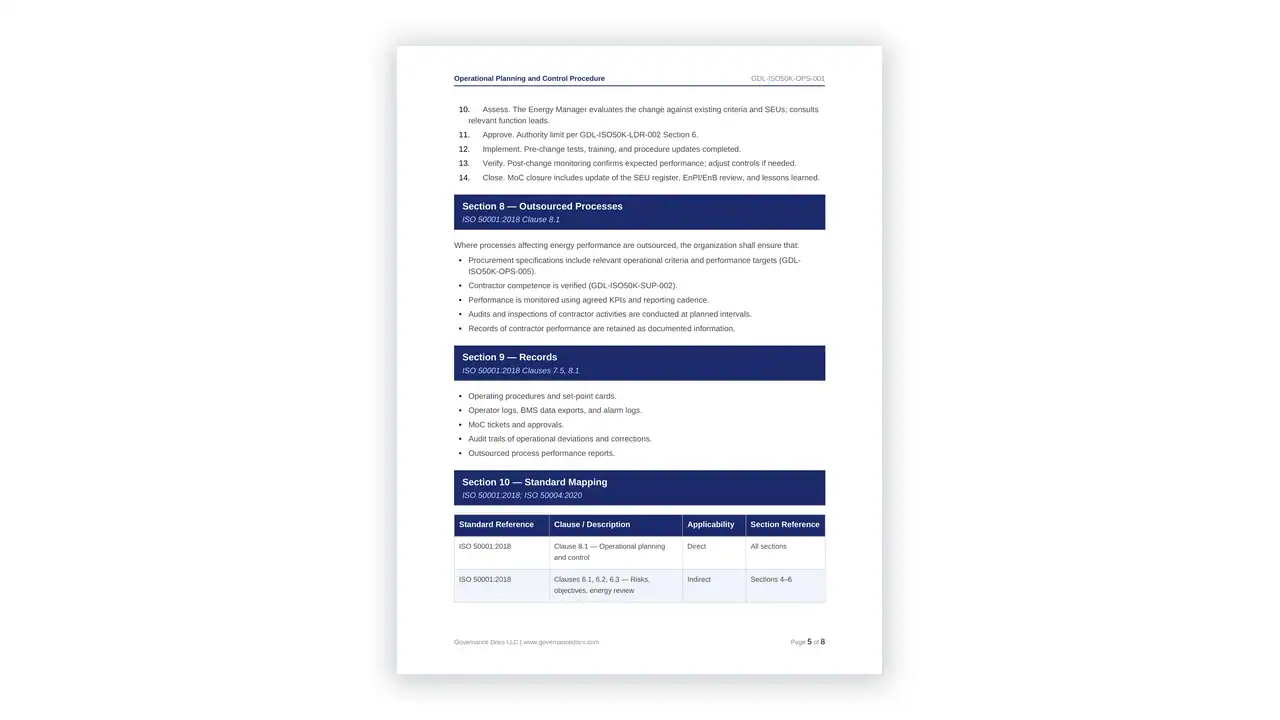
ISO 50001 is unusual among management system standards in requiring demonstrated improvement in measurable performance, not just in the system. That makes the energy baseline and EnPI the technical core – without a defensible baseline and indicators, you cannot show improvement happened. 53 editable Word documents, downloadable the moment you check out. On this page:
- What is in the energy baseline and EnPI pack
- Why the baseline is where ISO 50001 audits concentrate
- Who needs energy baseline and EnPI
- How the documents map to the framework
- Frequently asked questions
- Related toolkits
What is in the energy baseline and EnPI pack
Documents carry GDL-ISO50K reference codes and follow the clause structure:
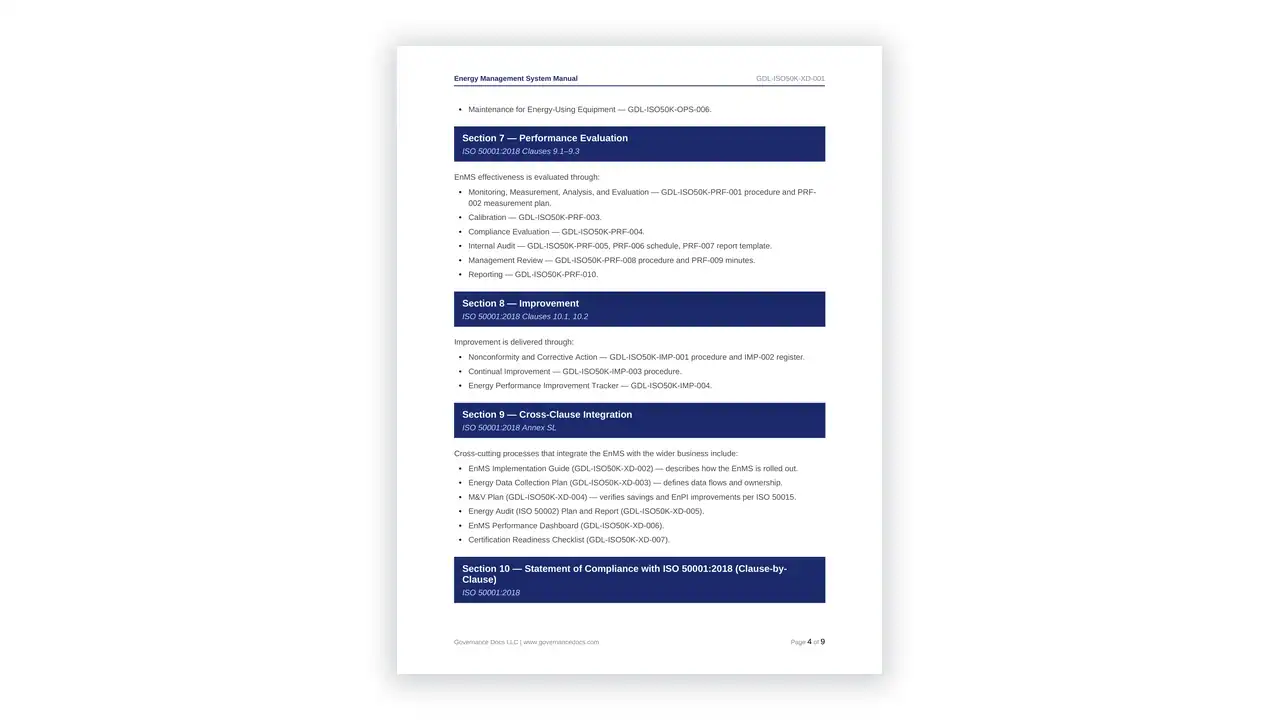
- Context – the EnMS scope and boundaries document, context analysis and interested parties register, internal and external issues procedure
- Leadership – energy policy, the energy management team, roles and responsibilities
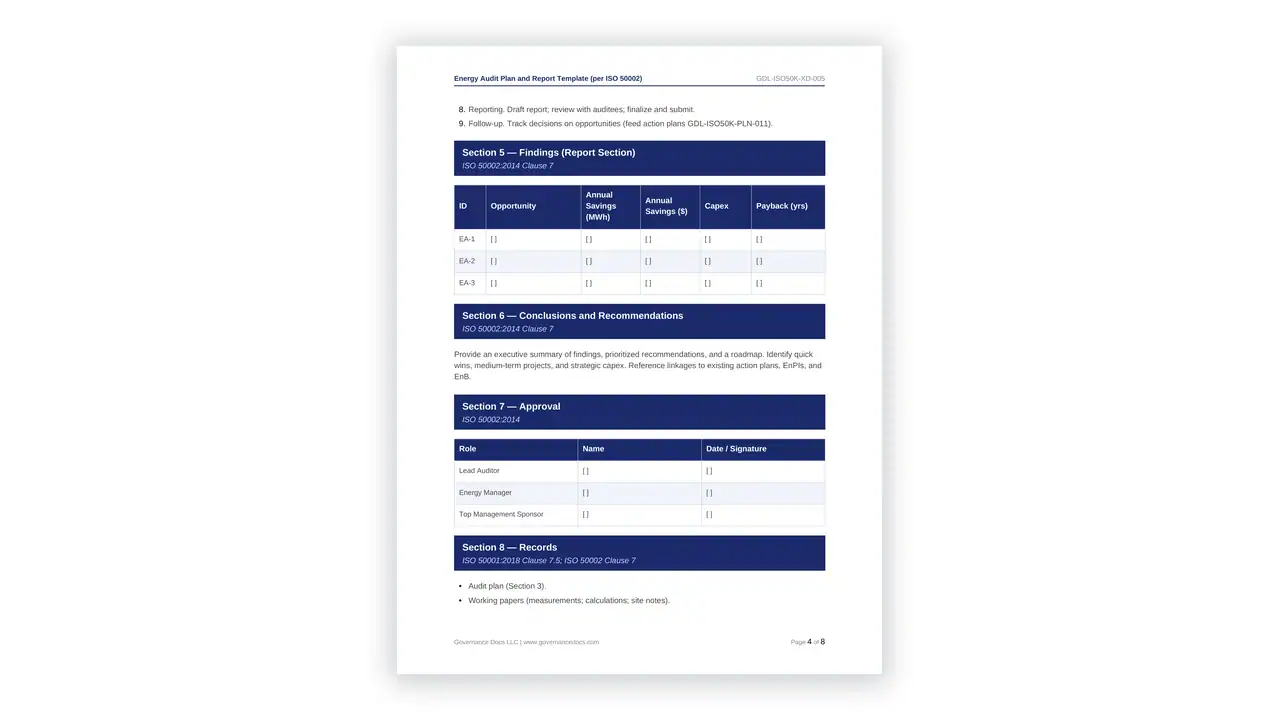
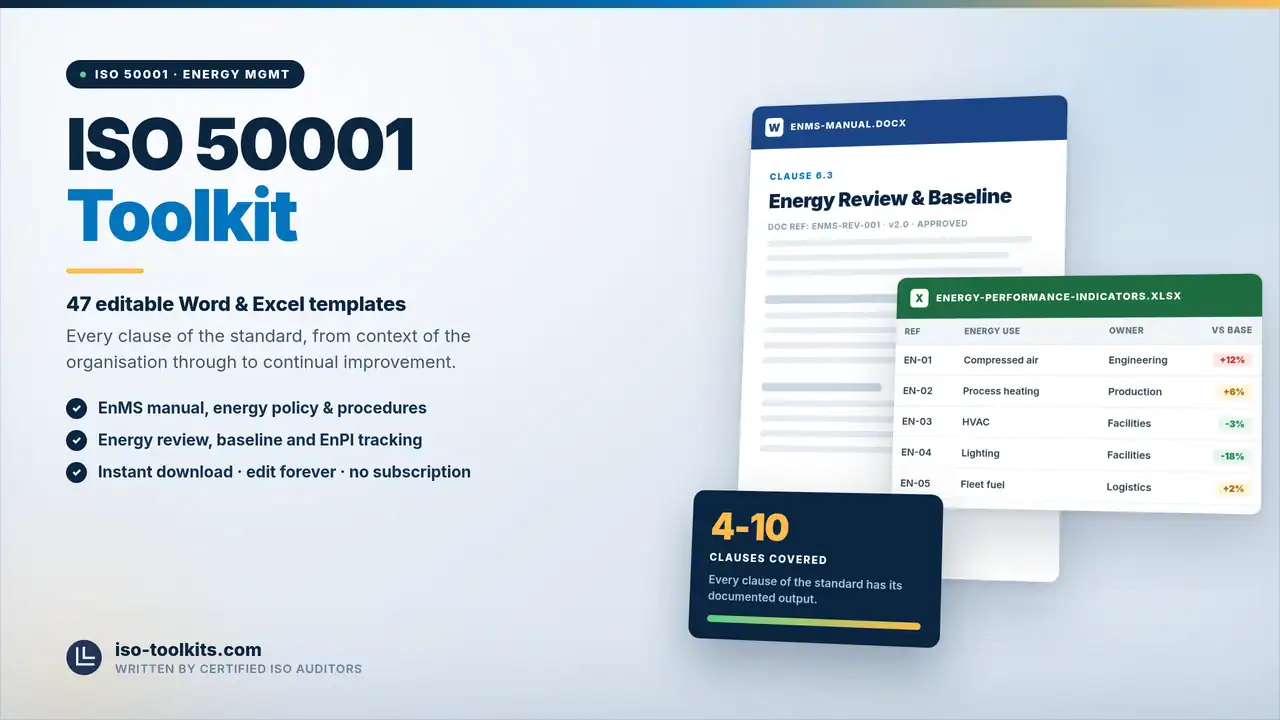
- Energy review – the procedure for analysing energy use and consumption, identifying significant energy uses and finding improvement opportunities
- Significant energy uses register – the SEUs that drive the majority of consumption and therefore of the improvement effort
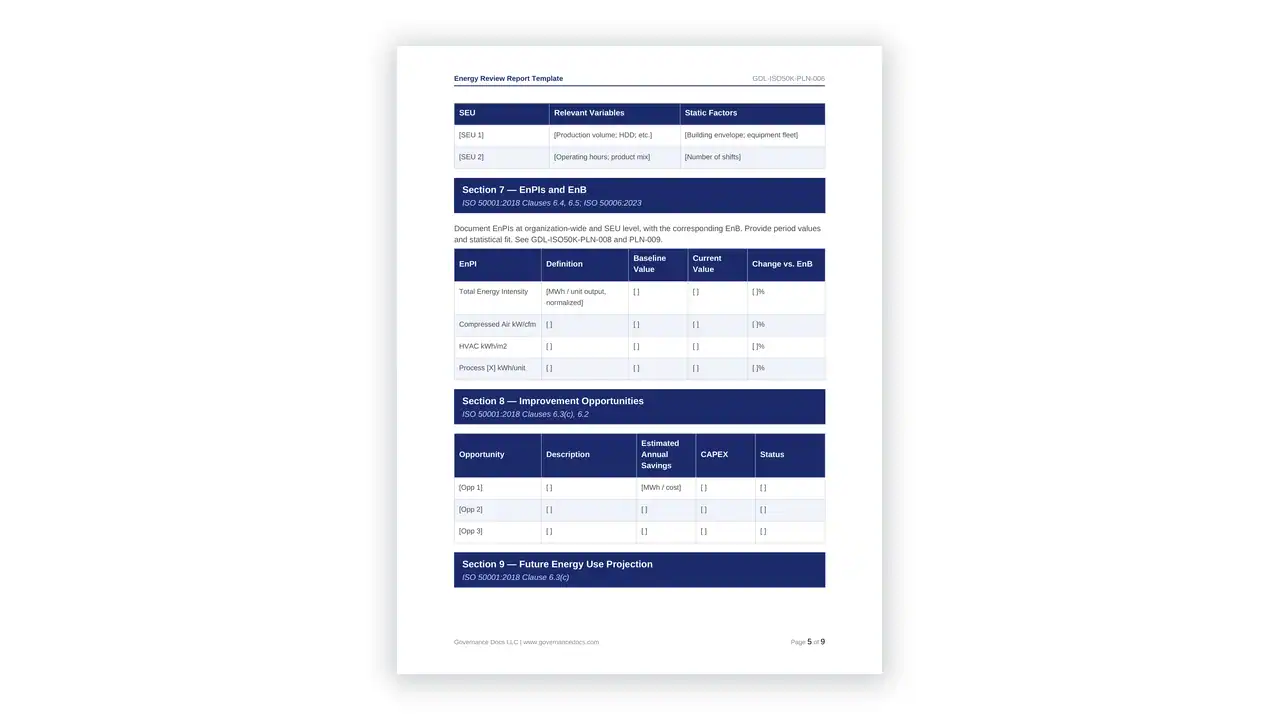
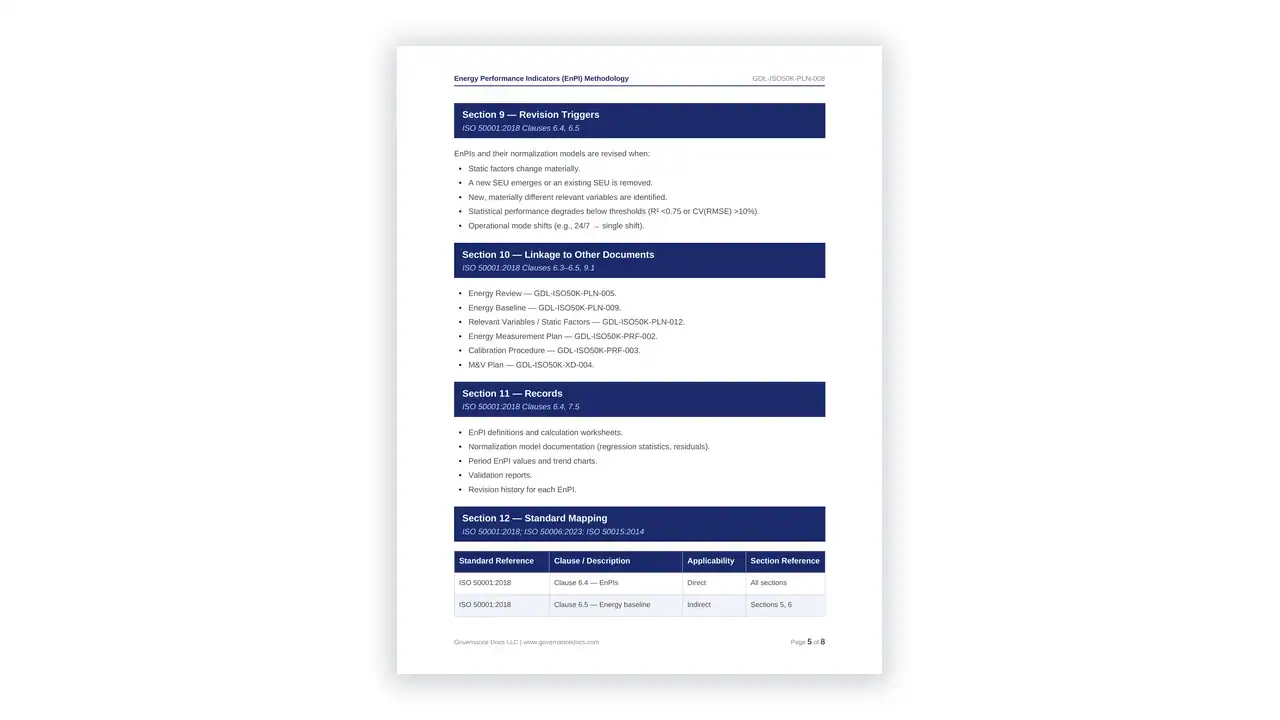
- Energy baseline – the reference period, the normalisation approach and the adjustment rules for when conditions change
- Energy performance indicators – EnPI definition, boundaries and calculation method
- Energy data collection plan – what is measured, how often, with what accuracy and by whom
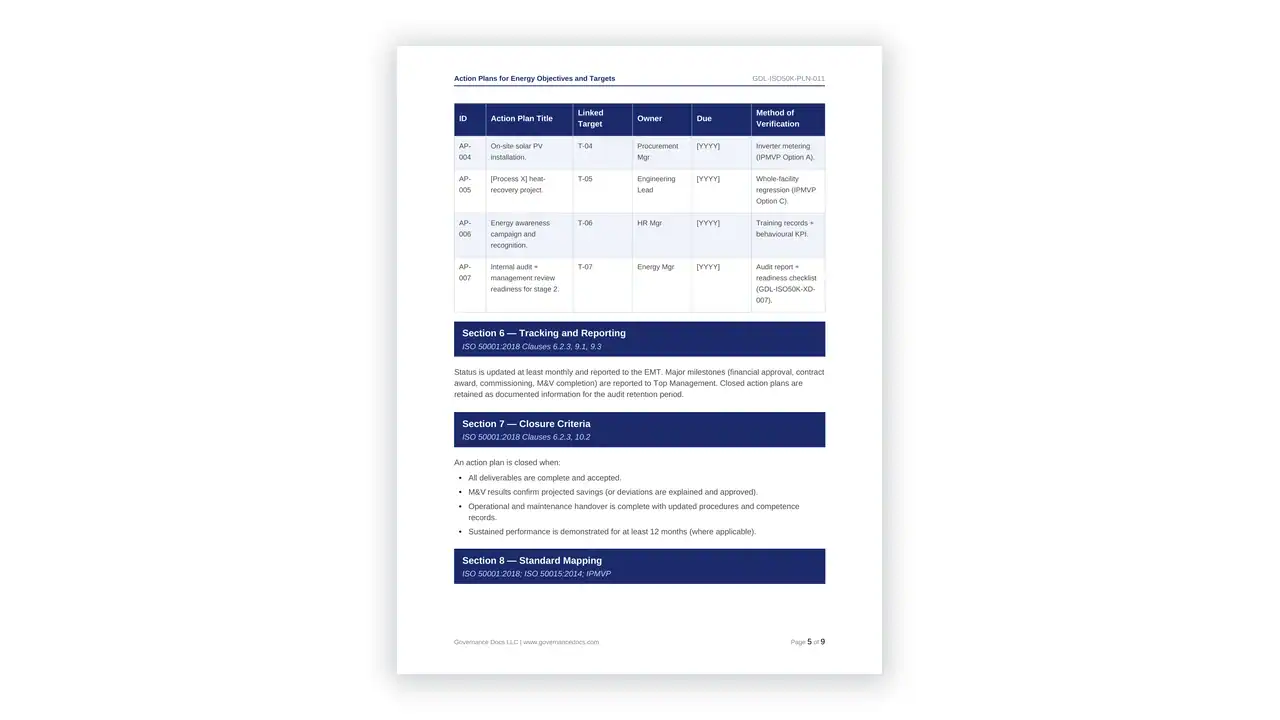
- Objectives, energy targets and the EnMS action plans that deliver them
- Operational control, maintenance and the design consideration requirement for new and modified facilities and equipment
- Procurement – the energy performance criteria applied to purchased equipment and energy supply
- Competence, awareness, communication and documented information control
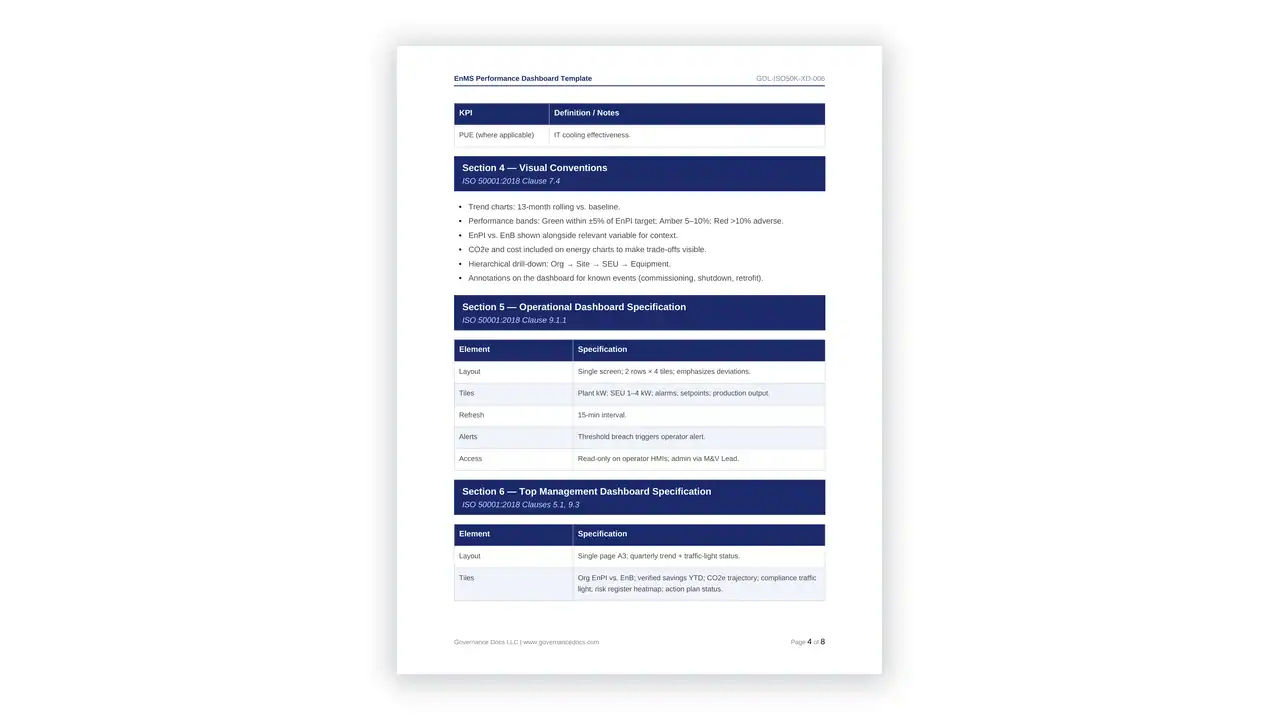
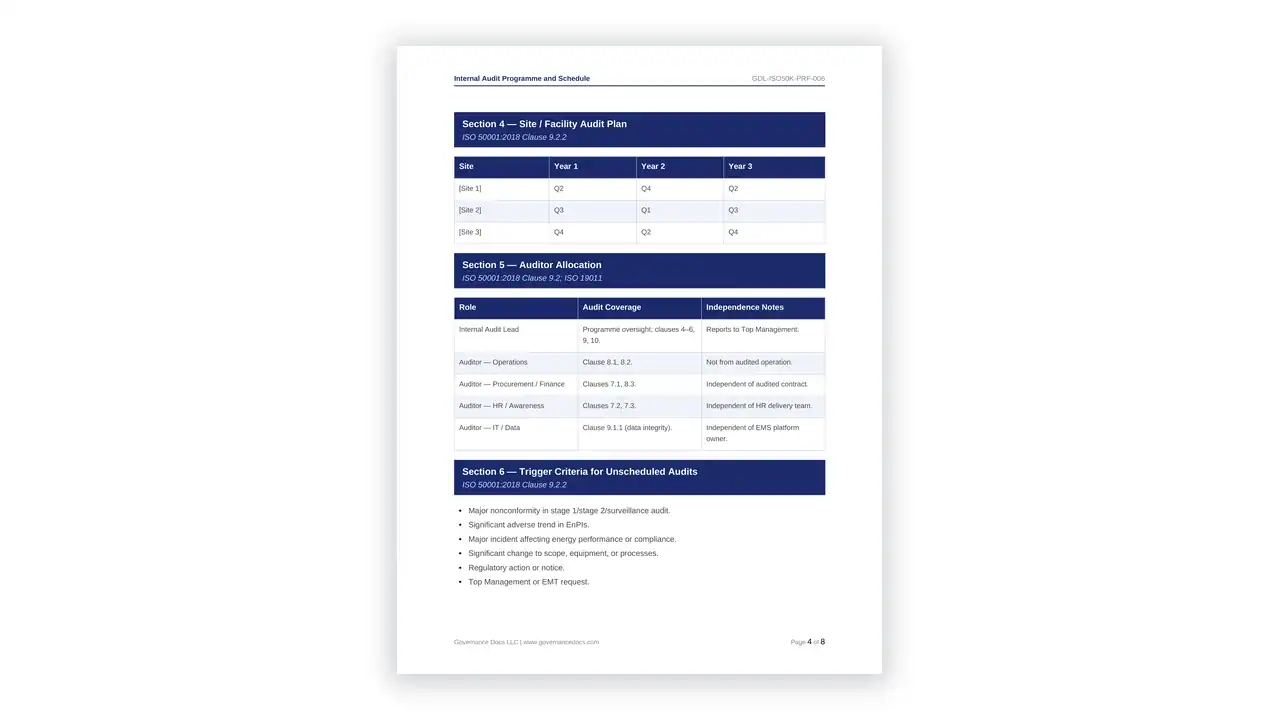
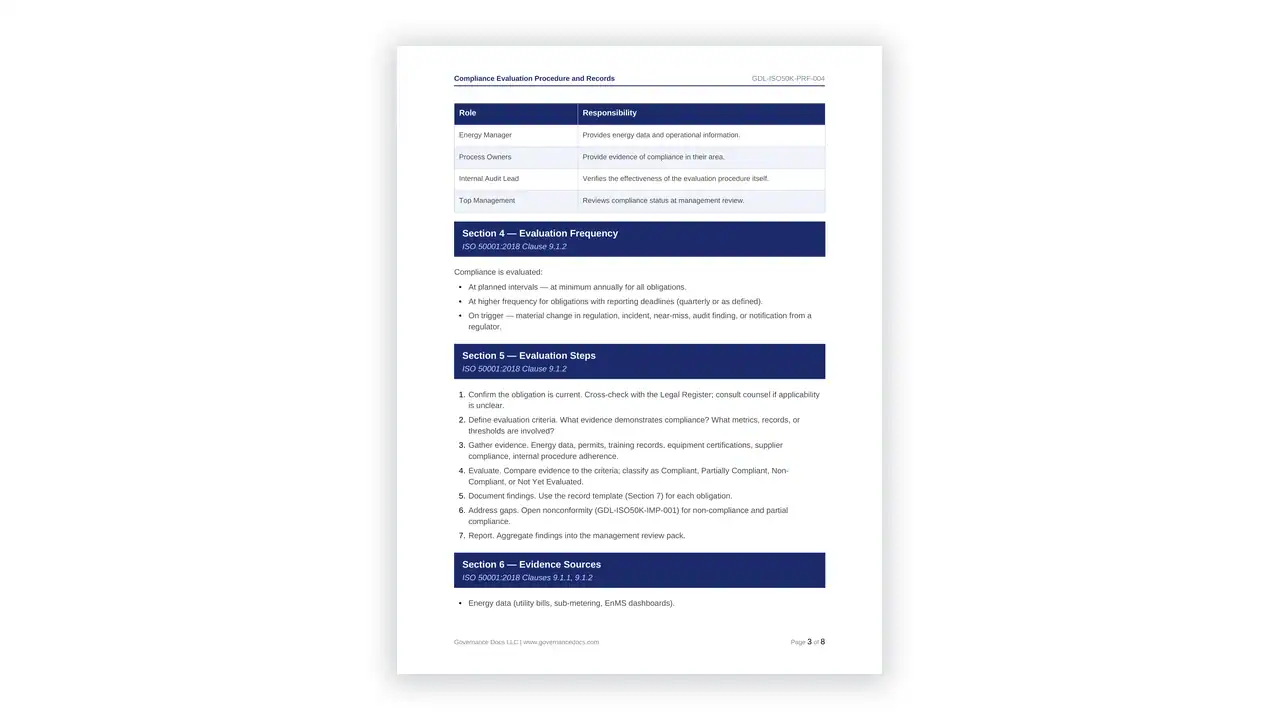
- Monitoring, measurement, analysis and evaluation of energy performance, internal audit and management review
- Nonconformity, corrective action and continual improvement
Why the baseline is where ISO 50001 audits concentrate
ISO 50001:2018 is the current edition, amended in 2024 to add consideration of climate change, and confirmed current in 2024 with no revision in development.
The distinguishing requirement is continual improvement of energy performance, not merely of the management system. An auditor will therefore test whether your energy baseline and EnPI are defensible: is the reference period representative, are the variables that affect consumption identified, and are the normalisation and adjustment rules written down before they are needed rather than after.
That last point matters more than it sounds. If production volume, weather or occupancy changes and your adjustment rules were not defined in advance, any claimed improvement becomes an argument. Documented adjustment rules turn it back into a measurement.
Who needs energy baseline and EnPI
Energy-intensive manufacturers where energy is a material cost line. Organisations subject to mandatory energy audit or reporting schemes that accept ISO 50001 certification in place of the audit. Companies with net zero or emissions reduction commitments who need a credible measurement basis. And multi-site organisations wanting one consistent method for comparing performance between sites.
How the energy baseline and EnPI maps to the framework
ISO 50001 shares the common management system structure, so an organisation holding ISO 14001 reuses the context, leadership, competence, audit and review material and adds the energy-specific technical content – review, baseline, EnPIs, data collection and the design and procurement requirements. That integration is the usual route.
Frequently asked questions
Which edition is current?
ISO 50001:2018 with the 2024 climate amendment. It was confirmed current in 2024 and no revision is in development.
What is an EnPI?
An energy performance indicator – a measure of energy performance appropriate to your operations, such as energy per unit produced. It has to be defined with a stated boundary and calculation method to be auditable.
Does certification exempt us from energy audit schemes?
In several jurisdictions ISO 50001 certification satisfies or reduces mandatory energy audit obligations. Check your national scheme, since the treatment varies.
How does it relate to ISO 14001?
They integrate well and share structure. ISO 14001 covers environmental management broadly; ISO 50001 goes deeper on energy performance specifically. See the ISO 14001 Toolkit.
How many documents are included?
53 editable Word documents, plus guidance and a licence file.
Related toolkits
Energy management sits alongside environmental and asset systems. See the ISO 14001 Toolkit (2026 edition), the ISO 55001 Toolkit for asset management, the ESG Toolkit for sustainability reporting and the ISO 9001 Toolkit for quality.
Implementing for clients? The Consultant Package licenses all 86 toolkits and assessment tools on this site for unlimited client engagements, under one firm-wide licence. One payment of $1,399, no subscription and no per-client fee.
Delivery, format and licence
Your energy baseline and EnPI downloads immediately after checkout as native Microsoft Word and Excel files. Nothing is watermarked or locked, so you can rebrand the documents, bring them under your own document control and revise them for as long as you need them.
One-time purchase. No subscription and no annual renewal. Because the source files behind the energy baseline and EnPI are yours, revising a procedure after an audit finding or a change of scope is an internal edit rather than another purchase.


Reviews
There are no reviews yet.