
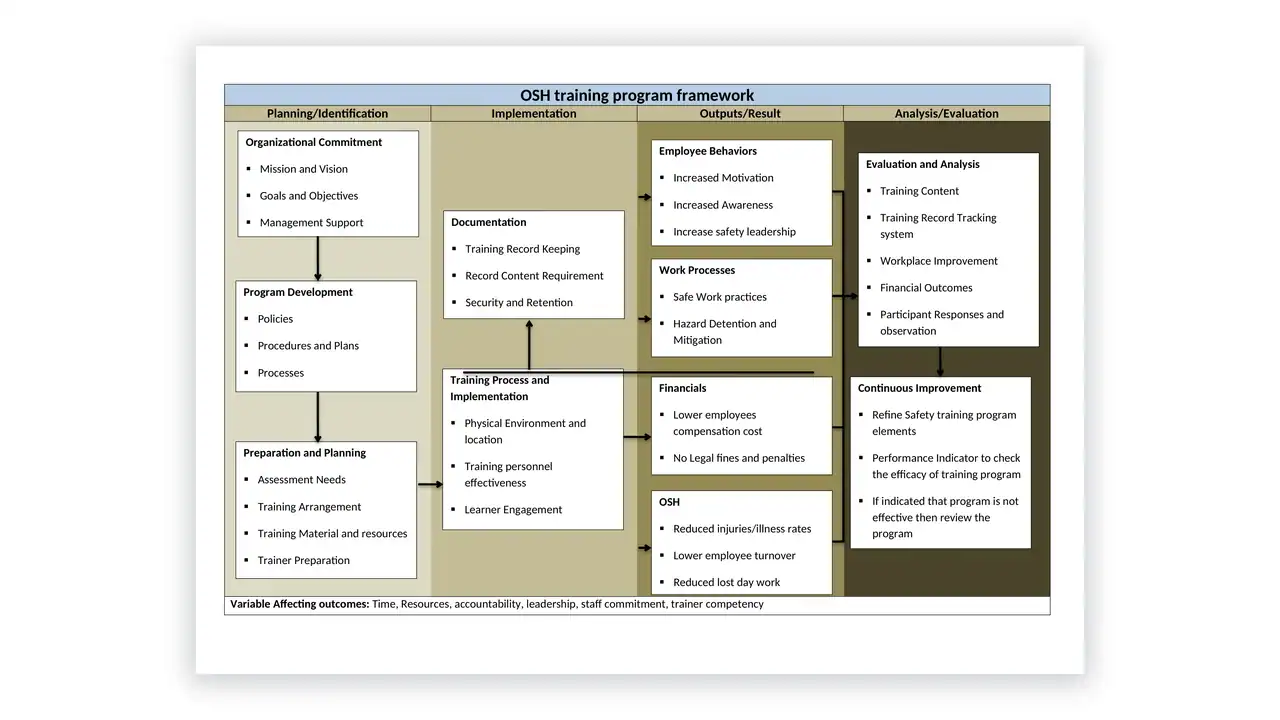
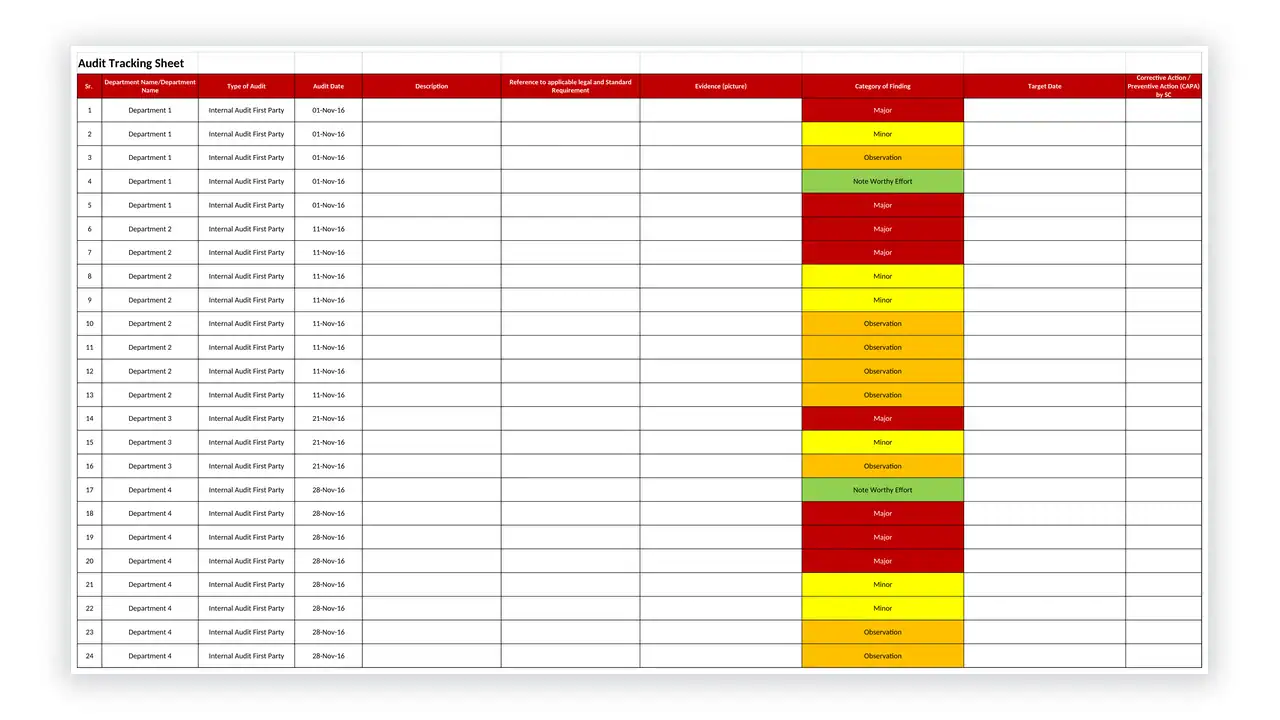
ISO 45001 turns on two things an auditor will test hard: whether your hazard identification and risk assessment process actually reflects the work people do, and whether workers were genuinely consulted rather than informed. This pack is built around both. 50 editable files, downloadable the moment you check out. On this page:
- What is in the hazard identification and risk assessment pack
- ISO 45001:2018 is current, and a revision is close
- Who needs hazard identification and risk assessment
- How the documents map to the framework
- Frequently asked questions
- Related toolkits
What is in the hazard identification and risk assessment pack
Documents carry P-OHS reference codes and follow the clause structure:
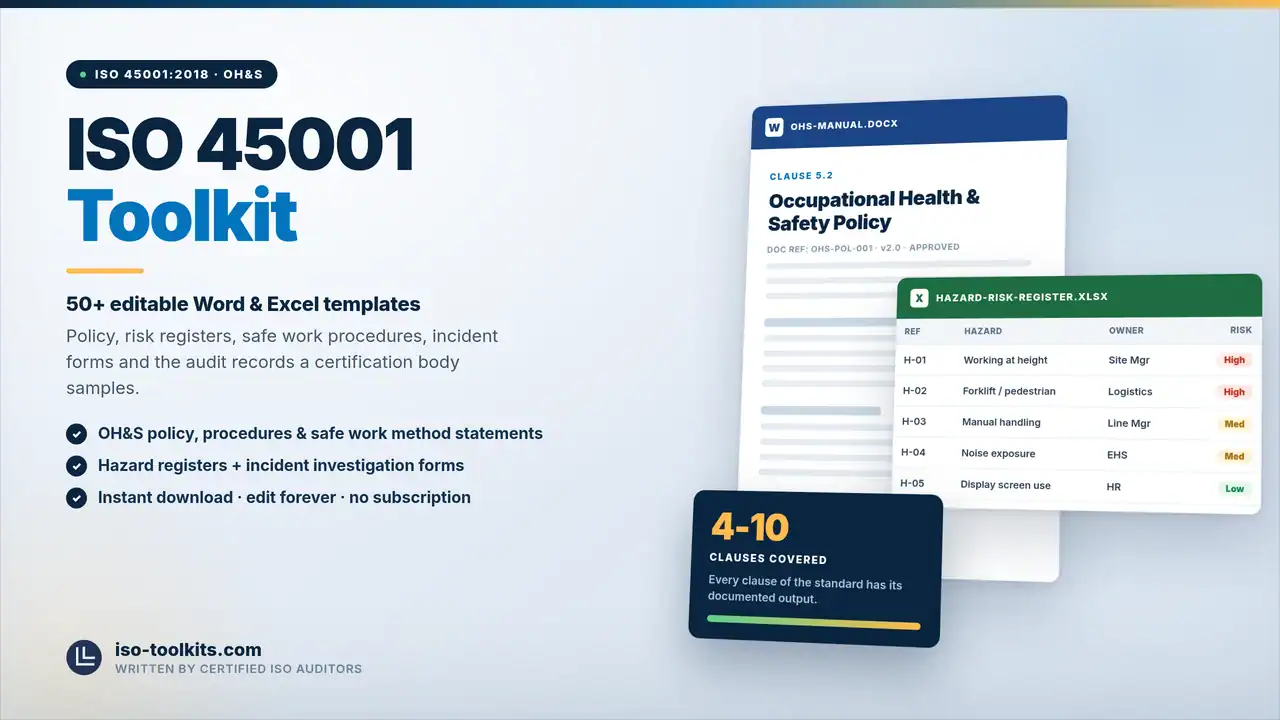
- OHSMS Manual and OH&S Policy – the scope, the framework and the policy commitments
- P-OHS-01 Context and interested parties – including the workers and worker representatives the standard names explicitly
- P-OHS-02 OH&S objectives and planning to achieve them
- P-OHS-03 Communication, participation and consultation – the procedure that evidences worker involvement, which is where ISO 45001 differs most from OHSAS 18001
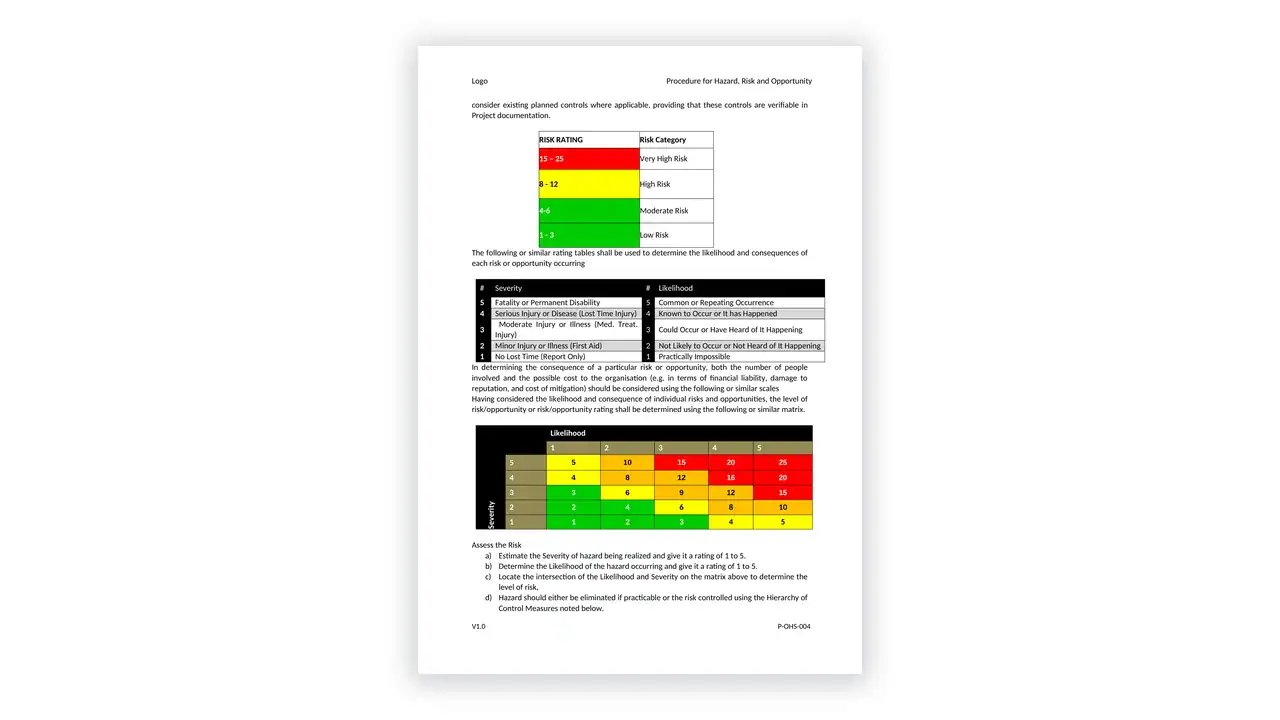
- P-OHS-04 Hazard identification, risk and opportunity – the methodology, the hazard register and the risk assessment records
- P-OHS-05 Legal and other requirements – the compliance register and the evaluation of compliance records
- P-OHS-06 Competence, training and awareness
- P-OHS-07 Control of documented information
- P-OHS-08 Operational control – including safe work procedures, permit-to-work and management of change
- P-OHS-09 Calibration and monitoring equipment
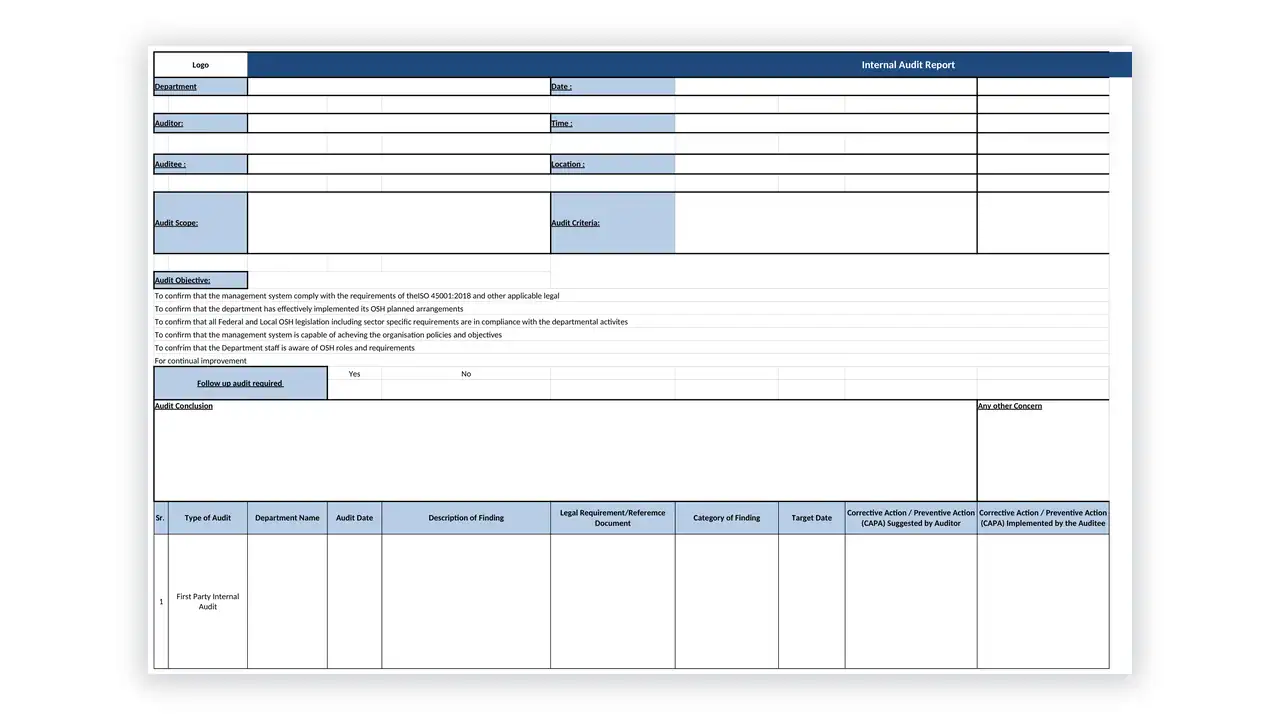
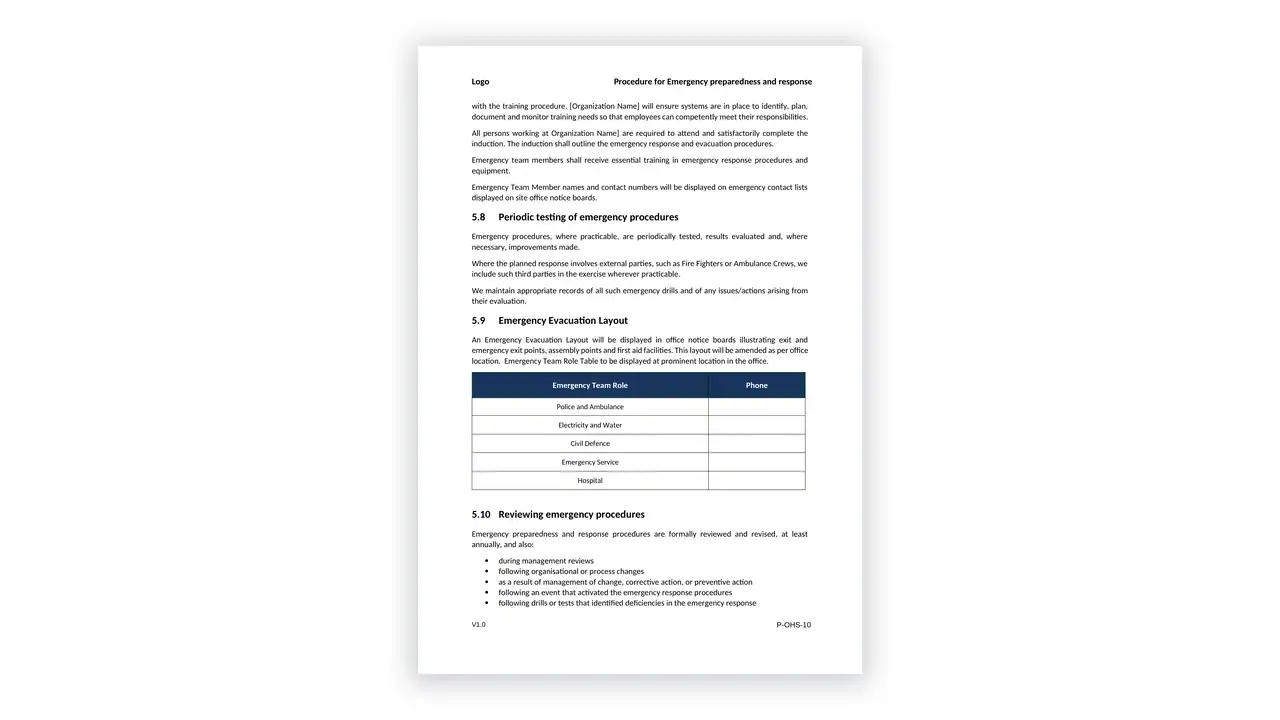
- Emergency preparedness and response, incident investigation, nonconformity and corrective action, internal audit and management review
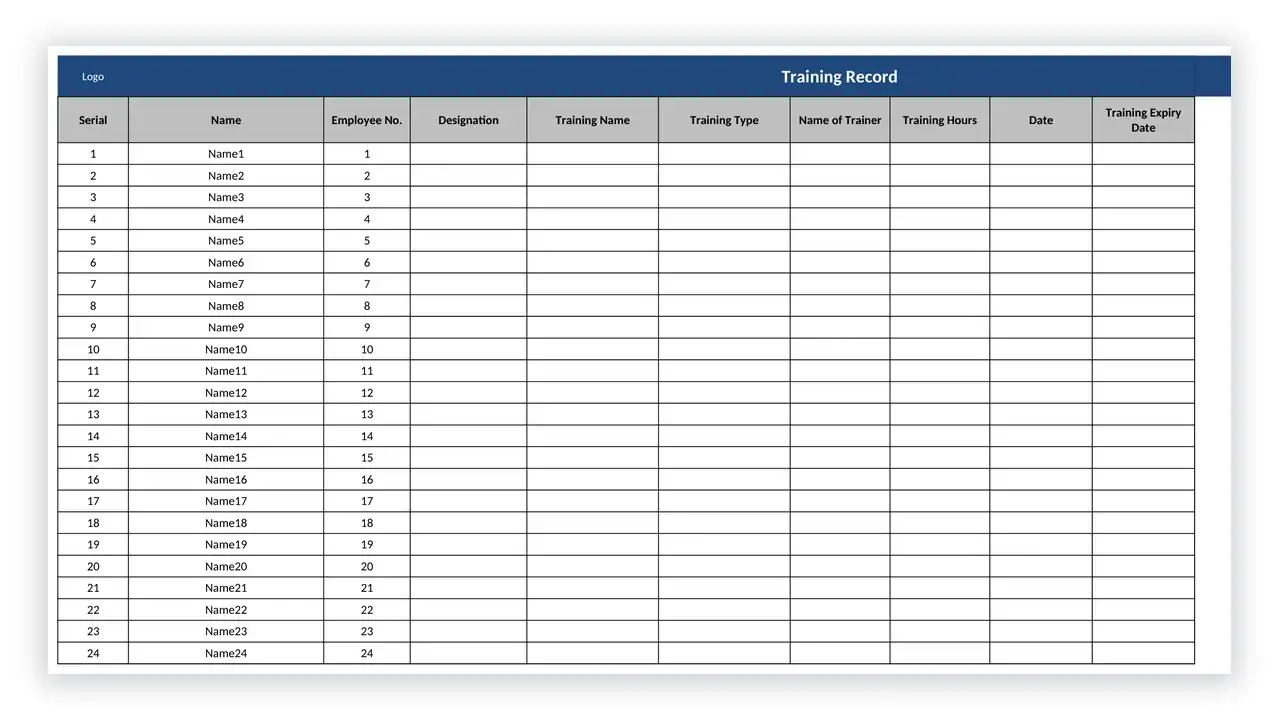
- Registers and workbooks – 13 Excel tools covering the hazard register, legal register, training matrix, incident log and audit programme
ISO 45001:2018 is current, and a revision is close
ISO 45001:2018 remains the current edition, amended in 2024 to add consideration of climate change. The standard is at draft international standard stage, so a new edition is expected within months rather than years.
That has a practical implication for timing. If you are certifying now, certify to the 2018 edition – it is what certification bodies assess against. But avoid building documentation so rigidly structured that a clause renumbering forces a rewrite, which is why this pack keeps the hazard identification and risk assessment methodology separate from the clause-mapped manual.
The substantive content is unlikely to change direction. Worker participation, the hierarchy of controls and the integration of OH&S into business processes were the defining features of the 2018 edition and will carry forward.
Who needs hazard identification and risk assessment
Organisations certifying to ISO 45001, commonly because a principal contractor or client requires it. Construction, manufacturing, logistics and facilities businesses where safety performance is contractually assessed. Organisations transitioning from OHSAS 18001, which was withdrawn and whose documentation lacks the worker participation and context requirements. And safety managers replacing a risk assessment process that exists on paper but not in practice.
How the hazard identification and risk assessment maps to the framework
The hierarchy of controls – elimination, substitution, engineering controls, administrative controls, then PPE – is the part auditors probe when reviewing risk assessments. A risk assessment whose control measure is always PPE and training signals that the hierarchy was not applied. The methodology here requires the higher levels to be considered and the reasoning recorded.
Frequently asked questions
Which edition is this written to?
ISO 45001:2018 with the 2024 climate amendment. A revision is at draft international standard stage; certification bodies currently assess against 2018.
We still have OHSAS 18001 documentation. Is it usable?
Partly. OHSAS 18001 was withdrawn and ISO 45001 added context of the organisation, leadership requirements and worker participation obligations that OHSAS documentation does not contain.
How much does worker participation actually matter?
A great deal. It is where ISO 45001 most distinguishes itself, and an auditor will ask workers directly whether they were consulted. Documented consultation that did not happen is worse than none.
Does it cover permit-to-work and safe work procedures?
Yes, within operational control, alongside management of change and contractor control.
How many documents are included?
50 editable files – 37 Word documents and 13 Excel workbooks – plus guidance and a licence file.
Related toolkits
Safety rarely sits alone. Combine with the ISO 14001 Toolkit for environmental management and the ISO 9001 Toolkit for quality, or take all three in the IMS Toolkit. For a wider QHSE forms library see the QHSE Documentation Bundle. The ISO 45001 self-assessment is a quick way to find the gaps before you start. Organisations whose people drive as part of the work also use the ISO 39001 road traffic safety toolkit.
Implementing for clients? The Consultant Package licenses all 86 toolkits and assessment tools on this site for unlimited client engagements, under one firm-wide licence. One payment of $1,399, no subscription and no per-client fee.
Delivery, format and licence
Your hazard identification and risk assessment downloads immediately after checkout as native Microsoft Word and Excel files. Nothing is watermarked or locked, so you can rebrand the documents, bring them under your own document control and revise them for as long as you need them.
One-time purchase. No subscription and no annual renewal. Because the source files behind the hazard identification and risk assessment are yours, revising a procedure after an audit finding or a change of scope is an internal edit rather than another purchase.


Reviews
There are no reviews yet.